Utah’s drought jumps to ‘extreme’ in one week as record March warmth melts a record‑low snowpack
Extreme drought expanded from 7% to nearly 60% of Utah in a single week; the snowpack meant to sustain spring rafting seasons through June is mostly gone.

The spring runoff that would normally carry Utah's rivers through early summer peaked weeks ahead of schedule and is largely spent. Extreme drought or worse now blankets nearly 60% of the state, up from 7% one week earlier, according to the U.S. Drought Monitor. National Weather Service hydrologist Glen Merrill called the single-week deterioration "rare," noting it is uncommon to see drought status jump a full category across an entire state in a single Drought Monitor update.
That includes almost 1% of Utah in exceptional drought, the highest classification on the monitor scale, a status that developed in western Colorado and has now extended across the border. All other parts of the state are in at least moderate drought for the first time this year, with over 80% in at least severe drought, nearly double the percentage from just two weeks ago.
The driver was an extraordinary March. St. George recorded 97°F, Provo reached 89°F, and Salt Lake City hit 84°F during a stretch of anomalous warmth that burned through an already record-low snowpack. Two-thirds of this year's poor snowpack collection has already melted prematurely in the March warmth, causing streamflows to peak in many areas, and the current statewide snowpack now sits at nearly one-fifth of its median value for the normal peak date, closer to what is typical of mid- to late May. "We're essentially going into the warm season one to two months early this year," Merrill said. David Simeral, a climatologist with the Western Regional Climate Center, described the cause as "anomalous heat and record-low snowpack levels" pushing drought indices sharply upward across the Intermountain West simultaneously. This is the first time any part of Utah has reached exceptional drought since January 2023, and the first time at least half the state has been in extreme drought since November 2022.
For anyone with Green River, Colorado, or San Juan corridor trips on the calendar, the compressed season is the immediate planning reality. Utah's reservoirs sit at 73% capacity with little snowmelt left to gain. Streamflows already peaked in many corridors as the snowpack flushed out prematurely. Rafting operators are now reworking logistics: longer motor shuttles, adjusted put-in and take-out locations, and low-water contingency routes are conversations worth having with any guiding company before a deposit is finalized.
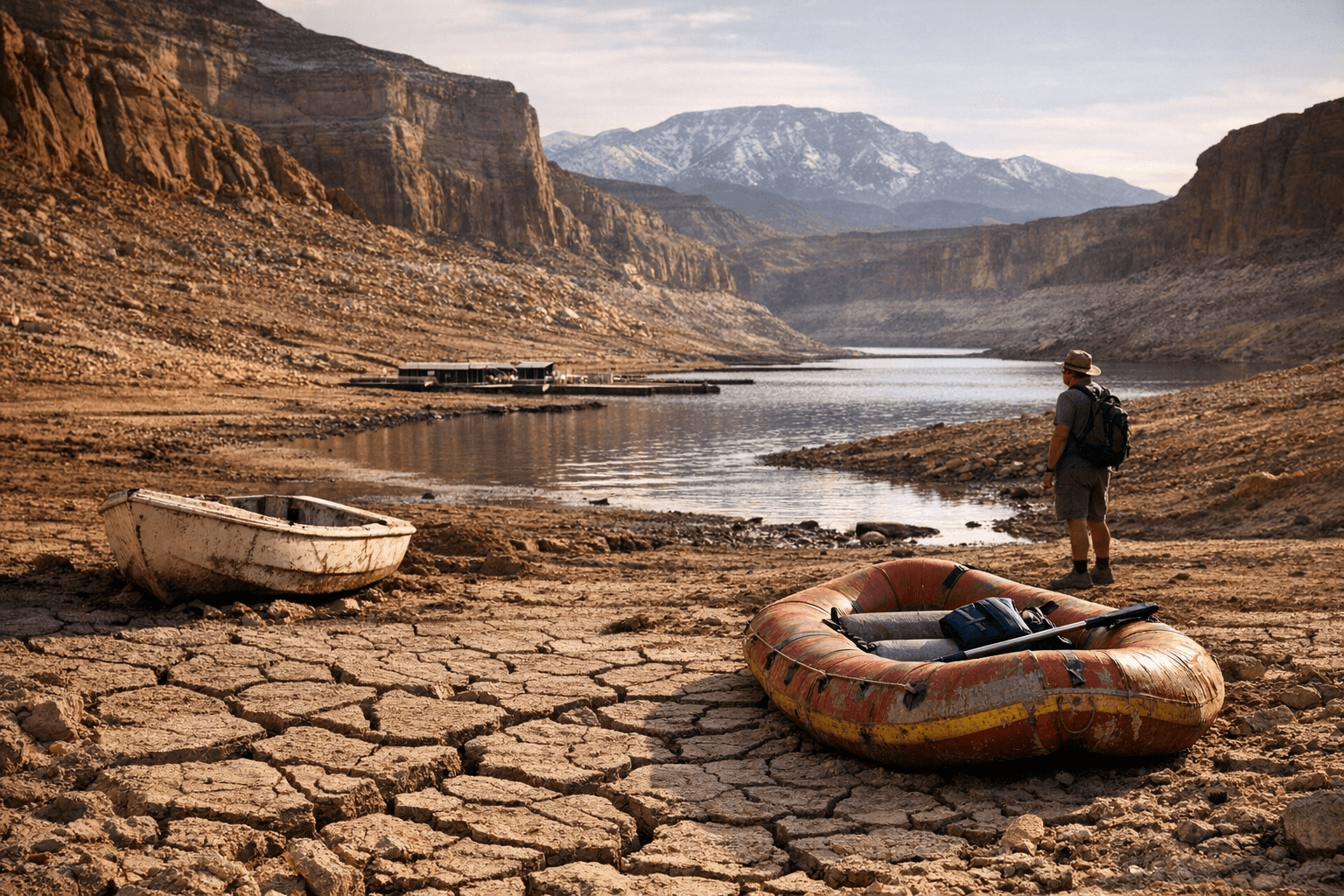
On land, the risk profile shifts toward fire. Soils and vegetation are drying at a pace more typical of July than April, and early fire restrictions on BLM and Forest Service lands across southern and central Utah are a reasonable near-term expectation rather than a distant contingency. Municipal water-use restrictions have already begun appearing in some Utah communities ahead of summer. Slot canyon hikers in the Zion and Escalante corridors should also account for reduced pothole and seep availability; the moisture that typically replenishes those water sources through late spring arrived and departed months early this year.
The practical monitoring checklist for 2026 Utah adventurers starts with the U.S. Drought Monitor, which updates every Thursday and is the clearest weekly signal of further category shifts. The Utah Division of Water Resources publishes reservoir levels by basin, a useful proxy for late-season river flow potential. The BLM Utah fire restrictions page updates by district as conditions deteriorate; a jump to Stage 2 restrictions in your specific destination district is the clearest operational signal to begin reworking a backcountry itinerary. For river trips, check the relevant USGS stream gauge in the week before departure rather than relying on seasonal flow projections, which are tracking meaningfully below historical norms across the state this year.
This article was produced by Prism’s automated news system from verified source data, official records, and press releases, then run through automated quality and moderation checks before publishing. The system is built and supervised by the people who set the standards it runs under. Read our full AI policy.
Did this article answer your question?