Hampton Racquet Club anchors East Hampton tennis with access, instruction, community
Hampton Racquet gives East Hampton players a rare blend of 10 clay courts, lessons, camps, padel, and wellness, all in a semi-public setting built for summer use.
A club built for the summer decision
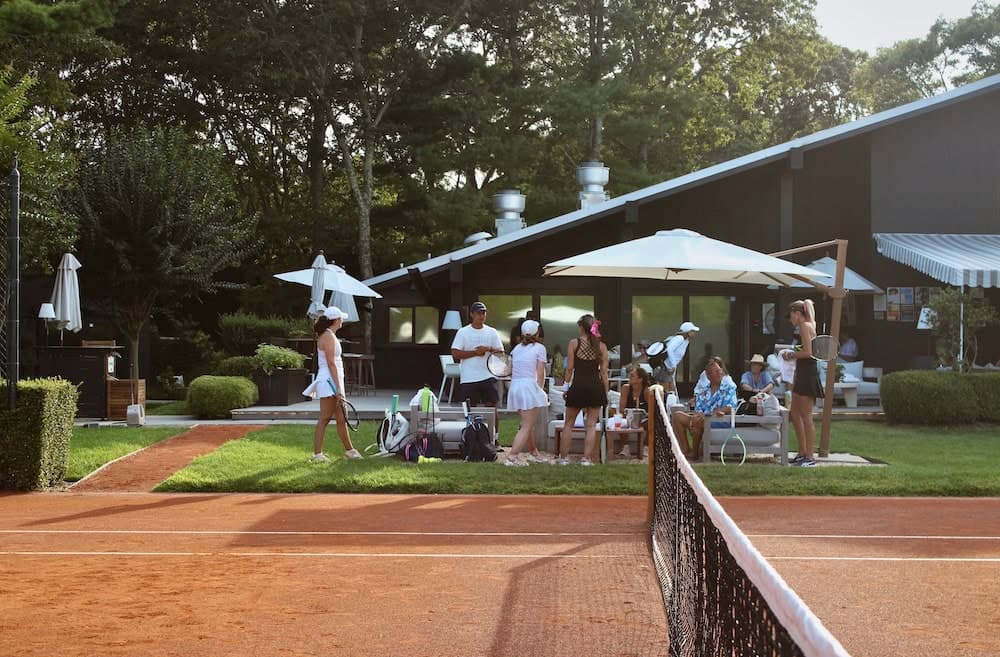
When the East End shifts into court season, Hampton Racquet is the kind of place that answers the most practical tennis question in the Hamptons: where can you actually play, learn, and bring the kids without it feeling like an entirely separate world? At 172 Buckskill Road in East Hampton, the club has long positioned itself as one of the oldest tennis clubs in the Hamptons, and its appeal comes from how much it offers beyond a simple court reservation.
The scale alone stands out. Hampton Racquet sits on 5.946 acres, and its tennis layout includes two red clay courts and eight Har-Tru Green Clay courts. That is a serious spread for a local club, and it gives players a place that can absorb summer demand while still feeling rooted in East Hampton rather than generic or resort-like. For families deciding where to spend a season, that matters as much as the name on the gate.
What kind of player this club serves
Hampton Racquet works because it does not behave like a place built for only one type of member. The club’s long-running identity is tied to serving players of many ages and abilities, and that breadth shows up in the way the property is used. It is not just for strong league players or vacationing adults who want an afternoon hit. It is also set up for people trying to get fitter, tighten up technique, and keep children moving through structured summer programs.
That range is part of what makes the club useful in the East Hampton tennis ecosystem. Town records describe the tennis camp use as a semi-public facility, which gives the place a different feel from a fully closed private club. In practice, that middle ground is important on the East End, where access often determines whether a place becomes a real part of daily life or just another beautiful property you can see from the road.
Court time, lessons, and the programming mix
The clearest draw is still tennis, and Hampton Racquet leans into it with a mix of access and instruction that gives the club its backbone. The current setup includes private lessons, group clinics, court rentals, events, and tournaments on the padel side, and the tennis operation is framed around getting people on court in a way that fits their level and schedule. That makes it useful for regular players who want structure and for newcomers who need repetition instead of one-off play.
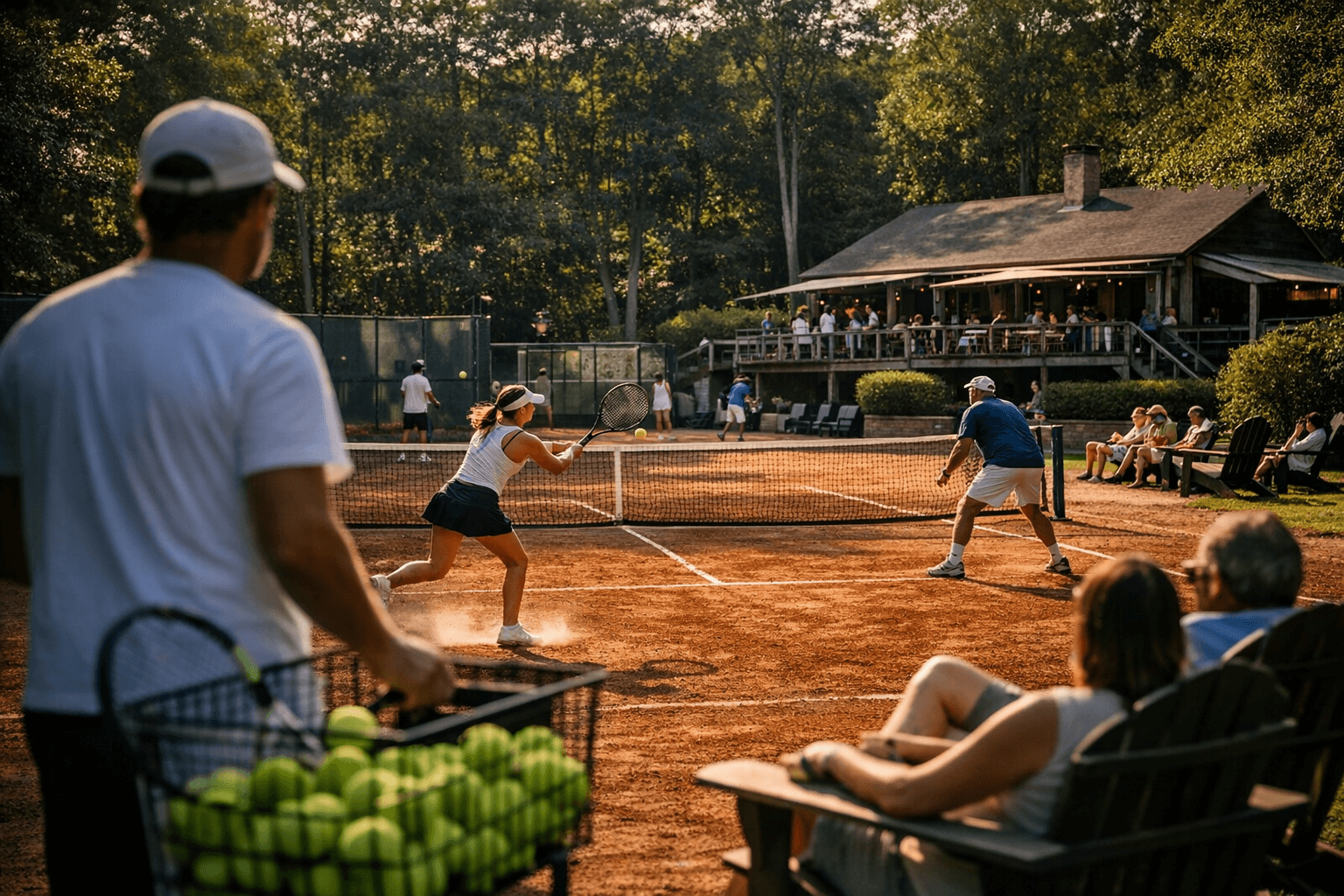
The club’s own materials say its broader mission is to support all ages and skill levels, and that wider lens is what turns a tennis club into a summer routine. If you are trying to place a child in camp, get a few clinic sessions in before July fills up, or simply keep a rally going with friends while you are in town, Hampton Racquet is built to accommodate that rhythm. It is a club that understands the Hamptons calendar, where a season can move quickly from quiet spring courts to packed summer afternoons.
Beyond tennis, the property now functions like a racquet-and-wellness campus
What also sets Hampton Racquet apart is how far it has expanded past tennis without losing its core identity. The club now offers padel, beach tennis, table tennis, badminton, an outdoor gym, yoga, Pilates, stretching, chess, laser tag, arts and crafts, and other wellness programming. It also includes Suong’s Kitchen, giving the property a built-in cafe and making it easier to spend an entire day there without leaving for lunch.
That breadth matters because it changes who the club can hold onto for a full season. A player may come for clay-court tennis, but a spouse, sibling, or younger child can still find something to do. In a region where summer time gets sliced into lessons, errands, beach stops, and dinner reservations, a place that can absorb multiple ages and interests is genuinely useful, not just impressive on paper.
A summer schedule that matches the market
Hampton Racquet’s 2026 season runs from June 1, 2026 through September 4, 2026, which tells you exactly how the club thinks about itself: as a seasonal anchor designed around the way East Hampton actually lives. That window is long enough to cover the heart of summer, but focused enough to keep the operation aligned with the Hamptons’ peak months.
The planning history reinforces that this is not a pop-up concept. The Town of East Hampton approved site plan and special permit relief on February 28, 2018 to legalize already-built structures and the existing tennis camp use. The property is identified as Suffolk County Tax Map parcel #300-184-3-11, and it sits in an A3-Residence zoning district. In other words, Hampton Racquet is not some improvised seasonal idea. It is a long-established, officially recognized recreational use that has continued to evolve inside a residential setting.
John’s legacy still shapes the club’s identity
Any story about Hampton Racquet also has to account for John, whose legacy still frames how the club presents itself. The club says he died on August 16, 2023 at age 63, and remembers him as someone who spent years building the place with generosity, kindness, fun, and authenticity. His devotion to teaching tennis to children is especially central to how the club tells its own story.
That matters because it explains the emotional tone behind the property’s practical growth. Hampton Racquet is not just adding sports and amenities for the sake of expansion. It is carrying forward a community-centered idea of what a Hamptons tennis club can be: part instruction hub, part social space, part family program, and part neighborhood fixture. Even as padel and wellness programming widen the footprint, the club still presents itself as something built around people first.
Why it matters in East Hampton
For East Hampton players, summer residents, and families trying to map out their season, Hampton Racquet stands out because it solves more than one problem at once. It offers clay courts in a familiar East Hampton location, instruction for different levels, camp use for children, and a wider menu of activities that makes the club feel usable rather than exclusive. The addition of padel courts in place of two existing tennis courts also shows that the property is adapting to how racquet sports are changing on the East End.
That combination is why Hampton Racquet matters. It is one of the few places in the area that can still function as a true daily destination, not just a place to squeeze in a match. In a Hamptons summer where access is often the hardest part of the game, that makes it an anchor.
This article was produced by Prism’s automated news system from verified source data, official records, and press releases, then run through automated quality and moderation checks before publishing. The system is built and supervised by the people who set the standards it runs under. Read our full AI policy.
Know something we missed? Have a correction or additional information?
Submit a Tip