Practical Guide to Hamptons Summer Tennis: Camps, Clinics, and Club Options
Peak Hamptons tennis weeks fill in days, not weeks; knowing your player profile before February is the difference between securing a spot and landing on a waitlist.
The Hamptons summer tennis season runs hard from late June through August, compressed into a window where court time is precious and the best programs book out fast. Whether you're placing a child in a junior camp, signing up for adult clinics, or planning a family drop-in week, the decisions you make in February and March will determine what's actually available to you in July. This guide walks through the full picture: who's running programs, what they include, and how to match your player profile to the right fit before the waitlists close.
Know Your Player Profile First
Before you contact a single program, be honest about what you're shopping for. The Hamptons tennis landscape breaks into three broad categories, each with different timing pressures and booking strategies.
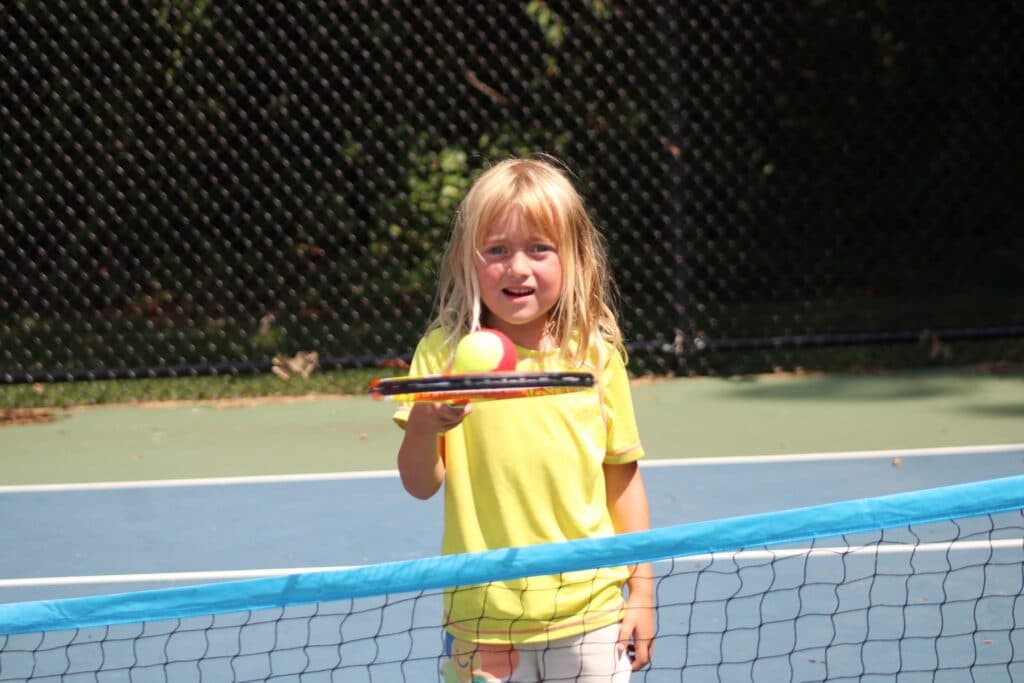
Junior campers, especially ages 5 through 14, benefit from structured week-long programs run by established academies or club-affiliated pros. Younger kids aged 5 to 9 should be in beginner clinics emphasizing fun, coordination, and the red/orange/green ball progression rather than anything resembling match pressure. Intermediates aged 10 to 14 are ready for week-long camps that blend tactical match play, point construction, and tournament preparation. High-level juniors at 14-plus with a UTR of 3.5 or above should specifically seek specialty weeks, including serve/return intensives, clay-court specialist sessions, and college recruiting-focused programs, and they should ask camp directors directly about match scheduling against similarly ranked opponents and whether the program provides UTR or national ratings exposure.
Adult players have the most flexibility but the least structure if they don't plan ahead. Carded clinics, drill sessions, drop-in mixer play, and level-specific social ladders are all available; the key is booking 2 to 3 sessions before you arrive rather than hoping for day-of availability, especially during peak weekends.
Family visitors staying fewer than 7 to 10 days occupy their own category entirely. Pre-book at minimum one private lesson and one or two clinics before you land. A private session focused on a single, targeted improvement goal followed by a clinic or practice match to apply it is the most efficient use of limited time on the East End.
Who's Running Programs
Three types of operators define the Hamptons summer tennis market. Established tennis academies, including those that maintain satellite East End programs alongside their New York City base, bring the most structured curriculum and typically the highest coaching pedigree. These programs often command premium pricing and fill earliest. Club-run clinics at country clubs and racquet centers offer multi-week formats for both juniors and adults, staffed by USPTA- or USPTR-certified pros, with the added advantage of full club facilities and consistent court access. Independent pros and boutique programs operating out of high school or municipal courts tend to offer week-by-week registration and more flexible scheduling, making them the practical choice for families with unpredictable summer calendars or tighter budgets.
Program Formats and What They Actually Include
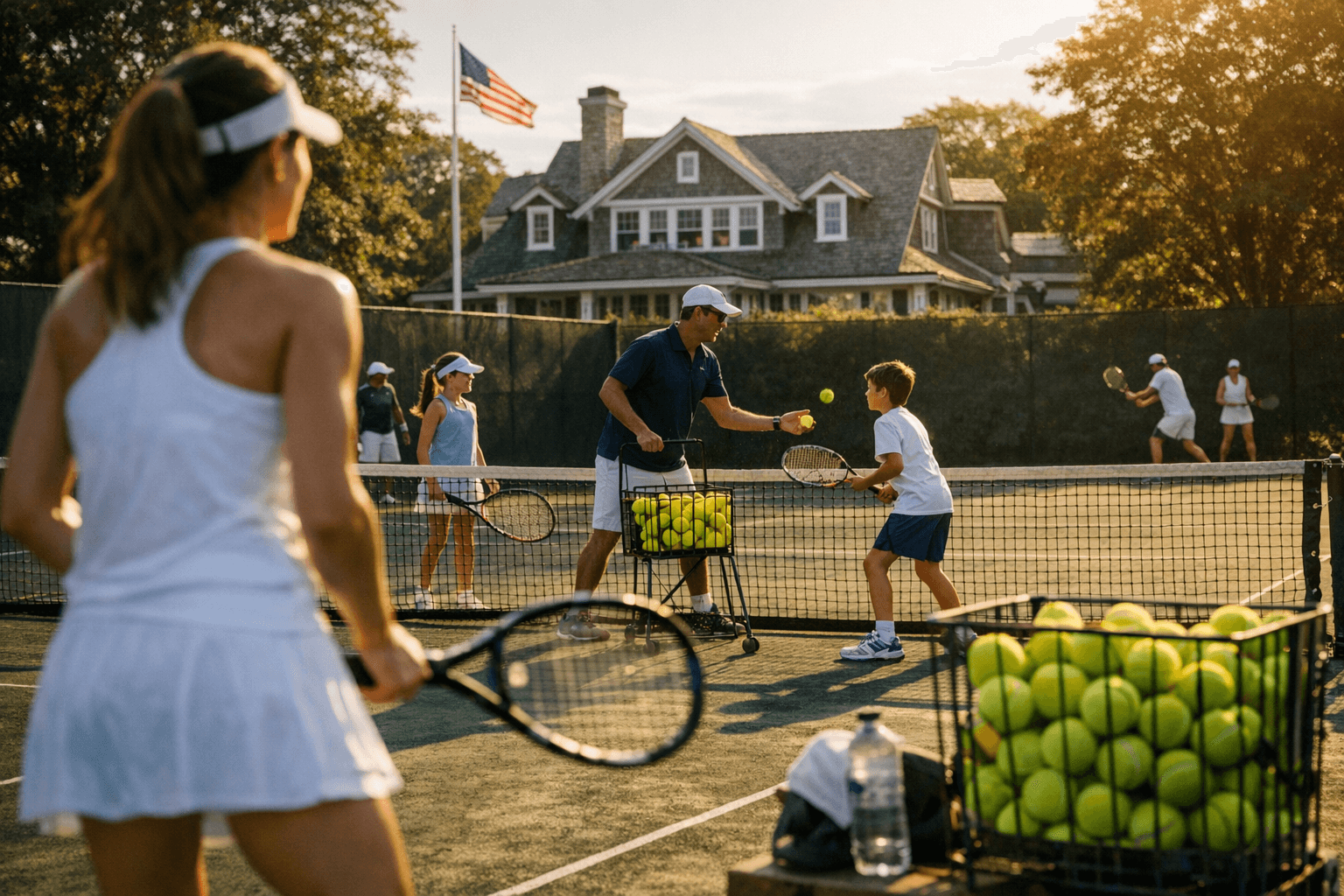
Full-day junior camps typically cover morning instructional blocks, drills, technique work, and live-ball match play, with supervised recreational time rounding out the afternoon. Half-day formats are standard for younger kids and remain the norm at municipal and school-based programs. Specialty weeks, serving niche demand at the advanced end, include serve-and-return intensives, clay-court specialist training, and high-level tournament prep for juniors on the college recruitment path.
On the adult side, expect drill sessions, mixer play, and level-specific practice matches. Some clubs and touring-pro partnerships bring in visiting professionals for one-off clinics, which tend to be popular and sell out quickly when announced.
Timing, Pricing, and the Booking Window
Most programs open early registration portals between late February and April, often with tiered pricing or early-bird discounts. Do not wait until Memorial Day weekend to start looking. July Fourth week and the late-July-through-early-August stretch are the two highest-demand windows: spots in well-regarded junior camps routinely fill within days of opening, and adult clinic slots in peak weeks follow the same pattern.
On pricing, the range is wide. Half-day junior programs at municipal or school courts sit at the more accessible end. Private club camps and programs run by high-profile or celebrity-branded academies operating seasonal satellites sit at the premium end. Scholarships and sliding-scale spots do exist through community programs; call organizers directly and ask early rather than assuming none are available.
On-the-Ground Constraints to Confirm Before You Book
Weekend traffic on the South Fork is a real variable. If your program runs Saturday morning and you're arriving from Manhattan Friday evening, build in the delay. Ask programs about their late-arrival and drop-off policies before assuming flexibility.
Court surface matters more than most families factor in. Confirm whether the program runs on Har-Tru, red clay, or hard courts, and whether that matches your player's goals and equipment. Clay-court weeks demand clay-specific footwear; pack a dedicated pair regardless. If you're visiting on hard courts all season but targeting clay tournament play, request a specialty clay week specifically.
Indoor backup plans for weather days are non-negotiable on the East End. Rain days in July and August are not rare. Ask every program explicitly what the bad-weather protocol is: do they move indoors, issue make-up days, or provide partial refunds? Get the cancellation and make-up policy in writing before registering.
Guest policies at private clubs vary significantly. Some programs are members-only; others accept outside registrants during summer. Confirm this upfront, as well as whether the program fee includes any club amenity access or whether day-guest fees stack on top.
Evaluating Any Program: What to Ask
When you contact a camp or clinic director, run through this checklist before committing:
- Coach-to-player ratio: look for 1:6 or better for junior programs; anything above 1:8 dilutes instruction meaningfully.
- Whether staff hold USPTA or USPTR certification, or carry college and pro-tour coaching experience.
- Daily schedule breakdown: drills, match play, conditioning, and hydration break timing.
- Hot-weather protocols, emergency contact procedures, insurance, and staff background check policies.
- Equipment availability, including demo racquets if needed.
- Hidden fees: registration charges, facility surcharges, equipment fees, or day-guest rates at private clubs.
Community Options and Low-Cost Access
Municipal tennis departments and community tennis academies on the East End run pop-up clinics and "try tennis" introductory events throughout the summer. These programs are explicitly designed to broaden access, often include equipment lending, and may offer family discount structures. They won't have the same coaching depth as premium academies, but for beginners and budget-conscious families, they represent real, useful court time with qualified supervision.
Before You Lock In Plans
Once you've matched your player profile to a program type and confirmed the logistics, use the local pro shop as a resource. Staff at well-stocked Hamptons pro shops can connect you with hitting partners, recommend ball types and string tension suited to local court surfaces, and point you toward programs that opened late or have cancellation slots. It is one of the most underused tools available to visiting players.
The short Hamptons season rewards early, specific planning. Programs confirm dates and coaching staff in the spring; that's the window to ask questions, verify credentials, and lock in spots before the East End summer rush makes availability someone else's problem.
This article was produced by Prism’s automated news system from verified source data, official records, and press releases, then run through automated quality and moderation checks before publishing. The system is built and supervised by the people who set the standards it runs under. Read our full AI policy.
Did this article answer your question?