USTA portal connects Hamptons players to courts, camps and tournaments
The East Hampton Indoor Tennis USTA portal puts Hamptons leagues, camps and tournament windows in one place, so players can plan without chasing club flyers.
If you are trying to build a Hamptons tennis calendar without piecing it together from club flyers, Instagram posts and hallway talk, the USTA-hosted East Hampton Indoor Tennis Outdoor Courts portal is the cleanest shortcut. It pulls local programs, camps, upcoming tournaments and a USTA League option into one place, which makes it easier to find real registration windows instead of guessing where the next match will come from.
What the portal solves
The value here is not just convenience, it is clarity. Hamptons tennis has long been spread across different channels, with one page showing courts, another listing camps and another handling tournament schedules. The portal brings those strands together, so the player who wants a competitive summer, and not just a casual hit, can see what is actually on offer without relying on word of mouth.
That matters most when you are deciding between a league, a tournament and a junior camp. A page that surfaces all three gives you a cleaner read on what kind of tennis is organized locally, which is especially useful in a market where the season moves fast and schedules fill before the summer is even in full swing.
Who gets the most out of it
The portal is built for players who need structure. Adults looking for league match play can use it to see whether there is a local USTA League pathway, while families can use the same listings to track camps and tournament entries without building a schedule from scratch.
- Competitive players can use it to map out league nights and tournament weekends.
- Parents can use it to find junior camps and competition pathways without bouncing between separate club pages.
- Part-time residents can use it to lock in tennis before they get to town, instead of hoping a court or clinic is still available.
That is the real Hamptons advantage of a portal like this: it reduces guesswork in a place where many players split time between the city and the coast, and where a late start often means missing the best organized options.
Where the outdoor tennis network actually sits
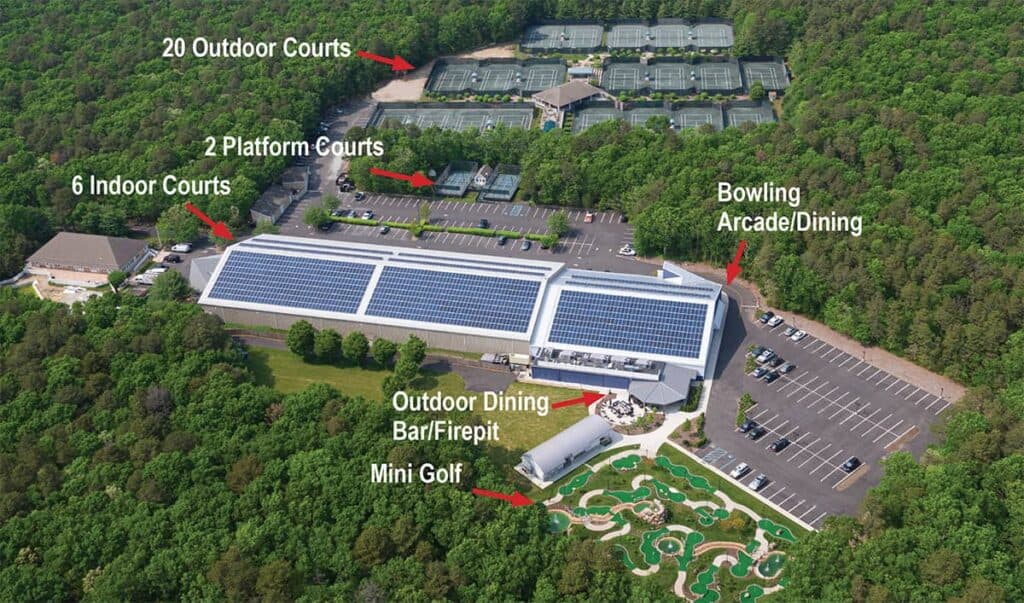
East Hampton Indoor Tennis helps explain why a local USTA hub is useful. Its home page described it as the “premier tennis facility of The Hamptons” and a “Full-Service Tennis Destination,” and said it had been operating since 1995. A court-rentals page said the facility offered 6 indoor courts, 18 outdoor courts, 2 platform/pickleball courts and 3 padel courts.

That court mix matters. In a resort market with heavy seasonal demand, a facility with both indoor and outdoor inventory can anchor organized play instead of leaving players to scramble for one-off openings. The portal fits into that ecosystem by giving players a direct route to competition and registration, rather than making them reverse-engineer where the organized tennis is happening.
The wider local landscape is older and more varied than a single club page suggests. East Hampton Tennis Club describes itself as a private cooperative tennis club established in 1969, which puts another long-running player into the area’s tennis culture. East Hampton Town also maintains a Tennis Information page that lists public court locations, including three courts at the Springs Youth Association Building at 60 Old Stone Highway in East Hampton.
That public listing is important because it shows structured tennis in the Hamptons is not confined to private clubs. Between a private cooperative club, a major multi-court facility and town-listed public courts, the area has multiple access points, and the portal helps sort them into something a player can actually use.
How to use the listings to build a summer schedule
The cleanest way to use the portal is to treat it like the starting point for your season, not the last stop. First, look for the organized play categories that matter to you, whether that is a local USTA League, a tournament calendar or a camp listing. Then match those dates to the places you can realistically play, such as East Hampton Indoor Tennis or the town courts in Springs.
From there, the decision is practical: do you want match play, instruction or just a reliable place to keep your game sharp? If you are a competitive adult, the league listing gives you a structure that is much harder to assemble by piecing together individual club notices. If you are a parent, the camp and tournament listings make it easier to sequence a junior summer without waiting for someone to forward you a flyer at the last minute.
What it says about Hamptons tennis
The portal also reflects a broader truth about tennis out here: organized play matters as much as open court access. A regional tennis scene can look abundant from the outside, but what really keeps it usable is registration, scheduling and a known competitive pathway. That is why a USTA-connected local listing has more practical value than a glossy summer brochure.
USTA TennisLink gives that context. It says USTA League is the country’s largest recreational tennis league, with more than 330,000 players nationwide, and it says the USTA sanctions thousands of tournaments. In other words, the East Hampton portal is not just a local convenience page, it is a doorway into a much bigger competition system.
The continuing interest is visible beyond the clubs themselves. Long Island Tennis Magazine published a feature titled “Tennis in the Hamptons 2025” on May 22, 2025, which shows that the area still draws attention as a place where summer tennis, organized play and local court access all overlap.
For Hamptons players, that is the real payoff of the portal: it takes a scene that has often lived in fragments and turns it into a workable plan. Instead of chasing rumors about where the next league, camp or tournament might be, you can start with a single hub and build the rest of your summer around actual tennis.
This article was produced by Prism’s automated news system from verified source data, official records, and press releases, then run through automated quality and moderation checks before publishing. The system is built and supervised by the people who set the standards it runs under. Read our full AI policy.
Did this article answer your question?