Sims 4 Origins mod adds identity, accents, passports, and study-abroad play
Origins turns where a Sim comes from into a living part of their story, from accents and passports to teen study-abroad arcs that can reshape a whole dynasty.

Why Origins matters beyond a feature list
Origins is one of those Sims mods that looks simple at first glance, then keeps unfolding the longer you sit with it. On paper, it adds native traits, accents, passports, genetic testing, and study-abroad play, but the real change is bigger than any one system. It asks a question The Sims 4 usually treats lightly: what does a Sim’s place of origin actually mean in their life story?
That is why Origins feels less like decorative flavor and more like a storytelling framework. Worlds stop being background scenery and start functioning as identity markers, something other Sims can read and react to. For legacy players, family historians, and anyone building multi-generational saves, that shift opens the door to stories about belonging, inherited identity, cultural friction, and the way a household changes when different histories collide.
A world system built for long-form play
The mod’s most ambitious move is the way it ties identity to geography across 30 worlds. Instead of treating a Sim’s home world as a label you forget after CAS, Origins makes it part of how the game understands the Sim. That matters because The Sims has always been strongest when location does more than decorate the map, and Origins pushes that idea into the systems layer.
The native traits structure also works across the full life span, from infants to elders. That makes the mod especially useful for generational storytelling, because identity is not locked to one life stage or one household setup. A founder Sim, their children, and their grandchildren can all carry place-based identity forward in different ways, which gives long saves a sense of continuity that base-game storytelling rarely reaches.
For players who build around family trees, migration arcs, or extended households, that is the kind of detail that changes how a save feels after dozens of hours. A world is no longer just where a Sim lives. It becomes part of who they are.
Accents are where the mod starts to feel lived-in
If passports and DNA are the scaffolding, accent systems are where Origins starts to feel socially messy in a good way. Sims can be assigned accent types, can like or dislike certain accents, and can even practice changing their accents in mirrors through a code-switching feature. That one interaction says a lot about what the mod is trying to do: it is not just tagging Sims with identity markers, it is giving them a relationship to those markers.
The social layer matters here. The ability to compliment another Sim’s accent, along with the custom buffs, notifications, and interactions built into the mod, turns identity into something that can shape everyday encounters. Instead of a trait sitting in the background, it can trigger emotional reactions and social responses that change the tone of a conversation.
That is the difference between surface-level flavor and real narrative fuel. If you want multicultural household stories to feel textured, accents and the reactions around them create a layer of recognition, curiosity, awkwardness, or pride that vanilla gameplay usually leaves implicit. In a legacy save, those small moments can do more storytelling work than a huge dramatic event.
DNA, passports, and the Sims version of ancestry
Origins also leans into the fantasy of tracing family history through systems that resemble real-world documentation and testing. The author’s feature list includes a “23andSul” DNA-composition system with 30 DNA composition results, plus custom passports. Together, those features give you a way to treat ancestry as something your Sims can discover, carry, and present rather than something you have to explain entirely in your headcanon.
This is where the mod becomes especially interesting for immigration-style storylines and identity-heavy households. A passport is not just an object here, it is a narrative signal that a Sim moves through the world with a documented origin. DNA composition results add another layer, letting family history become part of gameplay rather than background lore.
For storytellers, that means Origins gives you tools for arcs about discovery, displacement, mixed heritage, or the tension between what a Sim knows about themselves and what the game can formally track. It does not replace your imagination, but it does give it structure.
Study-abroad play gives teens a new kind of transition
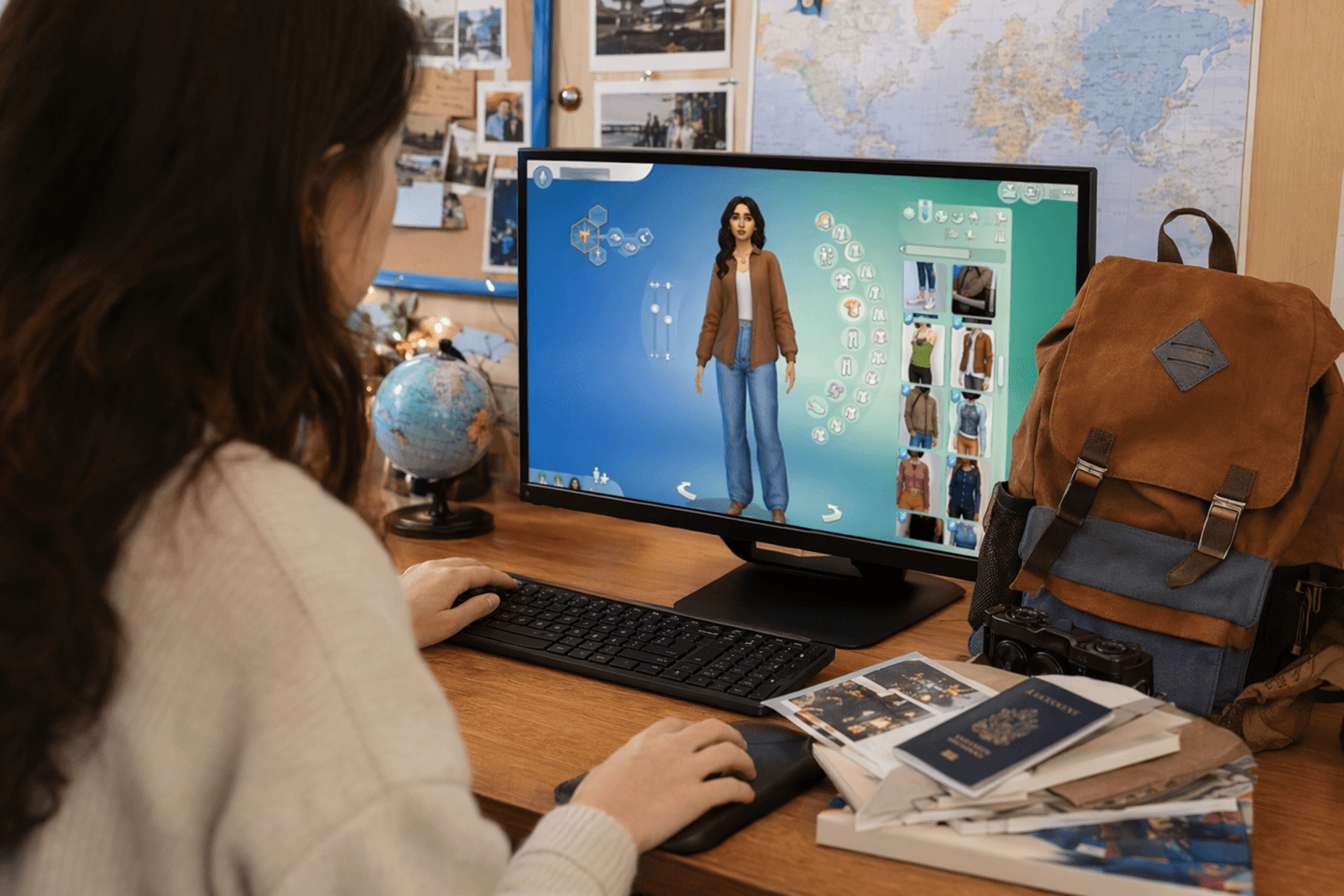
The SimGlobal Study Abroad Program is one of the clearest signs that Origins is built for long-form stories instead of quick cosmetic tweaks. It is framed as a rabbithole for teens, which is smart because adolescence is already one of the most narratively useful stages in The Sims. A teen away from home carries the emotional shape of separation, independence, and cultural adjustment in a way that fits neatly into legacy gameplay.
Study-abroad arcs work because they create a break in routine without breaking the save. A teen can return changed, carry new identity traits, or simply become part of a family story that now includes travel, education, and distance. That gives you a more believable transition into young adulthood than the usual skill-grind-to-career pipeline.
For players who enjoy boarding-school energy, exchange-student narratives, or family stories with a moving part in another world, this is one of the mod’s most promising systems. It helps turn a teen Sim into someone whose life has actually expanded beyond the home lot.
How it fits into The Sims 4’s existing geography
Origins lands well because The Sims 4 already encourages players to think in terms of neighborhoods, travel, and local identity. Electronic Arts has long described the game around choosing how Sims look, act, and dress, traveling to different neighborhoods, meeting other Sims, and learning about their lives. Origins takes that basic framework and pushes it toward deeper cultural specificity.
That also connects to official world design. Tomarang, the Southeast Asian-inspired city introduced in For Rent, showed how location can carry storytelling weight through its look, feel, and the kinds of households it supports. For Rent itself centered multi-family living and introduced new Residential Rental lots, which already nudged players toward more layered domestic stories. Origins builds on that same logic, but hands more of the identity machinery to the player.
In other words, if official content gives you a place with texture, Origins gives you the systems to make that texture matter in everyday play. It is a fan-made extension of a design philosophy The Sims already uses, only with more emphasis on heritage, mobility, and social consequence.
How to tell whether it is doing real narrative work
The best test for Origins is not whether the feature list sounds impressive. It is whether the systems continue to matter after the first few hours, when the novelty of passports and accent types has worn off. If the mod keeps changing how you tell family stories, how Sims relate to each other, and how movement between worlds feels in a save, then it is doing something substantial.
A strong Origins save usually shows up in a few ways:
- native traits still matter across life stages, not just in CAS
- accents create reactions, moods, or social tension instead of sitting idle
- passports and DNA results become part of household history
- teen study-abroad stories change the direction of a legacy, not just a semester
That is why Origins stands out. It does not just add identity details, it asks The Sims 4 to treat identity as a system with consequences. For players who want migration, multicultural household drama, or a richer sense of where a Sim comes from, that can turn a familiar save into something far more intentional and replayable.
This article was produced by Prism’s automated news system from verified source data, official records, and press releases, then run through automated quality and moderation checks before publishing. The system is built and supervised by the people who set the standards it runs under. Read our full AI policy.
Did this article answer your question?