Can you put a tiny home on any parcel of land?
A lot can look affordable and still be wrong for a tiny home if zoning, utilities, access, or classification don't line up. The land decides legality before the floor plan does.
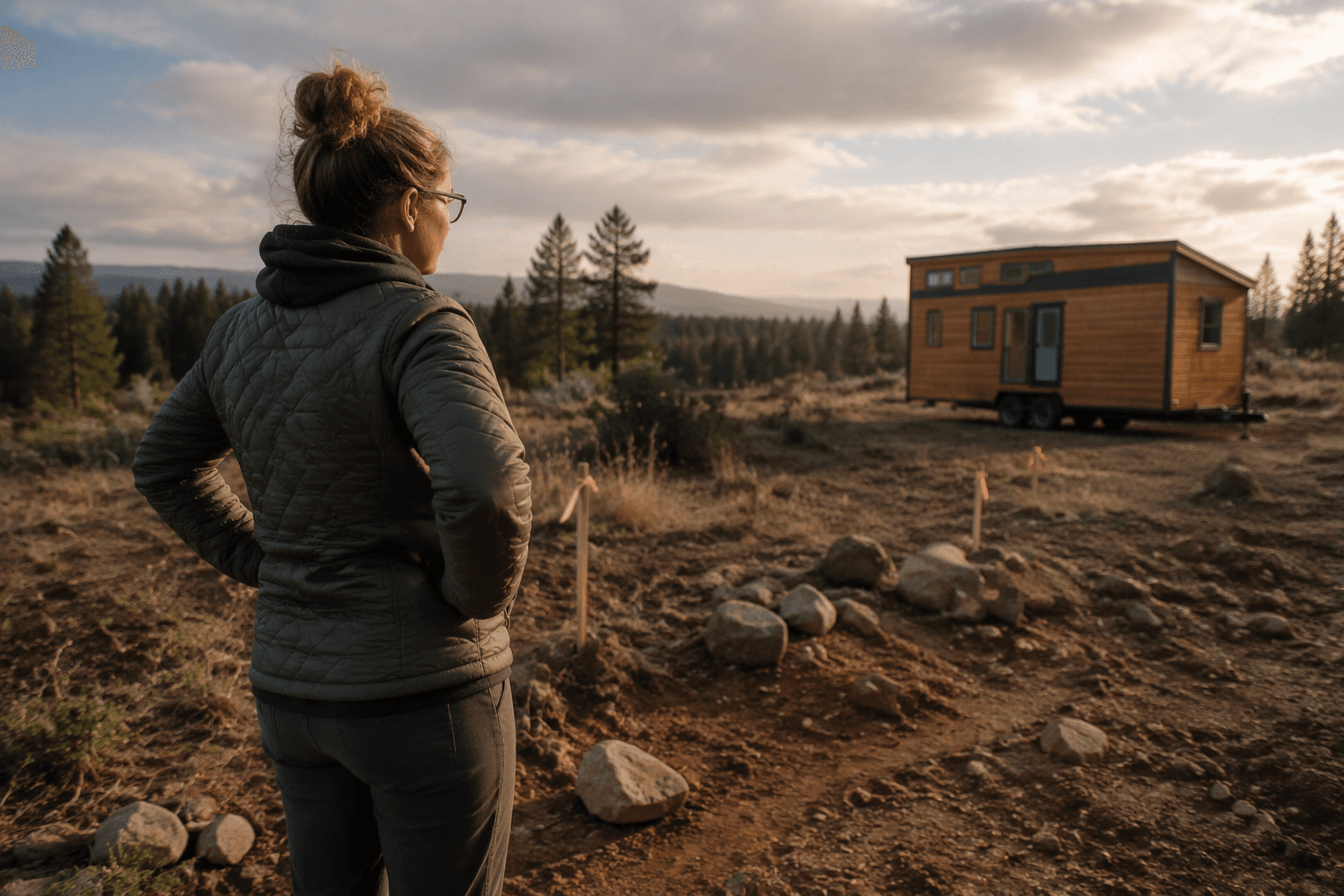
A cheap rural lot can look perfect on a listing and still fail on zoning, utilities, road access, septic or sewer, setbacks, foundation rules, or private covenants. The home shell is only part of the purchase; the real question is whether the land can legally and practically support it. Zoning, utility access, road access, septic or sewer, setbacks, and how the structure is classified can all decide whether the move works or becomes an expensive mistake.
Start with zoning, because the land does not care how cute the house is
Tiny-home buyers often make the first mistake before they ever tour a lot: they assume rural land means flexible land. It does not. Local rules can treat a tiny home as an accessory dwelling unit, a full dwelling, a moveable tiny house, or something else entirely depending on the jurisdiction, and that classification changes everything from permit paths to where the unit can sit on the parcel.
That is why the first pre-purchase check is always the zoning map and the local planning department. A parcel that looks open and buildable can still be limited by residential use rules, minimum lot sizes, or a requirement that the structure be placed on a foundation. In tiny-house terms, the question is not just whether you can fit the home on the land, but whether the land is zoned to accept the kind of tiny home you are buying.
Classify the home before you classify the dream
If the unit is on wheels, the THOW label matters because a tiny home on wheels is often treated differently than a permanent dwelling. A parcel that works for a foundation-built accessory unit may not work for a movable home, and some places care as much about permanence as they do about square footage. That means the same 300-square-foot house can be legal in one place and noncompliant in another.
The current policy picture shows how local this gets. Massachusetts’ Affordable Homes Act, signed in August 2024, made accessory dwelling units permitted by-right statewide. ADUs are now allowed by right in the commonwealth, and Massachusetts has official guidance on Mass.gov, including an ADU FAQ and a model zoning document. In California, the Department of Housing and Community Development updated its ADU Handbook in March 2026, and its December 2025 addendum summarizes state ADU law changes that took effect Jan. 1, 2026. California adopted Appendix Q for tiny houses, effective Jan. 1, 2020.
Utilities are where “affordable land” can turn expensive fast
A cheap parcel without service connections can eat a budget faster than a bigger lot with infrastructure already in place. Tiny homes still need water, wastewater handling, and power, and the site has to support those connections in a way the local jurisdiction accepts. If the parcel cannot connect to sewer, you need a septic solution that fits the lot and the rules; if it cannot connect to water, you need to know whether service can be extended or whether another approved source is even possible.
This is where buyers get trapped by the word “rural.” Rural does not automatically mean ready. It can mean no municipal sewer, limited utility capacity, and more moving parts before you can legally live there year-round. If a parcel cannot support septic or sewer access, water service, and electric hookups, the home itself may be the smallest part of the project.
Road access and setbacks can end the deal before foundation work starts
Even a parcel with the right zoning and utilities can fail on access. If emergency vehicles cannot reach the site, or if the driveway, easement, or frontage does not meet local standards, the parcel may not be approved for a dwelling at all. Setbacks also matter because a tiny home still has to sit where the code and the site plan allow, not just where there is open ground.
Foundation requirements are another filter. Some jurisdictions will only allow a tiny home as a permanent residence if it is placed on a foundation, which means a tiny home on wheels may not count the way buyers expect.
Private rules can be as restrictive as public ones
HOA rules, deed restrictions, and private covenants can stop a tiny-home plan even when the zoning looks favorable. A county may allow an accessory dwelling unit, but a neighborhood association may still limit size, placement, exterior appearance, or whether a secondary dwelling can be added at all. That is why a land search has to include the title paperwork, not just the county map.
The safest approach is to treat the parcel like a permit puzzle, not a lifestyle purchase. Check the recorded restrictions, ask whether the neighborhood has HOA rules, and confirm whether the property has any private limits on secondary structures.
State law can open doors, but only parcel by parcel
Virginia shows how much can change while the local checklists stay in place. SB 531 has a delayed effective date of July 1, 2027, and requires a locality to issue an ADU permit if the applicant meets certain requirements. It is set to make it easier to build a tiny house in a backyard when it takes effect.
This article was produced by Prism’s automated news system from verified source data, official records, and press releases, then run through automated quality and moderation checks before publishing. The system is built and supervised by the people who set the standards it runs under. Read our full AI policy.
Did this article answer your question?