Catskills tiny house resort shows compact living can feel spacious
A 260-square-foot Catskills tiny home felt “shockingly spacious” because the lofted layout, big window and simple furnishings made it work like a real test run.
A 260-square-foot house on wheels can feel surprisingly open when every choice inside it is pulling in the same direction. Joey Hadden spent two nights at A Tiny House Resort in South Cairo, New York, and the stay turned a Catskills getaway into a practical look at how tiny-house hospitality can work as a try-before-you-build option.
A Catskills stay that doubles as a tiny-house test drive
A Tiny House Resort markets itself as a Catskills waterfront getaway, and that setting matters as much as the floor plan inside the unit. Tourism listings place the Catskills about two hours from New York City, which makes the resort easy to picture as a short-break escape for urban travelers who want a real experience with downsized living, not just a weekend novelty.
That is the key shift in tiny-house hospitality: the stay is not only about sleeping in a small space, it is about testing whether the space actually works for daily routines. If you are considering buying, building, or moving into a mobile tiny home, a two-night stay like this one gives you a better read on circulation, comfort, and whether compact living feels restful or cramped.
The broader region gives the idea more weight. Business Insider noted in 2019 that Catskills resort owners saw millennials helping drive a comeback for the destination, and a tiny-house resort fits neatly into that renewal. The model works because it blends outdoor travel, design curiosity, and a real housing question into one stop.
Why the 260-square-foot layout feels bigger than it sounds
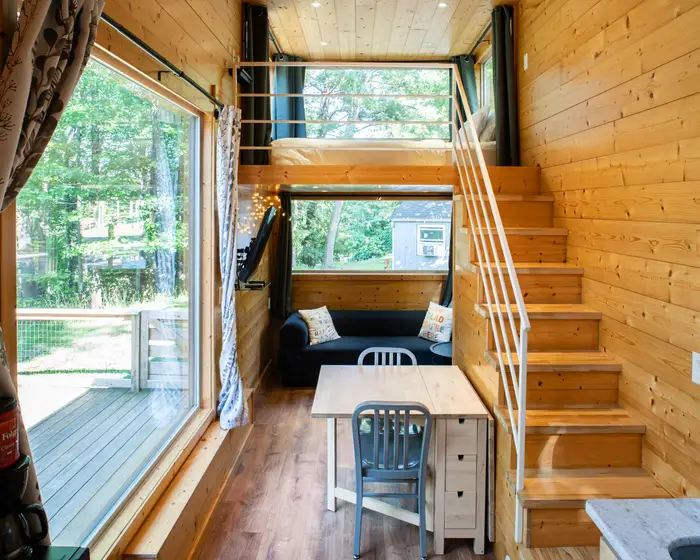
The unit Hadden stayed in was tiny by any standard, yet the interior choices made it feel “shockingly spacious.” The home used a wood-paneled interior, a loft bed, a staircase, a desk, a sofa, a large window, and a forest view to stretch the sense of space well beyond the footprint.
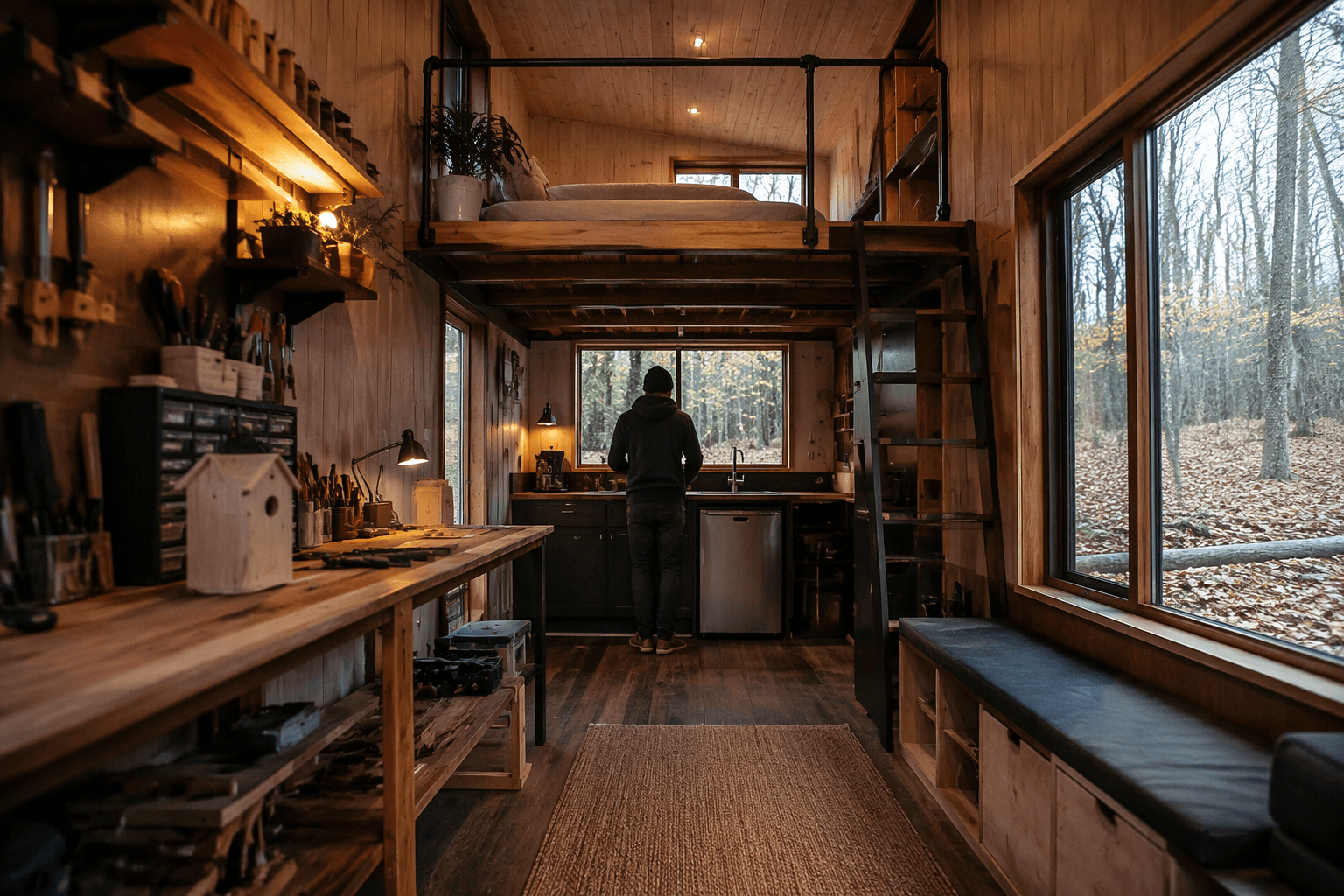
The loft bed is doing one of the biggest jobs. By lifting sleeping space out of the main room, the floor remains open for sitting, working, and moving around, which is exactly what a tiny home needs if it is going to feel livable instead of boxed in. The staircase, rather than a cramped ladder, gives the unit a more house-like rhythm and makes access to the sleeping area feel less temporary.
The main room works because it is not trying to do too much at once. A desk gives the space a place for practical use, a sofa creates a clear living zone, and the large window keeps the room from collapsing inward. Add the forest view, and the outside becomes part of the experience, which is often the difference between a small interior that feels narrow and one that feels calm.
The wood-paneled finish helps too. It gives the room a warm, cohesive look that softens the fact that the square footage is limited, and that cohesion matters in tiny homes where visual clutter can make a room feel smaller fast. In this case, the layout and the finishes work together, so the unit reads as a compact home rather than a stripped-down cabin.
What the resort adds beyond the house itself
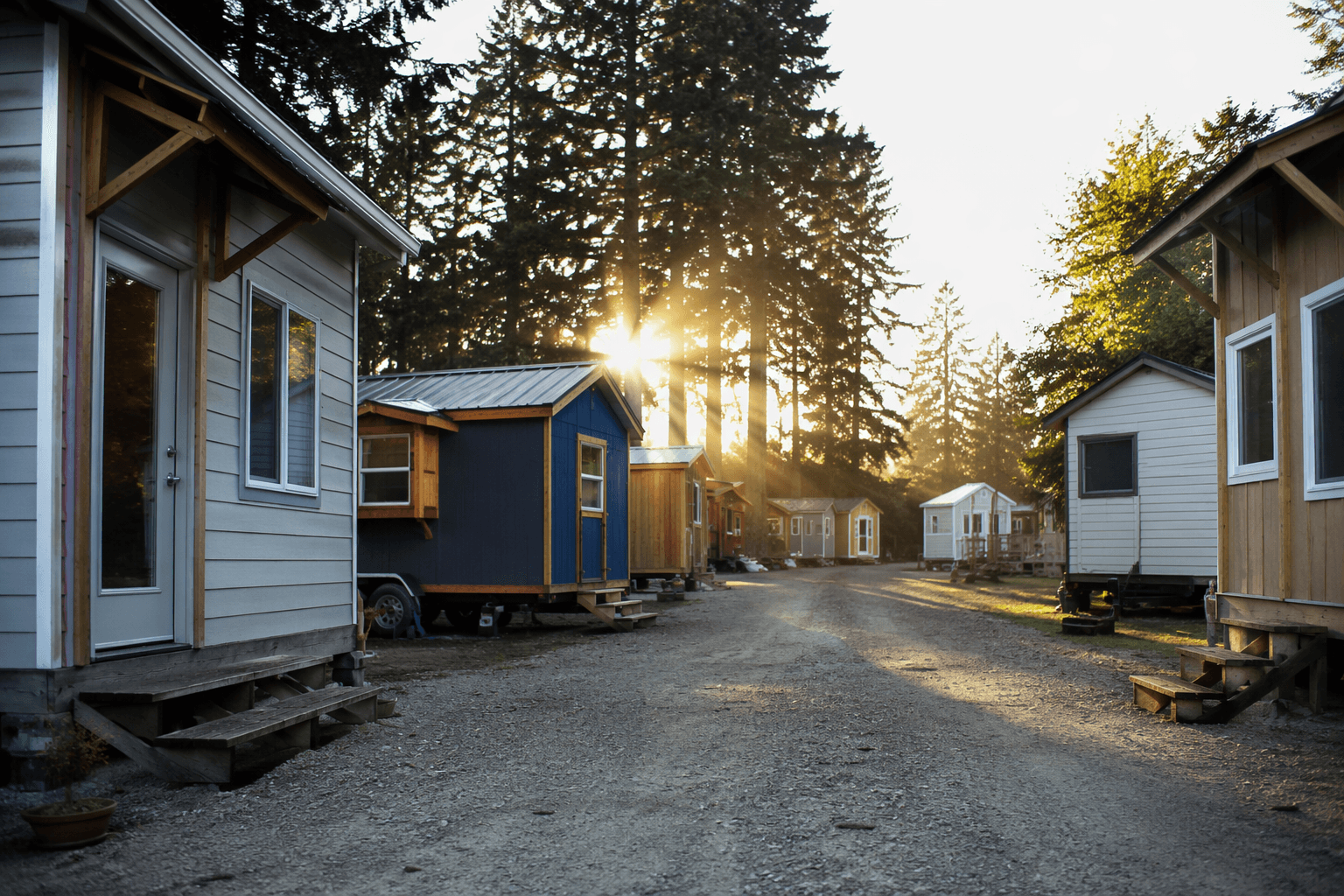
The resort is small, and that is part of its appeal. A Hudson Valley Magazine description says the property consists of four homes, a tiny store, a laundry, and a dog wash named the “Laundramutt,” which gives the place the feel of a tiny-house compound rather than a single rental tucked in the woods.
The activity list is broad enough to support a longer stay. A Tiny House Resort’s Facebook listing says the stay includes hiking, swimming, tubing, a heated pool, goats, free-range chickens, and crafts, all included in your stay. That mix matters because it keeps the resort from being a one-note novelty and turns it into a place where the setting, the amenities, and the housing format all reinforce each other.
That combination is what gives tiny-house hospitality real value in the market. A traveler can see how compact living pairs with shared amenities, how much time is actually spent inside a small footprint, and whether the surrounding property compensates for what the unit leaves out. In practical terms, the resort is selling a full experience, not just a bed.
What to look for when you are judging a tiny-house stay or build
If you want a rental to tell you something useful about tiny living, look at the same elements that made this Catskills unit work.
- A lofted sleeping area that frees the main floor for daily use
- A real staircase or other access point that feels comfortable to use repeatedly
- A sofa or seating zone that makes the space feel like a living room, not just a bedroom
- A desk or work surface if you expect the home to handle more than sleep
- A large window that brings in light and gives the room a visual extension
- A view that connects the interior to the setting instead of cutting it off
- Shared amenities like laundry, a small store, or outdoor activities if you are testing long-stay practicality
The bigger lesson from South Cairo is straightforward: square footage alone does not decide whether a tiny home feels livable. In a 260-square-foot unit, the right mix of lofted sleeping, simple furnishings, generous glazing, and a setting that opens to the forest can make the space feel much larger than the number on paper.
This article was produced by Prism’s automated news system from verified source data, official records, and press releases, then run through automated quality and moderation checks before publishing. The system is built and supervised by the people who set the standards it runs under. Read our full AI policy.
Did this article answer your question?