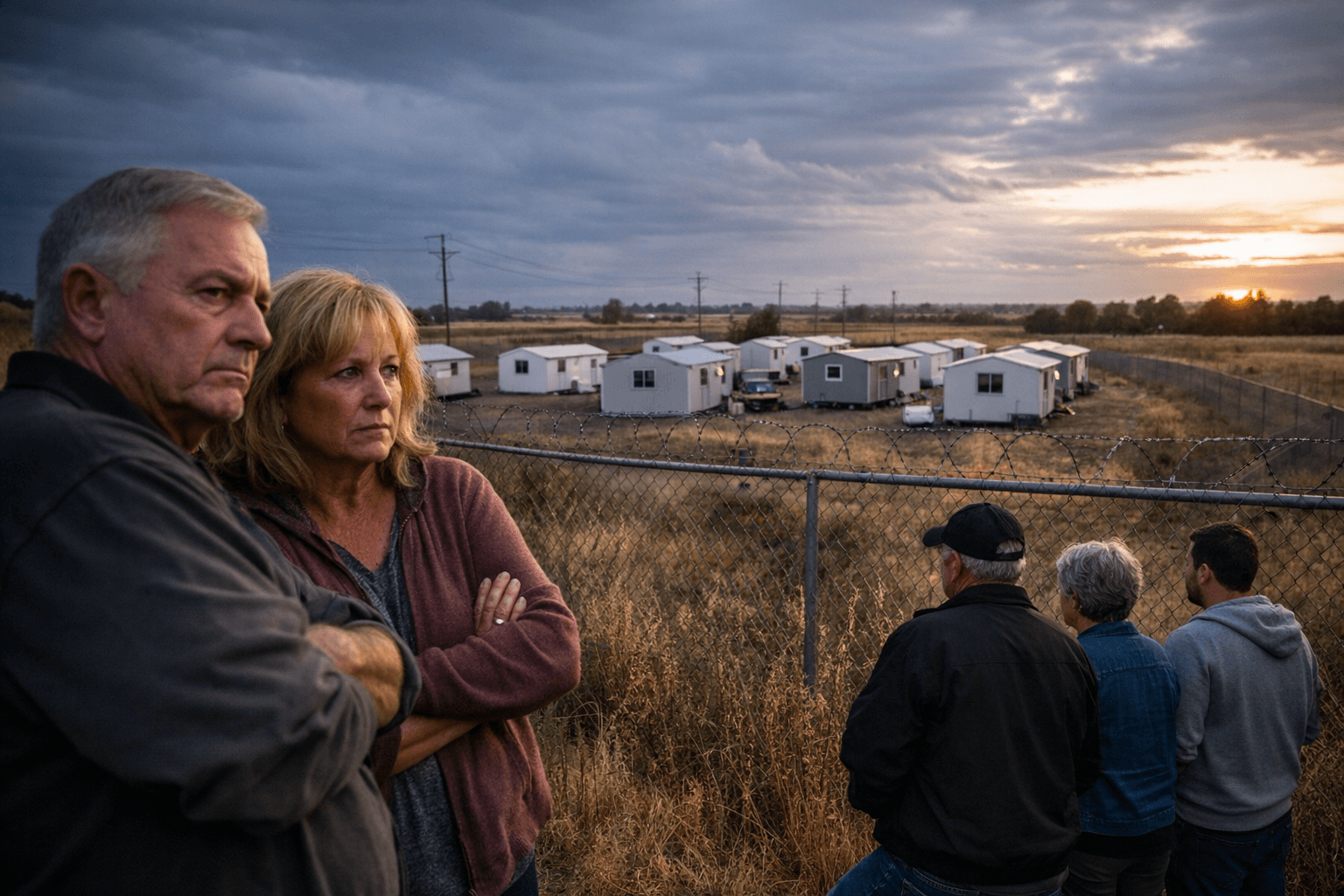
Minneapolis Nonprofit Opens 100-Unit Indoor Tiny Home Village for Homeless Residents
A converted North Loop warehouse holds 100 private micro-homes where the only entry requirement is sleeping outside.
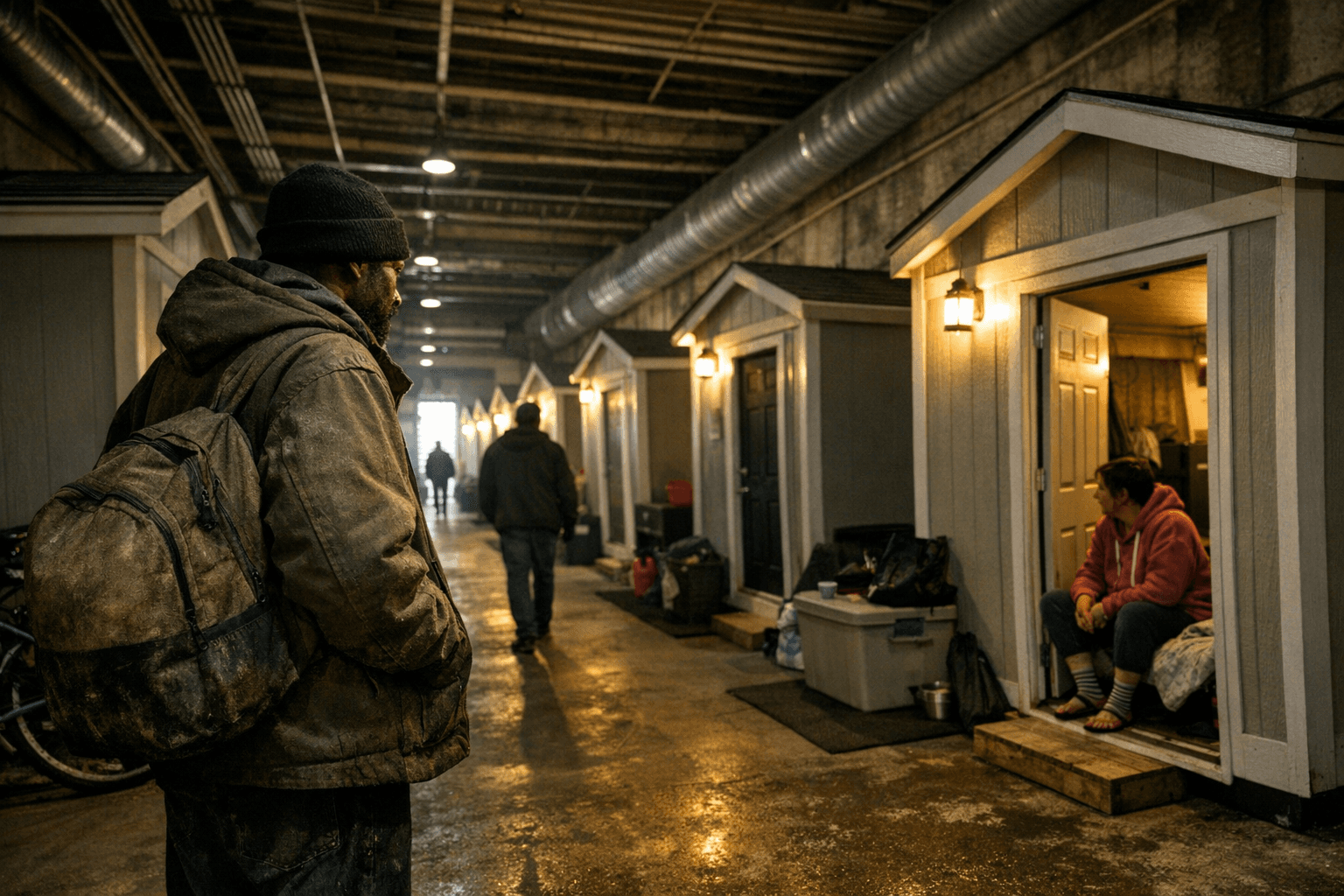
Inside a converted warehouse at 1251 N Washington Avenue in Minneapolis's North Loop neighborhood, 100 boxy micro-homes line the floor in rows, each just large enough for a bed, a small desk, storage, and a door that locks. That last detail matters most: Avivo Village gives people sleeping outside not a cot in a crowded hall, but four walls they control and a private space they can call their own.
Avivo, a Minneapolis nonprofit founded in 1960 as a county vocational center, opened the village in December 2020. The admission threshold is deliberately minimal. "The only criteria to Avivo Village is that you have to be sleeping outside," president and CEO Kelly Matter has said. That low-barrier approach reflects Avivo's broader stance on shelter access: "We are serving people, period. Human beings, brothers, sisters, mothers, fathers. So we want to make it easy for people to access shelter."
The timing of the project was not incidental. Minneapolis winters have dropped below negative 30 degrees Fahrenheit 12 times since 1891, and hypothermia can set in at any temperature below 35 degrees. The North Loop Neighborhood Association, which crafted a Good Neighbor Agreement with Avivo Village, describes the facility as "a dignified, safe, and COVID-aware alternative to outdoor encampments."
Inside, wraparound services include substance use disorder treatment, mental health therapy, medical care, employment skills training, and case management. Security is on site around the clock. But what distinguishes the model, according to program manager Heather Day, is what residents build among themselves. "The village is set up in a way that it really creates community, and a lot of people take on different roles," Day said. "We have a resident who is a barber, and he cuts people's hair. We have a resident who is very personable, so if somebody is feeling down, they're always the one that comes in. Everyone takes a part, just like our regular community would do."
Matter frames the village as proof of what coordinated action can produce. "Avivo Village is a tremendous example of what can happen when the community rallies together to address the issue of unsheltered homelessness," she said. "It offers stability and security first. A safe place out of the elements to take personal steps to permanent housing."
Funding comes from a mix of state, county, and city dollars, including CARES Act community development funding approved by the City of Minneapolis, alongside support from private foundations and individual donors. In October 2022, the city committed an additional $1.2 million to the shelter. Emily Bastian, Avivo's vice president of ending homelessness, acknowledged the cost directly: "It's not an inexpensive intervention. But when we do the math, we identify that a night in Avivo Village is no more expensive than a night in a correctional facility in our community."
What began as a two-year pilot project has now operated for over five years, with Avivo tracking impact metrics as recently as August 2025. The micro-homes themselves resemble, in the words of one fact-checking outlet, the containerized housing U.S. troops use on overseas military bases: utilitarian in form, but offering something a standard emergency shelter rarely provides, which is privacy on demand.
Know something we missed? Have a correction or additional information?
Submit a Tip