Removed Tiny Homes' Coolangatta 8.4 packs full-time comfort into 27.5 feet
A 27.5-foot tiny house with two lofts, a washer-dryer bath, and a kitchen built for real cooking, the Coolangatta 8.4 aims to cut daily compromises.
.jpg&w=1920&q=75)
At 27.5 feet long, the Coolangatta 8.4 is trying to solve the complaint that matters most in tiny housing: the daily compromise. Removed Tiny Homes has shaped this build around full-time living, not weekend novelty, and the result is a house that keeps pushing for ordinary comforts inside a very small footprint.
A footprint that is small without feeling stripped down
The name Coolangatta 8.4 points straight to the home’s 8.4-meter length, and that length sits on a triple-axle trailer finished in durable Colorbond steel cladding. Removed Tiny Homes, based in Brisbane, Queensland, says it delivers custom tiny homes across Australia, and this model reads like a deliberate answer to buyers who want compact living without giving up the basics that make a house usable every day.
That intent shows up in the way the company describes the build. The Coolangatta was tailored for clients who needed flexibility, storage, and a little extra breathing room, with the second loft reworked around how they planned to live. It is a one-of-a-kind home, but the logic behind it feels broader than a single client brief: make the space work harder so the owner does not have to.
Circulation and light do a lot of the heavy lifting
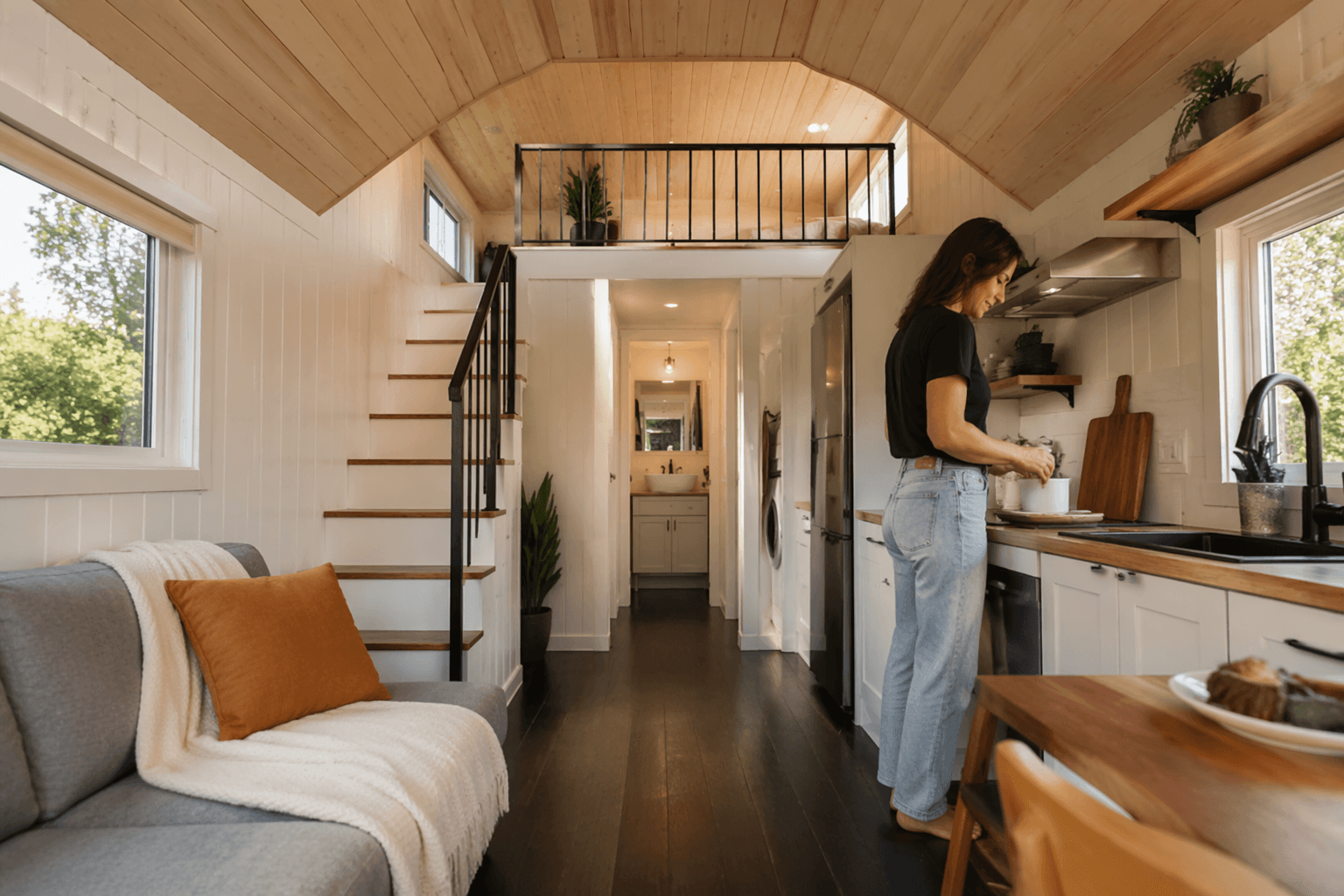
One of the easiest ways to make a tiny house feel tight is to break up the interior with too many dead corners. The Coolangatta 8.4 avoids that trap with generous glazing, including a picture window and double glass doors that keep the main floor open and bright. That matters in a home this size because daylight becomes part of the floor plan, not just a finishing touch.
The living area keeps the layout simple. An L-shaped sofa anchors the room without swallowing it, leaving a clear path through the house and making the central space feel like a proper lounge rather than a passage. In a tiny home, circulation is often the difference between a layout that feels clever and one that feels cramped, and the Coolangatta leans toward the former by keeping the main living zone readable at a glance.
The kitchen is built for actual meals, not just counter space
Kitchen design is where many tiny homes reveal their compromises first, but this one keeps the appliance list practical. The kitchen includes a two-burner propane stove, oven, sink, fridge-freezer, and a breakfast bar for two. That combination is significant because it covers cooking, storage, and eating without relying on portable add-ons or constant rearranging.
Storage is just as important as appliances here. Pantry space and upper cabinetry give the kitchen more utility than many tiny-home kitchens manage, and that directly affects how livable the house feels over time. A tiny home kitchen only works when it can absorb the clutter of everyday life, and this one is clearly designed to hold more than a few plates and a kettle.
The bathroom reads like a full-time amenity, not an afterthought
At the opposite end of the home, the bathroom keeps the same everyday emphasis. It includes a washer-dryer, a glass-enclosed shower, a vanity sink, a toilet, and its own exterior door. That exterior access is a small detail with outsized value, because it makes the room function less like a tucked-away utility box and more like a genuine part of a lived-in house.
The washer-dryer is especially telling. Laundry is one of those tasks that instantly exposes whether a tiny house is designed for a short stay or for permanent residence, and placing that equipment inside the bathroom signals that Removed is treating full-time use as the baseline. Pair that with the shower and separate entry, and the room starts to look like a feature list built for real routines.
The sleeping layout gives the home flexibility
The Coolangatta’s sleeping arrangement is where the design stops feeling merely compact and starts feeling adaptable. The main bedroom sits above the kitchen and bathroom, reached by a staircase with built-in storage, and includes a double bed, a TV, and more storage. A lowered standing platform helps with dressing and reduces the need to crouch, which is exactly the kind of small but meaningful adjustment that can change how a loft feels day after day.
A second loft sits above the living area and is accessed by a removable ladder. Right now it is used as a gaming or hangout space, but it can also serve as a second bedroom. That flexibility gives the home a broader use case, whether the owner wants an office, guest space, or a private retreat that can shift as life changes.
Climate control is covered too, with a mini-split air-conditioning unit and a ceiling fan helping the house stay comfortable across seasons. In a tiny home, comfort is never just about square footage. It is about whether the temperature, airflow, and sleeping spaces can keep pace with daily life.
Why this model matters inside Removed Tiny Homes’ range
The Coolangatta 8.4 also helps place Removed Tiny Homes in the wider market. The company says its standard tiny homes stay within road-legal parameters of up to 4.3 meters high, 2.5 meters wide, and 10.0 meters of body length, or 12 meters including the draw bar, with a maximum weight of 4.5 tonne. Queensland Government rules classify vehicles weighing 4.5 tonnes or more as heavy vehicles, which is part of the practical reality behind any build this size.
Removed says its standard homes run on 15-amp mains power, with solar and off-grid packages available, and it offers three all-inclusive off-grid packages for different budgets and locations. Its website also markets classic tiny homes at 25 to 35 square meters from $128,990, while its Tiny Mansions range runs from 60 to 70 square meters from $204,990. That wider lineup shows where the Coolangatta sits: not as a toy version of a house, but as part of a serious housing conversation.
Removed also includes a free custom design package in its design consultations, with a 3D model, photorealistic renders, full drawings, and an inclusions list. That is a useful clue to how the company sells itself, because the pitch is not just about style. It is about translating a client’s daily routine into a build that can support it.
At 27.5 feet, the Coolangatta 8.4 is still undeniably tiny. What makes it notable is how stubbornly it refuses to behave like a compromise, and that is exactly the challenge Removed Tiny Homes seems determined to meet.
This article was produced by Prism’s automated news system from verified source data, official records, and press releases, then run through automated quality and moderation checks before publishing. The system is built and supervised by the people who set the standards it runs under. Read our full AI policy.
Did this article answer your question?