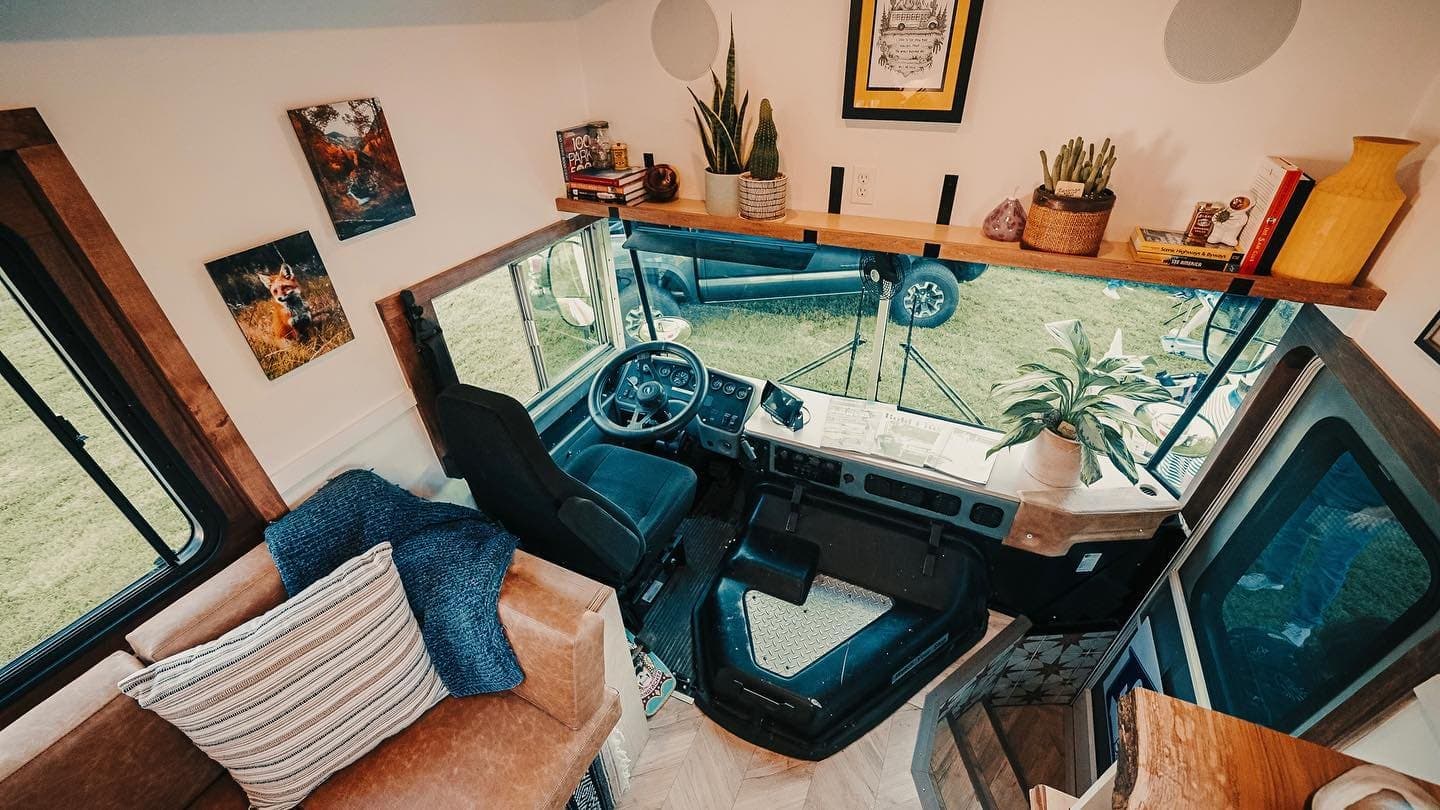
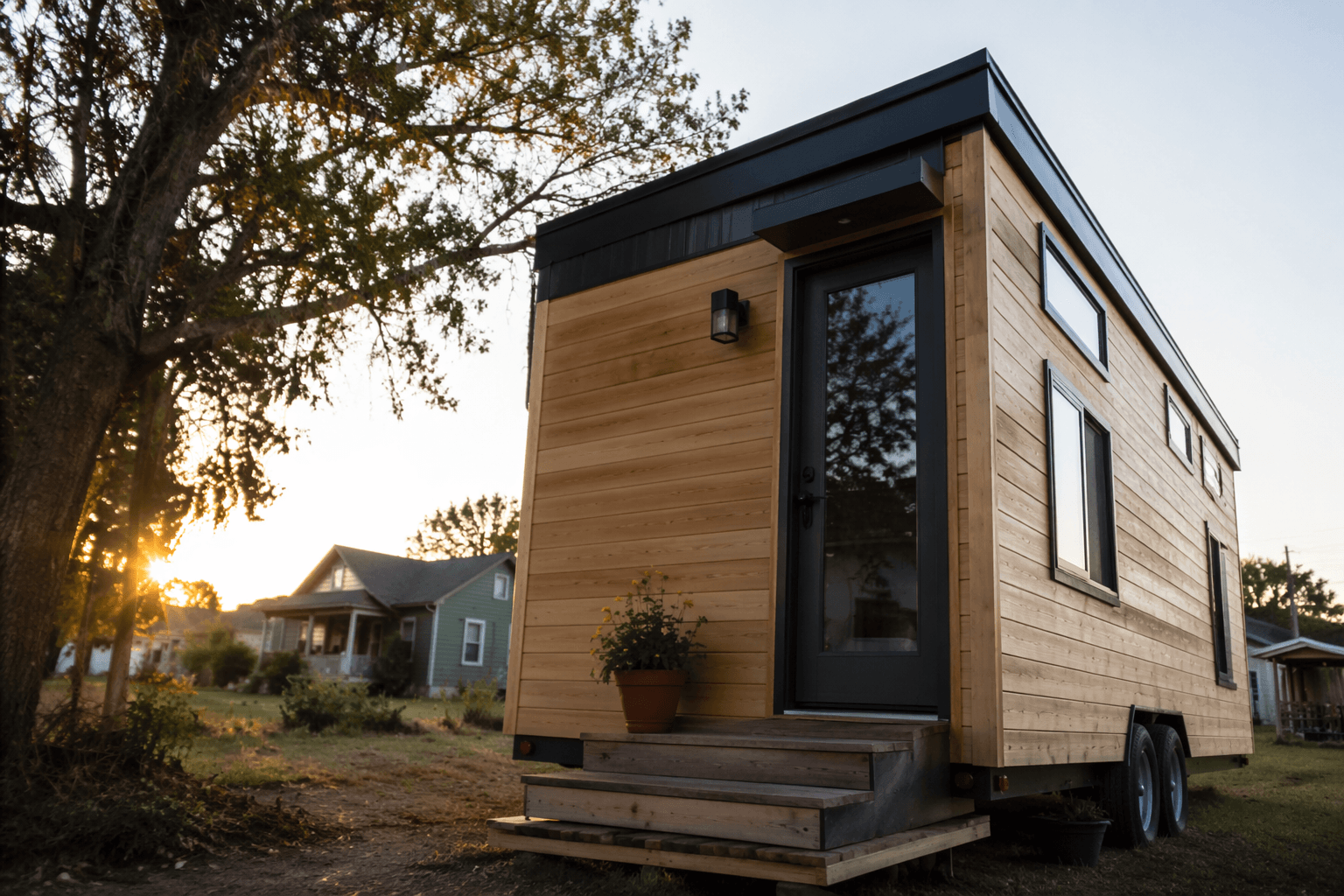
Tiny Tect’s Wildscape reimagines tiny-house living with stacked zones
Tiny Tect’s 8.4-meter Wildscape stacks sleeping, work, and lounge zones into one towable shell, proving tiny homes can gain privacy without losing light.
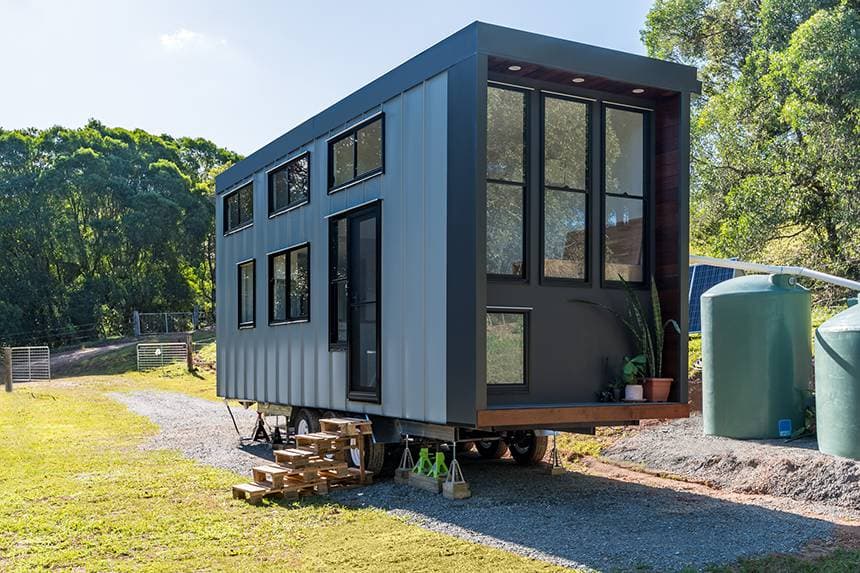
Tiny Tect’s Wildscape takes an 8.4-meter tiny house on wheels and turns it into a lesson in stacked zoning. Instead of defaulting to the familiar loft-over-living-room setup, the plan layers a raised lounge, a bedroom tucked below, a study above the dining zone, and a suspended net over the kitchen. That move gives the home a real sense of separation, not just a place to sleep.
A floor plan that works in layers
The Wildscape’s big idea is simple: every vertical inch has a job. Tiny Tect describes the home as built for Australian conditions, and the layout reflects that ambition, with a ground-floor bedroom, a loft bedroom, a study, an ensuite, and a full kitchen fitted with an oven and 4-burner cooktop. Full-height windows keep the stacked spaces from feeling closed in, which matters when a home this size is only 8.4m long and 4.25m high.
The strongest design move is the raised living platform. By lifting the lounge, Tiny Tect creates usable space underneath for a bedroom, which is a cleaner separation than the all-too-common single loft that forces sleeping, circulation, and storage into one cramped upper zone. The study floating above the dining area adds another layer of privacy, while the netted lounge above the kitchen gives the home a playful third hangout zone without claiming floor area.
That combination matters because it changes the way a tiny house gets used day to day. The Wildscape is not just trying to fit a bed into a shell. It is trying to support real routines, with distinct places to sleep, work, eat, and relax.
Three layout ideas builders can steal
The Wildscape is especially useful because it offers ideas that can be adapted without copying the entire build.
- Use height changes to separate functions. A raised living zone can open space for a bedroom or storage below, giving you privacy without adding width.
- Float the work zone above the meal zone. A study over the dining area keeps a remote-work desk from invading the main living area, which is a smart move for couples or families sharing one compact footprint.
- Turn dead vertical space into leisure space. The suspended net above the kitchen is a reminder that overhead volume does not have to stay empty. It can become a reading perch, nap zone, or extra casual lounge if the structure is engineered properly.
Each of those ideas adds livability, but each also adds complexity. More levels mean more framing, more careful load planning, and more attention to head height, stairs, and fall safety. In a towable home, those choices also have to stay within road-friendly limits, so every extra platform has to earn its place.
Why the Wildscape feels larger than its footprint
Tiny Tect says the Wildscape can sleep up to 4 adults and 2 children, which is a serious occupancy figure for a home this size. The company also says the model suits families and couples, and can work as an office or a weekender, which helps explain why the design leans so hard into zoning instead of one open multipurpose room.
The real win is circulation. Because the layout stacks functions instead of spreading them flat, the house can preserve separate paths through the space. That makes the interior feel more usable for everyday life, especially when more than one person is in it at once. For families and remote workers, that kind of separation is often the difference between a clever tiny home and one that actually functions.
The full-height windows are part of that success, too. They keep light moving through the levels, which helps offset the visual weight of the raised platforms and lofts. In a compact shell, daylight is not just a comfort feature, it is part of the architecture.
Specs, options, and pricing context
Tiny Tect’s brochure presents the Wildscape as an 8.4m tiny home on wheels that sleeps up to 4 adults and 2 children. It lists the home at 8.4m long and 4.25m high, with a ground-floor bedroom, loft bedroom, full-height windows, a study, an ensuite, and a full kitchen with oven and 4-burner cooktop. A separate Tiny Tect video description shows a 3-bedroom version at 8.4m long and 4.3m high, with a dishwasher and a spacious ensuite shower.
That variety matters because it shows how the Wildscape scales within the same shell. The 3-bedroom version suggests Tiny Tect has pushed the design even further toward family use, while keeping the footprint fixed at 8.4m. At the same time, the company’s current website says its homes start from $74,990, while one published article put the Wildscape starting price at $100,000, a sign that configuration and market conditions can shift the final number.
For buyers, that price spread is a useful reality check. A stacked, multi-zone tiny house can deliver a lot of function, but it is not a bare-bones build. More custom structure, more glazing, more fitted cabinetry, and more complex internal levels all push the design away from a simple entry-level shell.
Why the industry kept noticing it
Tiny Tect has kept the Wildscape visible beyond its first reveal. In March 2024, the company said Alison and Ben appeared on Living Big in a Tiny House to tell the story behind the model, and Tiny Tect also describes customer testimonials that praise Alison’s design work and Ben’s practical construction knowledge. That pairing helps explain the home’s appeal: the idea reads like architecture, but it still feels buildable.
The model later surfaced again as a DESIGN finalist in the 2025 Tiny House Industry Australia Awards, which says a lot about its staying power. Tiny Tect also positions its designs around off-grid living, natural heating and cooling, and materials that respect the earth, so the Wildscape fits neatly into a broader philosophy rather than standing alone as a novelty piece.
What makes the Wildscape memorable is not that it squeezes more into 8.4 meters. It is that it uses height to create real living zones, real privacy, and real daily usefulness. That is the shift tiny-house design keeps chasing, and this build shows how far a towable shell can go when the floor plan stops thinking like a loft and starts thinking in layers.
This article was produced by Prism’s automated news system from verified source data, official records, and press releases, then run through automated quality and moderation checks before publishing. The system is built and supervised by the people who set the standards it runs under. Read our full AI policy.
Know something we missed? Have a correction or additional information?
Submit a Tip