Cold Case Doc Solves 1990 Gay Porn Murder, The Gay Black Dahlia
A doc filmmaker got a cold-case killer to confess on camera to the 1990 dumpster murder of gay porn actor Billy London, dubbed the "gay Black Dahlia."
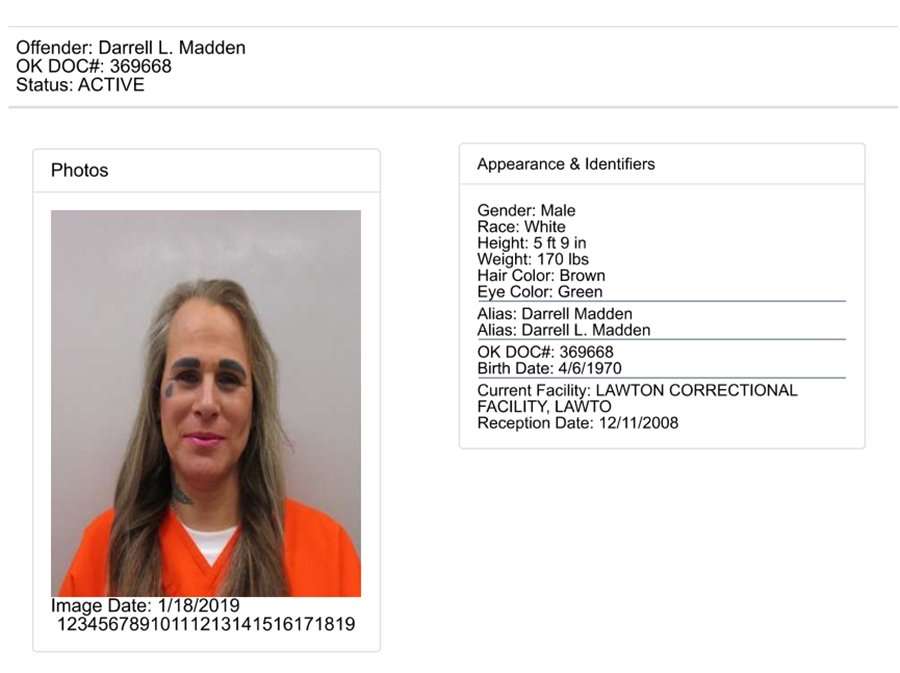
Darrell Lynn Madden walked onto the stage of a gay porn industry memorial awards show sometime in the early 1990s, unknowingly providing the piece of archival footage that would eventually unravel a 35-year-old murder case. That clip, unearthed during the production of Rachel Mason's documentary My Brother's Killer, helped connect Madden to the 1990 killing of William Arnold Newton, a gay porn performer known on screen as Billy London, whose head and feet were found in a dumpster in Hollywood.
The case had long been called the "gay Black Dahlia," an unsolved homicide that sat buried in the Los Angeles cold-case files while the industry and community around it were decimated by the AIDS crisis. Mason stumbled onto it while making Circus of Books, her 2020 documentary about her parents' West Hollywood adult bookstore. A colleague handed her an old Advocate article about the murder of Billy London, and the trail began. Newton's former boyfriend, Marc Rabins, later showed Mason a gay newspaper from the era packed with obituaries. Newton's face appeared among rows of young men who had all died of AIDS. "AIDS, AIDS, AIDS, murder," Mason said. "I was so disgusted. Like, no, you can't have a murder in this sea of people already dying — that's not right, not fair. We can't let this go."
Mason, working alongside editor-producer Dion Labriola, assembled a team of amateur sleuths and collaborated with LAPD cold-case detectives John Lamberti and Tamara Momayez. Amateur sleuth Clark Williams proved critical: digging through gay porn films from the era, he found Darrell Lynn Madden's name appearing repeatedly across several titles, then matched it to an interview in which Madden, described as a member of a white supremacist skinhead group, had admitted to carrying out two homophobic murders in Baltimore and Los Angeles. The archival awards show footage, which Mason called "basically a time capsule of that era," sealed the identification. "And in that footage you see someone who later became the suspected killer actually walk on stage," she said. "It's chilling."
What followed was the kind of interview sequence true crime obsessives will be dissecting for years. Lamberti and his team approached Madden, now a transgender inmate serving a life sentence for killing another gay man years after Newton's murder, without revealing the full scope of their interest. Madden volunteered the details herself. "We initially just said that we were there to talk about an old case from L.A., and it was Madden who actually brought up Billy first, and said, 'Oh well yeah, and there was this one case where somebody's head and feet got found in a dumpster,'" Lamberti recounted. "The fact that I walked out of there with a confession was just mind-blowing."
The confession was captured on camera, giving My Brother's Killer the kind of moment that invites comparisons to The Jinx, where Robert Durst's "I killed them all, of course" became one of true crime's most infamous recordings. Mason, who has described herself as a cultural documentary filmmaker more drawn to "characters and subcultures" than criminal investigations, framed her entry point into this world through a historical lens: "gay porn is actually a form of history," she told the Hollywood Reporter. "Before the 1980s you didn't see gay lives represented on television. Porn was one of the only places where those lives existed visually. So I started thinking: there must be incredible stories buried in that world. Billy's story turned out to be one of them."
My Brother's Killer premiered at SXSW. Whether formal charges for the 1990 Newton killing follow Madden's confession remains a question the legal record has yet to fully answer publicly, but for William Arnold Newton's family, the film has already delivered something the cold case never had: "a sense of closure," according to reporting on the documentary's reception.
This article was produced by Prism’s automated news system from verified source data, official records, and press releases, then run through automated quality and moderation checks before publishing. The system is built and supervised by the people who set the standards it runs under. Read our full AI policy.
Did this article answer your question?