CrimeReads spotlights five new true-crime books, including Murdaugh and Manson cases
CrimeReads’ five-book slate leans into the true-crime sweet spot: cases that are still cracking open, from Murdaugh to Manson, plus adoption, fraud, and a historic massacre.
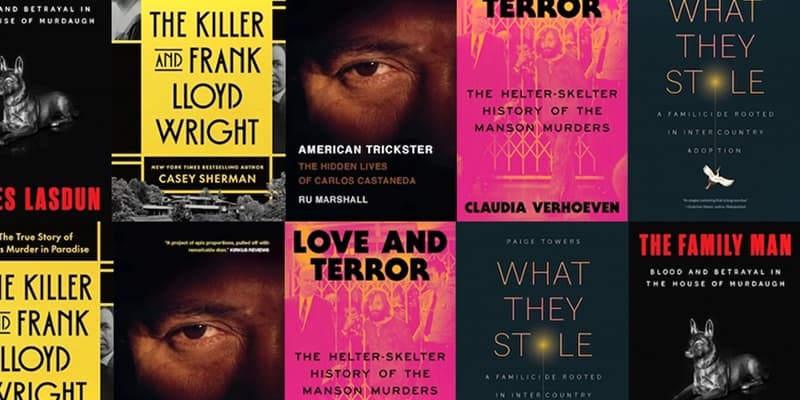
The best true-crime books in CrimeReads’ May roundup are the ones that still have something to pry open. That is the real thread running through the list: not just notorious names, but active questions, buried context, and the kind of reporting that can still shift how a case feels to readers.
The Family Man: Blood and Betrayal in the House of Murdaugh
James Lasdun’s Murdaugh book arrives with the kind of live-wire relevance true-crime readers notice immediately. W. W. Norton calls it “an immersive account” of a seemingly loving father’s transformation into a “family annihilator,” and the reporting angle is richer than simple case retelling: Lasdun drew on original interviews, prison phone-call transcripts, criminal-psychology literature, and the murder trial itself. That mix matters because the Murdaugh story has never really settled into the past.
The biggest hook is that the legal story is still moving. On May 13, 2026, the South Carolina Supreme Court overturned Alex Murdaugh’s double-murder convictions and ordered a new trial, citing jury-tampering concerns. For readers who follow true crime for the tension between courtroom certainty and documentary doubt, that makes this book feel less like a recap and more like a fresh lens on a case that keeps reopening itself.
American Trickster: The Hidden Lives of Carlos Castaneda
Ru Marshall turns to a very different kind of true-crime figure: Carlos Castaneda, the anthropologist who was never really an anthropologist, the bestselling author who was a fraud, and the cultural guru who became a cult leader. That combination gives the book a different kind of suspense, because the mystery is not who committed a single act, but how a myth was manufactured and maintained for so long.
What makes American Trickster stand out is the scale of the effort behind it. It is described as being twenty years in the making, which tells you Marshall was not chasing a quick exposé but rebuilding a buried story from the inside out. For true-crime readers, that is the high-value hook here: a long con, a public persona, and the slow work required to separate the performance from the person underneath it.
What They Stole: A Familicide Rooted in Intercountry Adoption
Paige Towers’ book reaches for a more complicated kind of case, one where family tragedy sits inside a much larger historical system. University of Iowa Press says What They Stole blends true crime, geopolitical analysis, and historical storytelling, and that is the right frame for a book about a familicide rooted in intercountry adoption. The crime is the engine, but the book also asks what structures made that family, and that violence, legible in the first place.
The Holt Adoption Program gives the book its unsettling scale. In 1955, Bertha and Harry Holt adopted eight Korean children, gained support through a special act of Congress, and helped establish a program that would facilitate the migration of tens of thousands of Korean children to the United States. That is a big, troubling story on its own, and Towers ties it to evangelical networks, race, and global inequality, which makes this title especially compelling for readers who want more than a single-case narrative. This is the sort of book that can change what a reader thinks the entire subgenre can do.
The Killer and Frank Lloyd Wright
Casey Sherman’s Taliesin book reaches back into one of the strangest and most devastating chapters in American crime history. The attack at Frank Lloyd Wright’s Wisconsin home and studio on August 15, 1914, was not just an architectural tragedy. Julian Carlton set fire to Taliesin and killed seven people, including Wright’s partner Mamah Borthwick and her two children, turning a celebrated modernist landmark into the site of one of Wisconsin’s deadliest mass murders.
That history gives the book a different kind of appeal than a modern courtroom narrative. The unresolved power here is less about a living suspect than about how violence becomes part of a public myth, especially when the victim is Frank Lloyd Wright and the setting is Taliesin. For true-crime readers who like literary, atmospheric cases where place and person are inseparable, this one has a very specific pull: it is about a massacre, but it is also about how a house can become a wound that never quite closes.
Love and Terror: The Helter-Skelter History of the Manson Murders
Claudia Verhoeven’s Manson book closes the roundup with a case that has been dissected so many times it can feel impossible to say something new. That is exactly why this title matters. Publisher materials describe Love and Terror as reexamining the murders as a prism of American culture, global avant-garde movements, revolutionary violence, and the age of spectacle, which suggests a book interested in why the Manson murders keep returning to public memory.
The underlying facts are as infamous as ever. On August 9 to 10, 1969, members of Charles Manson’s cult killed Sharon Tate and four others at her home, then murdered Leno and Rosemary LaBianca the next night. But the promise of Verhoeven’s book is not just another reconstruction of the crime scene. It is the chance to look at a case that has long lived in the overlap between crime, performance, and mass media, where the story is never only what happened, but why it became one of the most analyzed crimes in the United States.
CrimeReads’ roundup works because it understands the modern true-crime reader’s real appetite: not just for body counts or famous names, but for the friction points where a case still has a live edge. Whether the hook is a conviction that has just been overturned, a cult figure whose entire identity was built on fraud, or an old massacre that still casts a shadow over American culture, these five books all promise the same thing: another pass at a mystery that refuses to stay sealed.
Know something we missed? Have a correction or additional information?
Submit a Tip