Decades-old Malabar, Florida Jane Doe identified as Jeanette Marcotte
Skeletal remains found in Malabar, Florida in 1985 have been identified as Jeanette Marcotte, a Canadian woman last seen in Saskatchewan in 1981 or 1982, closing a nearly 40-year cold case.

Skeletal remains discovered in a densely wooded area in Malabar, Florida in January 1985 have been positively identified as Jeanette Marcotte, investigators say. The identification follows advanced DNA sequencing and forensic genetic genealogy that linked the long-known Malabar Jane Doe to a Canadian missing-person case from the early 1980s.
Local investigators with the Brevard County Sheriff's Office and the District 18 Medical Examiner's Office originally examined the remains in 1985. At the time, examiners estimated the woman’s age at death between 20 and 50 years and her height between 5 feet and 5-foot-7. No identification was found with the remains, the case was entered into the U.S. National Missing and Unidentified Persons System (NamUs), and the investigation eventually went cold.
Years later investigators resubmitted forensic evidence to Othram, a Texas-based forensic laboratory that specializes in advanced DNA sequencing. Othram developed a comprehensive DNA profile suitable for forensic genetic genealogy. This profile enabled the Florida Department of Law Enforcement’s forensic genetic genealogy team to conduct a genetic genealogical search that generated new investigative leads. Follow-up investigative work narrowed the woman’s possible identity and resulted in confirmation as Jeanette Marcotte.
Kristen Mittelman, Chief Development Officer at Othram, summarized the cross-border challenge and the role of DNA in the identification: “In a cold case like this, where a woman is reported missing in Canada and her remains are found in Florida, there is almost no way for investigators to piece that together except through DNA.” Mittelman added, “These are difficult cases to solve, but the technology is here and it works.”
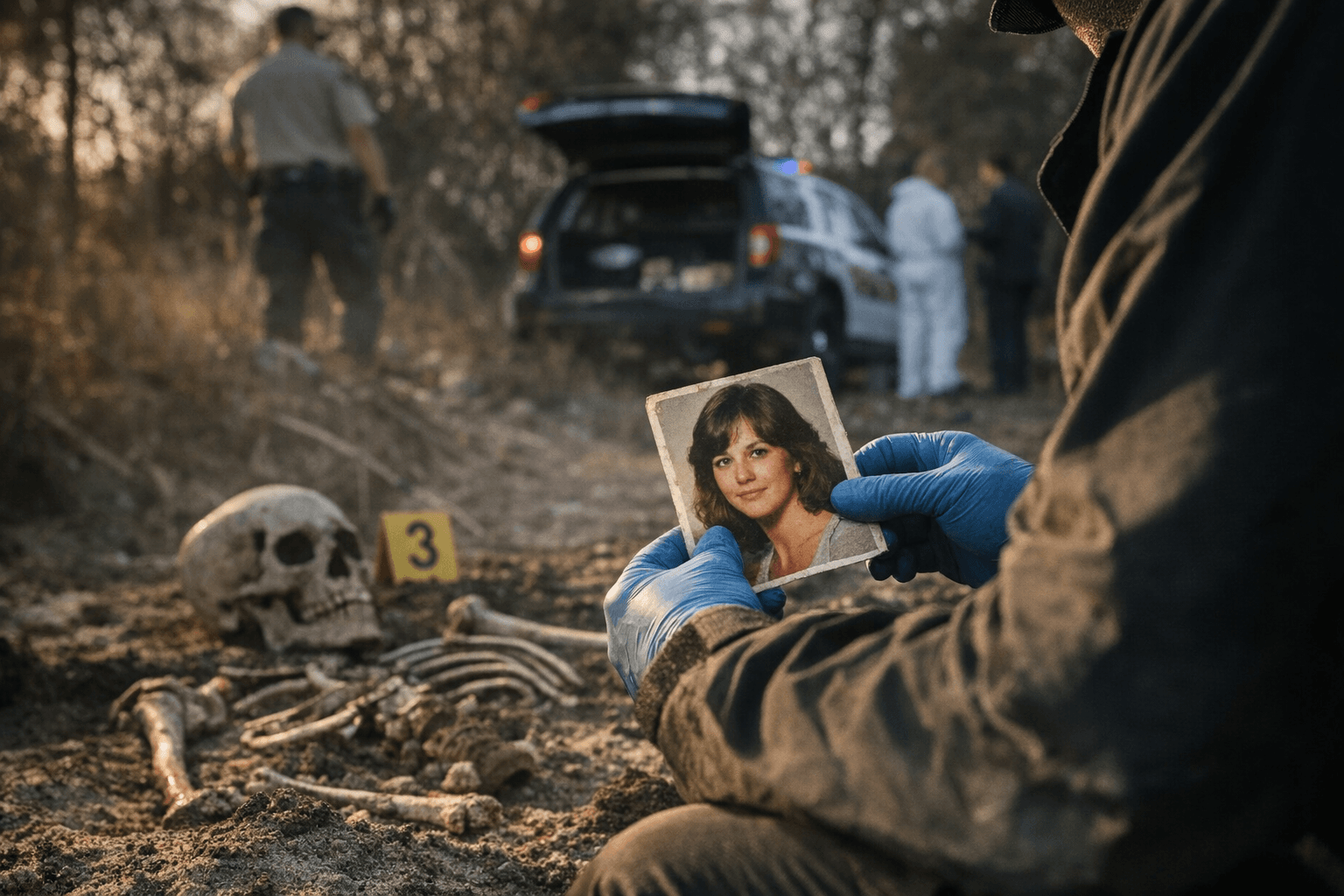
Available records and family reports indicate Jeanette Marcotte was last seen in Saskatchewan in 1981 or 1982 and had reportedly told relatives she was headed to Vancouver, British Columbia. Some accounts describe her as missing from Vancouver in the early 1980s; reconciling those reports, the clearest detail is that Marcotte was last seen in Saskatchewan and had said she planned to travel to Vancouver.
What remains unknown in public reporting is whether a cause of death has been determined, whether any suspects or charges are associated with the case, and whether family members have been located or issued statements. Law-enforcement agencies involved have not released detailed technical steps beyond confirming the use of advanced sequencing and genetic genealogy to reach the identification.
For the True Crime community and anyone following cold-case work, the identification highlights how forensic genetic genealogy can bridge jurisdictions and decades. The Malabar Jane Doe case demonstrates that evidence retained from decades-old investigations can yield answers when new scientific tools are applied. Expect investigators to update the public if further investigative steps or case developments occur; for now, the identification brings a name to a case that had been anonymous for nearly 40 years.
This article was produced by Prism’s automated news system from verified source data, official records, and press releases, then run through automated quality and moderation checks before publishing. The system is built and supervised by the people who set the standards it runs under. Read our full AI policy.
Did this article answer your question?