DNA Evidence Definitively Links Ted Bundy to Utah Teen's 1974 Murder
DNA confirmed Ted Bundy beat and strangled 17-year-old Laura Ann Aime 51 years after she vanished from a Halloween party in Lehi, Utah.
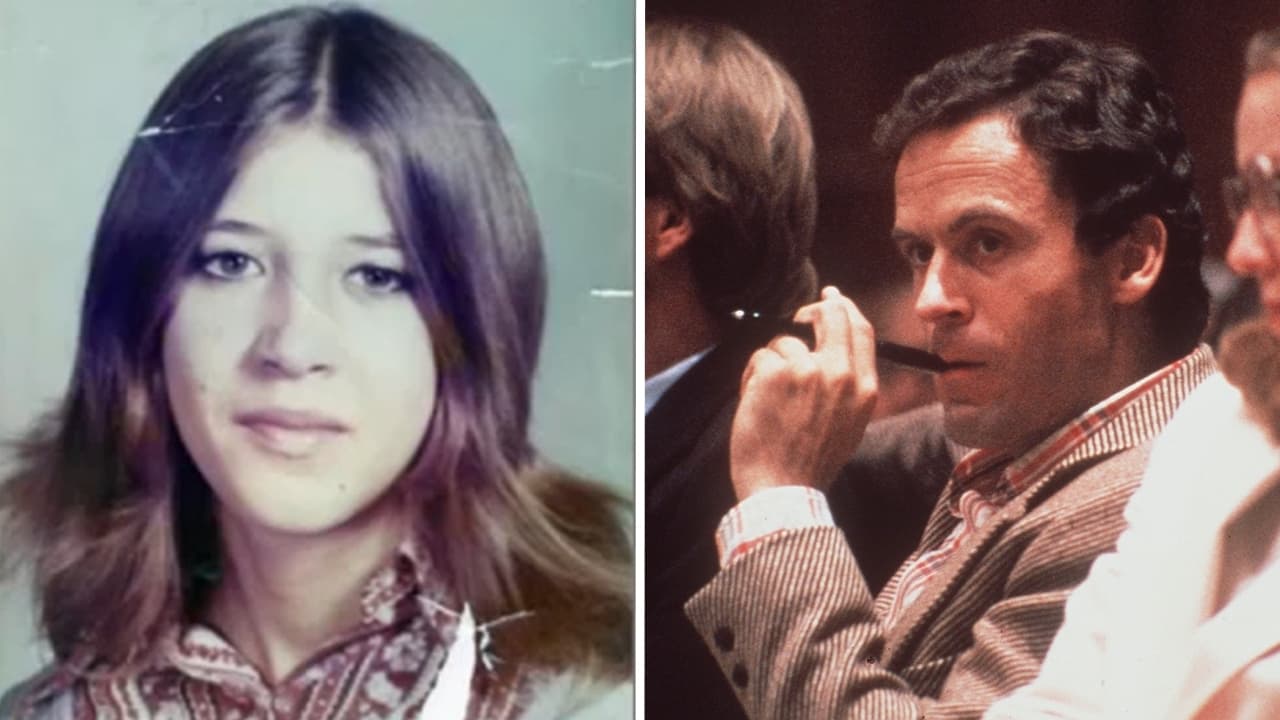
Fifty-one years after Laura Ann Aime left a Halloween party alone to make a convenience store run and never came back, the Utah County Sheriff's Office has closed her case with the two words true crime followers have long suspected: Ted Bundy.
Aime, 17, went missing Halloween night 1974. About a month later, her body was found by hikers on the side of a highway in American Fork Canyon, bound, beaten, and without clothing. Two college students discovered her body tossed several feet from the highway near State Road 92. Authorities said the evidence indicated she had likely been kept alive for several days after her abduction.
"We can now say, without a doubt, Ted Bundy did kill Laura Ann Aime," Utah County Sheriff Mike Smith said. "If Bundy were alive today, we would have pursued this case to the fullest extent, and we would have pushed this criminal case and asked for capital punishment and the death penalty from the Utah County Sheriff's Office."
The forensic breakthrough traces directly to a 2023 upgrade at the state crime lab. Utah Department of Public Safety Commissioner Beau Mason explained that new technology acquired that year allows investigators to extract DNA from samples even if they are small, degraded from age, or contain DNA from multiple people. That technology allowed them to identify a single male DNA profile, which they then submitted to a national law enforcement database. Bundy's DNA was a match.
In 2025, the sheriff's office had Investigation Sergeant M. Reynolds and Cold Case Detective J. Hall review the cold case, and those investigators found that more forensic work could be completed due to how science had "greatly evolved in the past several years."
The case had haunted investigators for decades despite a trail of circumstantial evidence pointing squarely at Bundy. At the time of Aime's killing, Bundy was living in Salt Lake City and studying law at the University of Utah. Bundy even referenced Aime before his execution, though authorities said he verbally acknowledged his culpability leading up to his execution but the case remained open until they could be sure. Aime's niece told investigators that Bundy "approached [Aime] multiple times before" and "kind of stalked her before taking her."
"The Utah County Sheriff's office has definitive proof that Theodore 'Ted' Bundy murdered Laura Ann Aime in 1974," the statement read. "Case evidence similarities indicated that the manner of abuse and the likely cause of death was comparable to the modus operandi of Theodore 'Ted' Bundy," the office added.
Bundy, who once bragged he killed at least 100 women, was executed in Florida in 1989 for the murder of 12-year-old Kimberly Leach after his arrest in 1978. He was one of the nation's most prolific serial killers, with at least 30 women and girls' deaths linked to him in several states in the 1970s.
The DNA profile can now be used by other law enforcement agencies who have long suspected Bundy of additional unsolved killings, Commissioner Mason said, adding that more families could receive similar closure. For the true crime community, which has debated Bundy's full victim count for decades, that prospect makes this confirmation more than the closing of one cold case file. It may be the key that reopens several others.
This article was produced by Prism’s automated news system from verified source data, official records, and press releases, then run through automated quality and moderation checks before publishing. The system is built and supervised by the people who set the standards it runs under. Read our full AI policy.
Did this article answer your question?