INTERPOL's Red Card 2.0 Targets Cybercrime Across 16 African Nations
Neal Jetton said Operation Red Card 2.0 led to 651 arrests and the recovery of more than USD 4.3 million after an eight-week sweep across 16 African countries.
Neal Jetton, director of INTERPOL’s Cybercrime Directorate, framed Operation Red Card 2.0 as an eight-week multinational push that produced 651 arrests and recovered more than USD 4.3 million after actions conducted between 8 December 2025 and 30 January 2026, INTERPOL announced on 18 February 2026. The operation ran under the African Joint Operation against Cybercrime framework and targeted networks behind investment and loan scams across 16 African countries.
Investigators identified 1,247 victims and said the probes exposed scams linked to over USD 45 million in financial losses. Participating countries included Angola, Benin, Cameroon, Côte d’Ivoire, Chad, Gabon, Gambia, Ghana, Kenya, Namibia, Nigeria, Rwanda, Senegal, Uganda, Zambia, and Zimbabwe. INTERPOL supplied intelligence and forensic support to national authorities during the operation.
Authorities described a range of schemes targeted during Red Card 2.0: high-yield digital asset investment scams, mobile money fraud, fraudulent mobile loan applications, phishing campaigns, identity theft, and social engineering. Reporting from national investigations highlighted specific harms such as the harvesting of sensitive personal data, hidden loan charges, and abusive debt collection practices tied to predatory mobile loan apps.
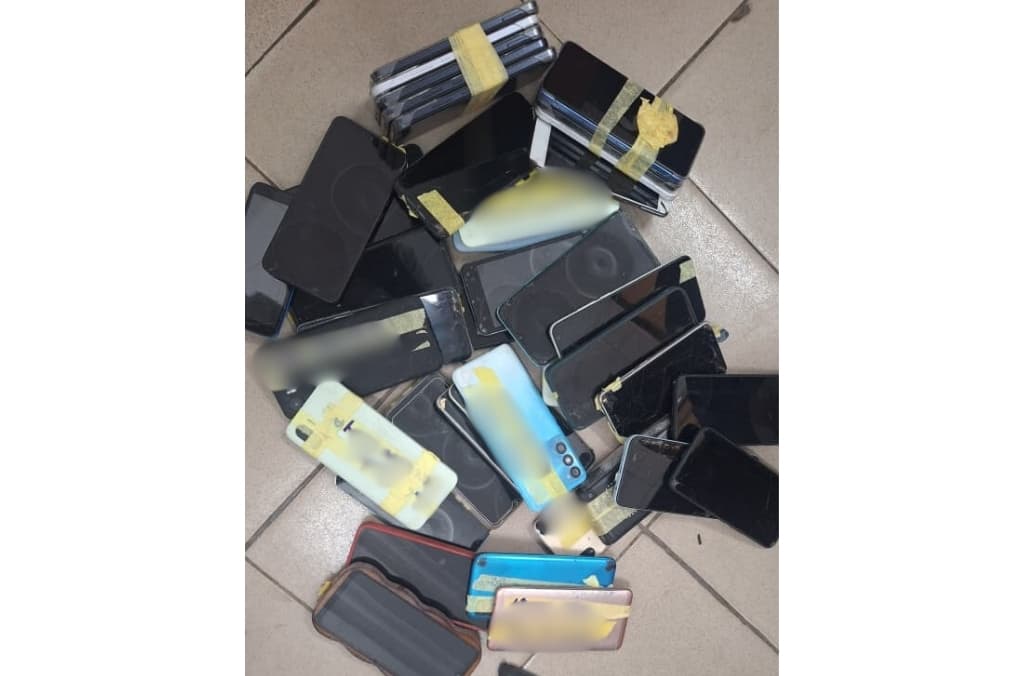
Operation-wide technical and physical seizures were substantial: law enforcement confiscated 2,341 devices and dismantled 1,442 malicious IPs, domains, and servers. In the Nigeria case, authorities shut down more than 1,000 fraudulent social media accounts linked to a syndicate accused of recruiting young people to carry out phishing, identity theft, social engineering and fake digital asset investment schemes; investigators also found an alleged ringleader had constructed a residential building used as an operational base.

Côte d’Ivoire law enforcement arrested 58 individuals in a predatory mobile loan fraud operation, a national case cited among the 16-country effort. Across the operation, recovered proceeds were reported as more than USD 4.3 million, though the public summary did not provide a country-by-country breakdown of seized funds or the mix of cash, crypto, or mobile money.
Operation Red Card 2.0 is described as the second phase of the Red Card initiative. The earlier wave ran from November 2024 through February 2025 and resulted in 306 arrests and the seizure of 1,842 devices. External support for the second phase included funding from the UK’s Foreign, Commonwealth & Development Office and targeted assistance from the EU–Council of Europe GLACY-e project, officials said.
INTERPOL’s public materials included two direct appeals from Jetton on the human toll and the need for cooperation: “These organized cybercriminal syndicates inflict devastating financial and psychological harm on individuals, businesses, and entire communities with their false promises,” and “Operation Red Card highlights the importance of collaboration when combating transnational cybercrime. I encourage all victims of cybercrime to reach out to law enforcement for help.” Key follow-ups remain: names of arrested suspects, formal charges and prosecutions in each country, and a technical inventory of the 1,442 dismantled IPs, domains and servers.
This article was produced by Prism’s automated news system from verified source data, official records, and press releases, then run through automated quality and moderation checks before publishing. The system is built and supervised by the people who set the standards it runs under. Read our full AI policy.
Did this article answer your question?