Juror Refuses to Deliberate in Suzanne Mericle Murder Trial, Halting Proceedings
A juror walked into the deliberation room and announced he would not deliberate in Suzanne Mericle's murder trial, triggering a procedural crisis two hours into deliberations.
Two hours into deliberations in the murder trial of Suzanne Mericle, a 62-year-old dentist accused of shooting her boyfriend through a locked bedroom door, the jury in Hall County Superior Court sent Judge John Breakfield a note that stopped proceedings cold. "A juror has declared, immediately upon entering room, he will not change his mind, will not discuss and deliberate," the foreperson wrote. The juror had told his fellow panelists that he was "not obligated to change his mind or to be open-minded."
The refusal landed on March 27, 2026, in Gainesville, Georgia, the same day deliberations began in a case built around the March 7, 2025, death of James David Barron, 68. Prosecutors argued that Mericle, after learning Barron was sending money to a woman named Lilia, retrieved a Glock, walked upstairs to a locked bedroom door, and fired from inches away. Forensic testimony established the shot traveled at nearly a flat trajectory, five to seven degrees, consistent with the gun being pressed close to the door rather than aimed at any angle. The defense countered that Mericle suffered an acute trauma response and acted in self-defense, with Mericle herself testifying that Barron had abused her. She also admitted to flushing shell casings down the toilet and placing Barron's personal gun near his hand before calling 911, details prosecutors framed as consciousness of guilt.
When a juror refuses to deliberate outright rather than simply holding a minority view on the evidence, a judge has a narrow and genuinely high-stakes menu of options. The first move is inquiry: Breakfield re-read the full jury instructions to the panel on the record, the standard initial response designed both to clarify a juror's legal obligation and to lock in a clean appellate record. Georgia law requires jurors to deliberate in good faith; refusing to engage at all is categorically different from a juror who listens and votes to acquit, a distinction courts treat as critical.
If instruction fails to move a holdout, a judge can remove the juror and seat an alternate. That route carries its own appellate exposure, because a defendant can later argue the removal was pretextual and effectively coerced a verdict, particularly if the removed juror was the sole dissenter. A judge can alternatively deliver an Allen charge, sometimes called a "dynamite charge," which urges deadlocked jurors to reconsider their position in light of the evidence and the views of colleagues. Appellate courts have repeatedly scrutinized Allen charges for placing disproportionate pressure on minority-opinion jurors. The last option is a mistrial, which preserves rights on both sides but forces the victim's family, the witnesses, and the accused back through the entire proceeding.
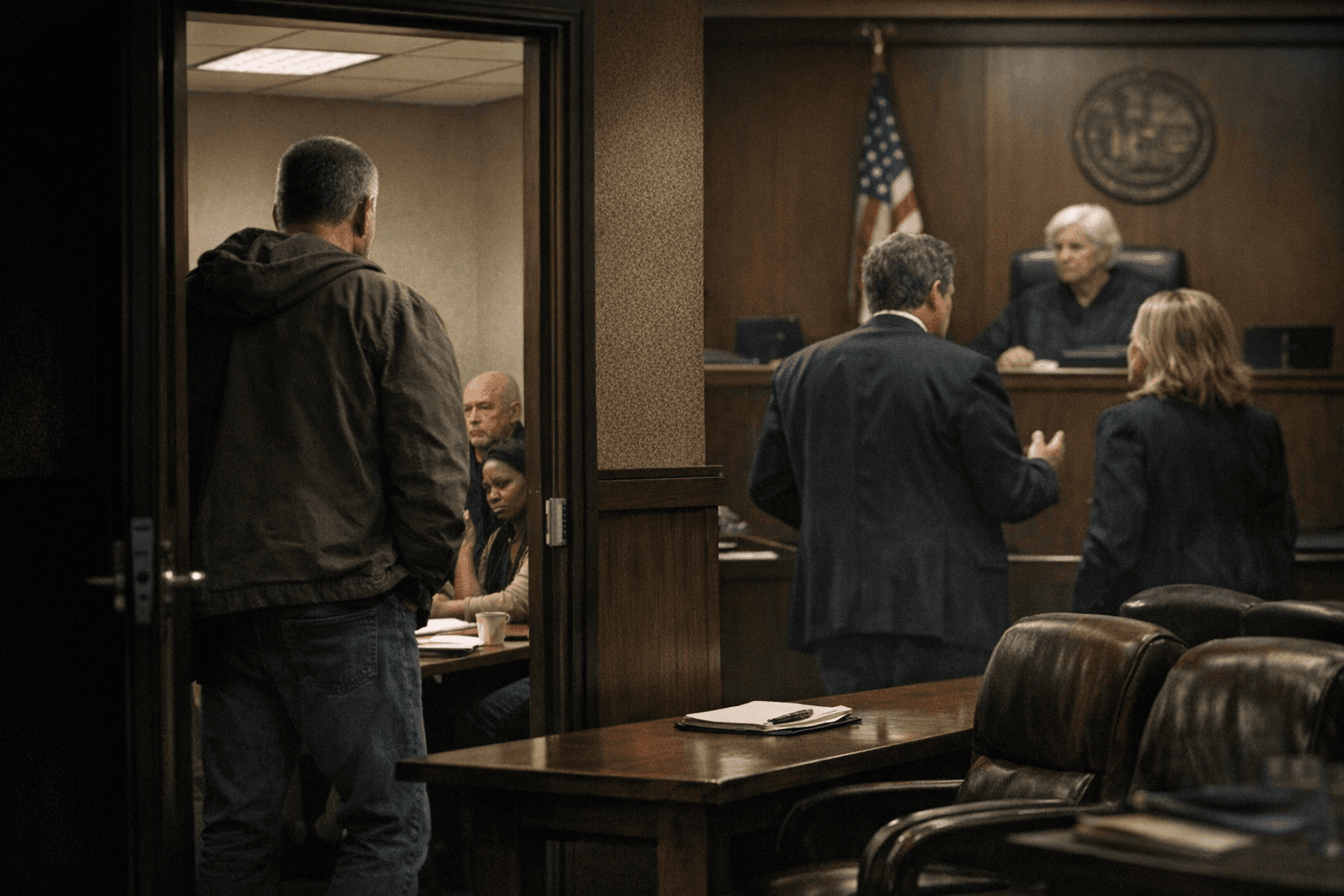
That any of those remedies became necessary here was not a foregone conclusion. A juror who walks into a room and immediately announces a fixed position, before a single exchange with fellow panelists, signals something beyond ordinary reasonable doubt. Legal commentators reading such notes treat them as potential indicators of a juror with a deep moral conflict, a misunderstanding of the role, or, in some cases, a predetermined outcome shaped by factors outside the evidence.
In this instance, Breakfield's re-reading of the instructions proved sufficient. The holdout juror rejoined deliberations, and by the end of March 27 the panel returned its verdict: guilty of felony murder, criminal damage to property, reckless conduct, and tampering with evidence. Mericle was acquitted on malice murder and aggravated assault. Sentencing is scheduled for May 11; Barron's family has also filed a civil wrongful death lawsuit against her.
This article was produced by Prism’s automated news system from verified source data, official records, and press releases, then run through automated quality and moderation checks before publishing. The system is built and supervised by the people who set the standards it runs under. Read our full AI policy.
Did this article answer your question?