Jury Awards Exonerated Man $12 Million Over Coerced Confession, 24-Year Imprisonment
A federal jury awarded Eric Kelley $12 million after finding three former Paterson officers coerced a false confession that cost him 24 years of his life.
Eric Kelley walked into a Paterson detective bureau in 1993 with a brain injury that left him cognitively impaired and, by accounts from the officers themselves, highly suggestible. He walked out with a typewritten confession to the murder of Tito Merino, a 23-year-old video store clerk, that he says he never actually gave. Last week, a federal jury agreed it had been taken from him by force, awarding Kelley $12 million in damages on March 25, 2026.
The verdict came after more than three decades of cascading consequences. Merino had been stabbed to death during the robbery of Victoria's Video in Paterson on July 28, 1993, and police were under pressure to close the case fast. Kelley and his co-defendant, Ralph Lee Jr., were brought in and interrogated separately for several hours. No audio or video recording was made. No notes were kept. The only evidence of what happened in those rooms were typewritten statements the officers prepared and then had Kelley and Lee sign. Both men recanted almost immediately and maintained their innocence for the next two and a half decades.
The interrogation mechanics, as later reconstructed, are a textbook case of what wrongful conviction researchers call a contaminated confession cascade. Detective Richard Reyes questioned Kelley first and, by the detectives' own admission, fed the information Kelley provided to Detective Louis Stell. Stell then used that information to convince Lee that police already knew he was involved. Both men were sentenced to 30-year prison terms. The interrogations produced the only evidence connecting either of them to the crime.
DNA testing eventually unraveled the case. Post-conviction analysis of a green and purple plaid baseball hat found near Merino's body excluded both Kelley and Lee and matched Eric Dixon, a man who had committed a near-identical knife attack three years earlier. Passaic County Superior Court Judge Joseph Portelli vacated the convictions in September 2017. Prosecutor Camelia Valdes dismissed all charges on April 6, 2018. Kelley had been incarcerated for over 24 years. Both of his parents died while he was behind bars.
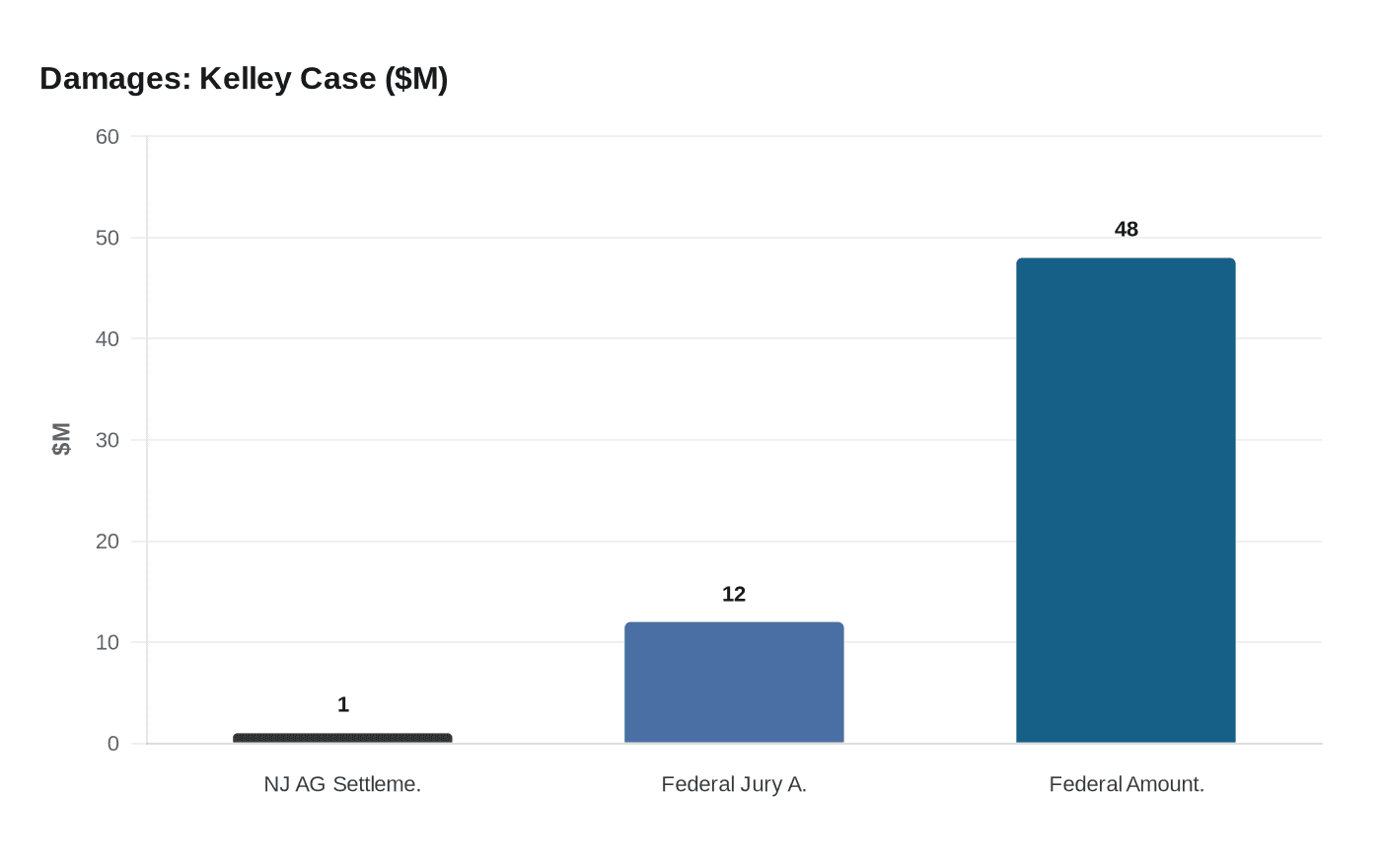
In 2019, both Kelley and Lee each received $1 million from the New Jersey Attorney General's Office in a separate lawsuit targeting the state's role in the wrongful convictions. That same year, the two men filed a federal lawsuit against the city of Paterson and individual officers, seeking as much as $48 million. A federal judge dismissed claims against the city in the days before the civil trial concluded, leaving three former Paterson officers as the sole remaining defendants.
The jury's decision to hold those officers individually liable carries real weight in the wrongful conviction community, where damage awards against municipalities are common but accountability for the specific officers involved is far rarer. The $12 million finding now raises the harder question this community has long debated: whether a verdict against individual officers, rather than a city with insurance and indemnification resources, will actually translate into compensation Kelley can collect. The defendants may appeal or seek post-trial relief, and Kelley's legal team will need to pursue enforcement of the judgment.
For the true crime community, the case sits alongside Reid Technique reform debates, Brendan Dassey's coerced confession in the "Making a Murderer" saga, and the Central Park Five as a landmark illustration of how unchecked interrogation rooms can end innocent lives. Kelley's jury verdict does not give him back 24 years or two parents. What it does is put a price on what was taken.
This article was produced by Prism’s automated news system from verified source data, official records, and press releases, then run through automated quality and moderation checks before publishing. The system is built and supervised by the people who set the standards it runs under. Read our full AI policy.
Did this article answer your question?