Loyd Brown Arrested After DNA From Knife Ties Him to 2003 Murder
Oklahoma City police arrested 59-year-old Loyd Brown after DNA from a re-tested knife handle matched him to the 2003 stabbing death of Leon Harris, a cold-case breakthrough with local impact.
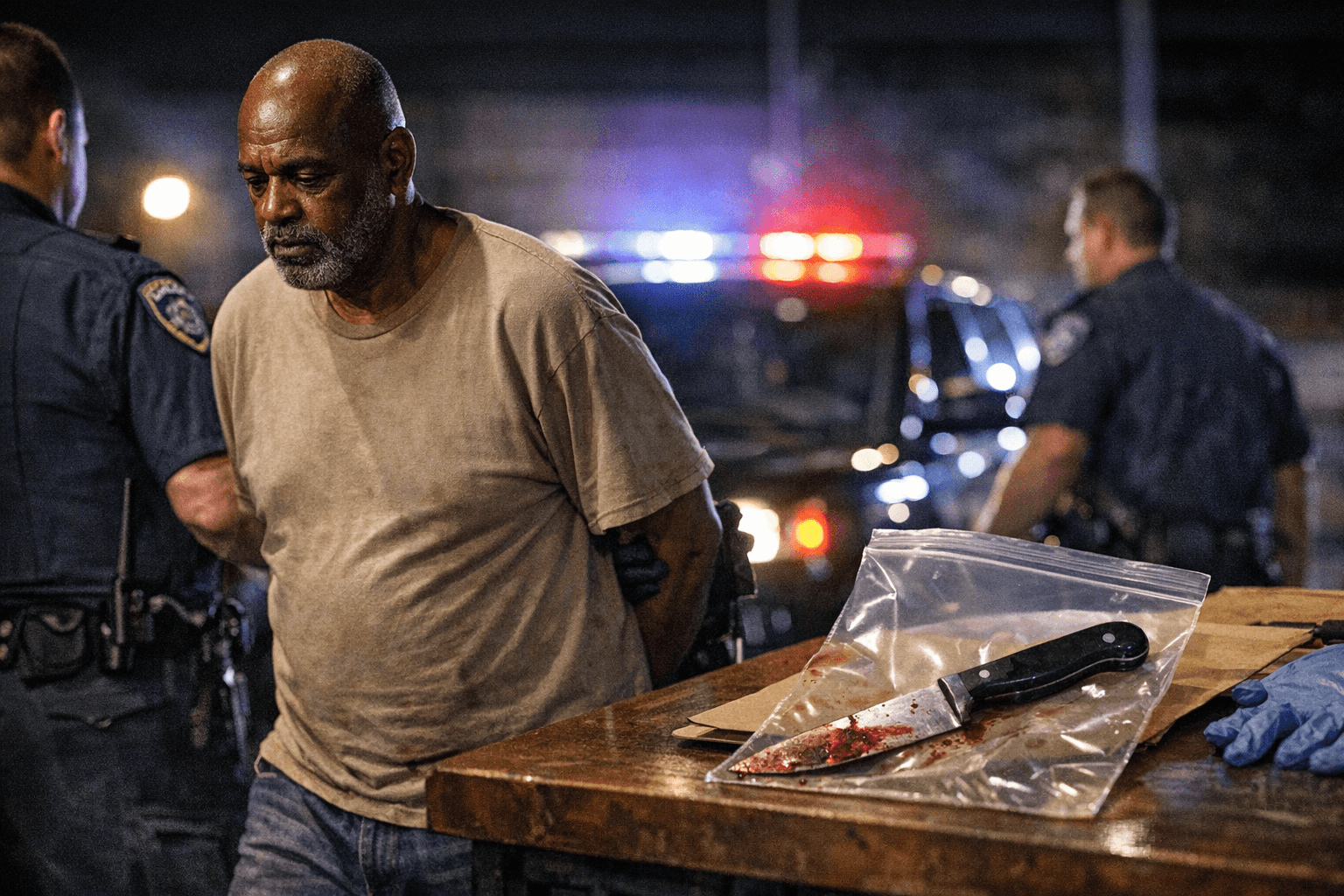
Oklahoma City police took 59-year-old Loyd Brown into custody after cold-case investigators re-tested a knife from a 2003 homicide and found a DNA match to Brown on the knife’s handle. The knife was linked to the fatal stabbing of Leon Harris, an unsolved murder investigators have pursued for more than two decades.
Police arrested Brown on Feb. 10, 2026 at a northwest Oklahoma City home near Britton Road and Western Avenue where he had been allegedly squatting for nearly a year. Authorities say a woman was detained at the scene but “was not connected to the murder in any way.” Brown is being held at the Oklahoma County Detention Center. A homeowner at the address, identified only as Blankenship, said, “They took both of them out of here.”
Court filings and full charging documents have not yet been released publicly. Police affidavit material summarized by investigators said Brown initially denied knowing the victim and changed his story several times during questioning. Brown later told investigators that the victim broke into his home at the Will Rogers Courts and attacked him with a knife, and that he forced the man outside and “the man fell on the knife.” Officers noted the victim’s wounds did not match Brown’s account.
The key forensic development was the DNA recovered from the knife handle after re-testing; authorities say that profile matched Brown. Officials have not specified which laboratory conducted the analysis, what type of DNA testing was used, or whether the match came from a criminal database, investigative genetic genealogy, or another source. Those technical details will be important to understanding how investigators closed this long-running file.
Cold-case work often depends on preserved evidence and advances in DNA methods. As Oklahoma City investigators have learned in other cases, re-analysis and new investigative tools can produce matches years after an original crime. Oklahoma City Police Department Master Sergeant Dillon Quirk has summarized that dynamic in prior work: “DNA was collected. ‘There was a profile for a person, but it was unrivaled at that time.’” That gap can close when testing or databases change.
For neighbors and the Harris family, the arrest may offer a measure of answers after 23 years. For the broader community, the case underscores the value of preserving evidence and of transparent updates from law enforcement about testing methods and charging decisions. Journalists and residents awaiting further information should look for the formal charging documents, the arrest affidavit and lab reports that will clarify the forensic basis for the arrest and the next legal steps.
Expect prosecutors to decide on formal filing and arraignment dates in the coming days; investigators may also release details on the lab work that produced the match. I will follow developments and report confirmed court filings, forensic documentation, and official statements as they become available.
This article was produced by Prism’s automated news system from verified source data, official records, and press releases, then run through automated quality and moderation checks before publishing. The system is built and supervised by the people who set the standards it runs under. Read our full AI policy.
Did this article answer your question?