Montreal Man Charged With Murder of Girlfriend in Intimate Partner Violence Case
Katerine Alejandra Mejia Salinas, 18, was allegedly strangled by her 20-year-old partner in Montreal, marking Quebec's eighth suspected femicide of 2026.

Katerine Alejandra Mejia Salinas was 18 years old when she was allegedly strangled inside an apartment on Everett Street, near 18th Avenue, in Montreal's Villeray–Saint-Michel–Parc-Extension borough. Her boyfriend, Heberth Gudiel Martinez Ramirez, 20, was arrested the same day and later charged with second-degree murder, a charge the court filing explicitly frames as an intimate partner violence case.
Emergency calls came in to Montreal police at approximately 12:20 p.m. on March 31, 2026. Officers arrived to find Mejia Salinas unconscious in the apartment; CPR was performed at the scene, but she was pronounced dead on-site. Homicide detectives secured the apartment, gathered witness statements from neighbors, and collected forensic evidence. Montreal police spokesperson Const. Jean-Pierre Brabant confirmed case details publicly. Martinez Ramirez was taken into custody before the end of the day.
He appeared before the court by videoconference from the Montreal courthouse on April 1, 2026, with a Spanish-language interpreter translating the proceedings. Court documents indicate he has no prior criminal record in Quebec. The second-degree murder charge is a legally precise designation under Canadian criminal law: it signals that prosecutors believe the killing was intentional but do not allege the planning and deliberation that would elevate it to first-degree murder. A conviction carries a mandatory life sentence, with parole ineligibility set anywhere between 10 and 25 years at a judge's discretion.
The immediate next steps follow a structured sequence. A judge will first rule on whether Martinez Ramirez should be detained pending the full criminal process. The Crown will then move through disclosure, sharing its investigative file with the defense, before pretrial motions and, eventually, trial, where every element of second-degree murder must be proven beyond a reasonable doubt.
Mejia Salinas's death was recorded as Montreal's sixth homicide of 2026 and the eighth suspected femicide in the province since January 1, a pace of nearly one per week. That toll had already alarmed advocates: four women were killed in Quebec in the first three weeks of the year, prompting the Conseil central du Montréal métropolitain–CSN to warn that "domestic violence continues to kill." By mid-March, the Canadian Femicide Observatory for Justice and Accountability had counted 30 violent deaths of women and girls across Canada in 2026.
Those numbers land harder against the backdrop of stalled policy. After a surge of femicides in 2021, the Coalition Avenir Québec government pledged to expand shelter capacity across the province. By 2026, it was reportedly 33% short of that commitment, a gap advocates argue leaves women in violent homes with nowhere to go.
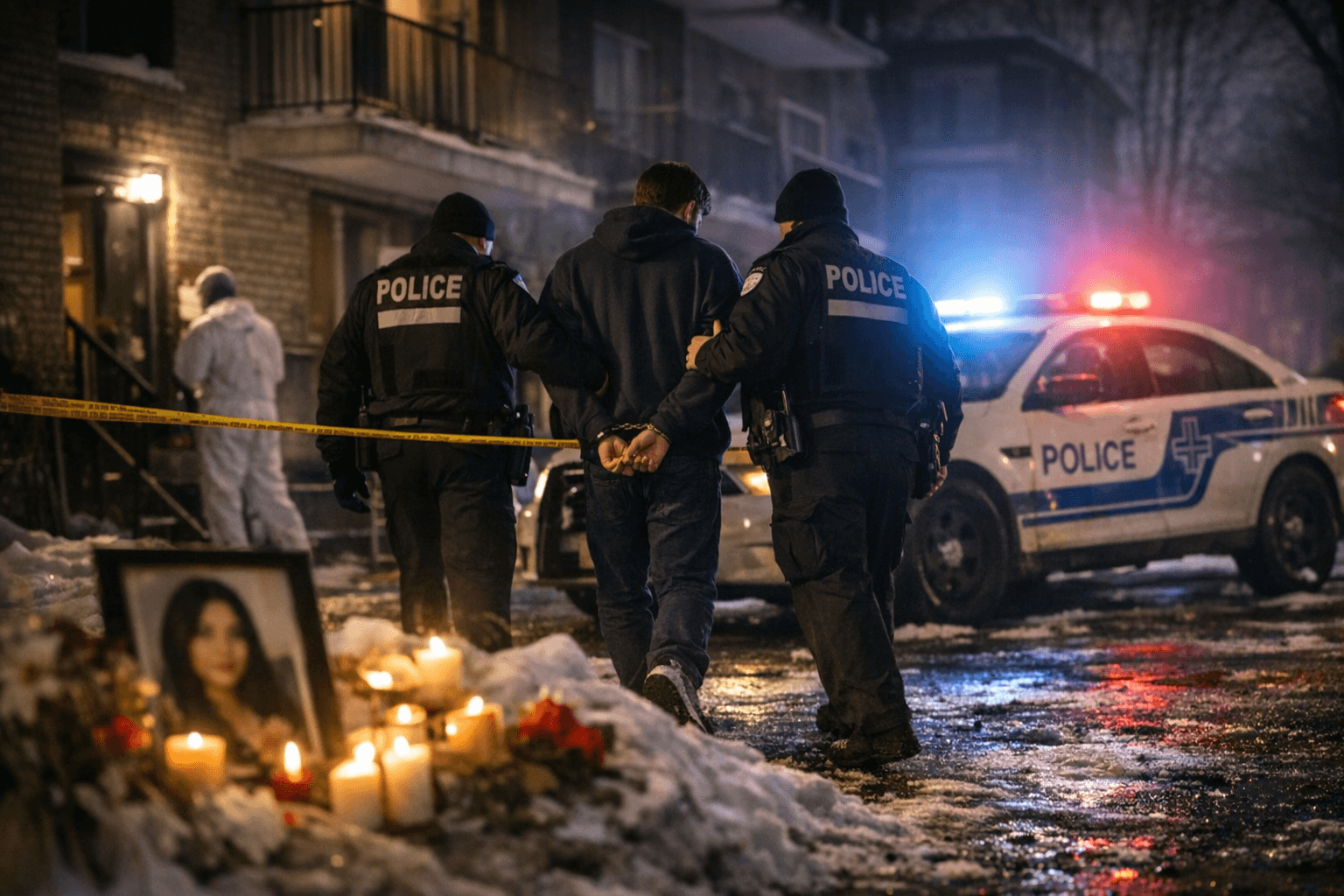
On April 1, the same day Martinez Ramirez appeared in court on a videoconference screen, community members laid flowers outside the Everett Street building. She was 18 years old.
This article was produced by Prism’s automated news system from verified source data, official records, and press releases, then run through automated quality and moderation checks before publishing. The system is built and supervised by the people who set the standards it runs under. Read our full AI policy.
Did this article answer your question?