Murder in Glitterball City Prompts True-Crime Scrutiny of Place Portrayal
James “Jamie” Carroll’s body was found inside a sealed plastic bin buried beneath the dirt floor of 1435 S. Fourth St., Louisville, a discovery that led to murder charges and a documentary that reframes the case as a portrait of place.

James “Jamie” Carroll was found entombed in a rubber bin beneath the basement floor of 1435 S. Fourth St., Old Louisville, a discovery that triggered murder charges against Joseph “Joey” Banis and homeowner Jeffrey Mundt and culminated in Banis’s conviction for murder while Mundt was later convicted on lesser charges and released. Local coverage places the discovery in 2010 after a domestic dispute and a 911 call, with reports that the remains had lain in the basement for six to seven months.
The two-part HBO film Murder in Glitterball City was made by World of Wonder cofounders Fenton Bailey and Randy Barbato, who spent four years filming and editing the project and adapted material from David Domine’s book A Dark Room in Glitter Ball City. The series debuted on HBO as a two-part documentary and centers visually and narratively on the Victorian house at 1435 S. Fourth St., the Old Louisville neighborhood, and the city itself.
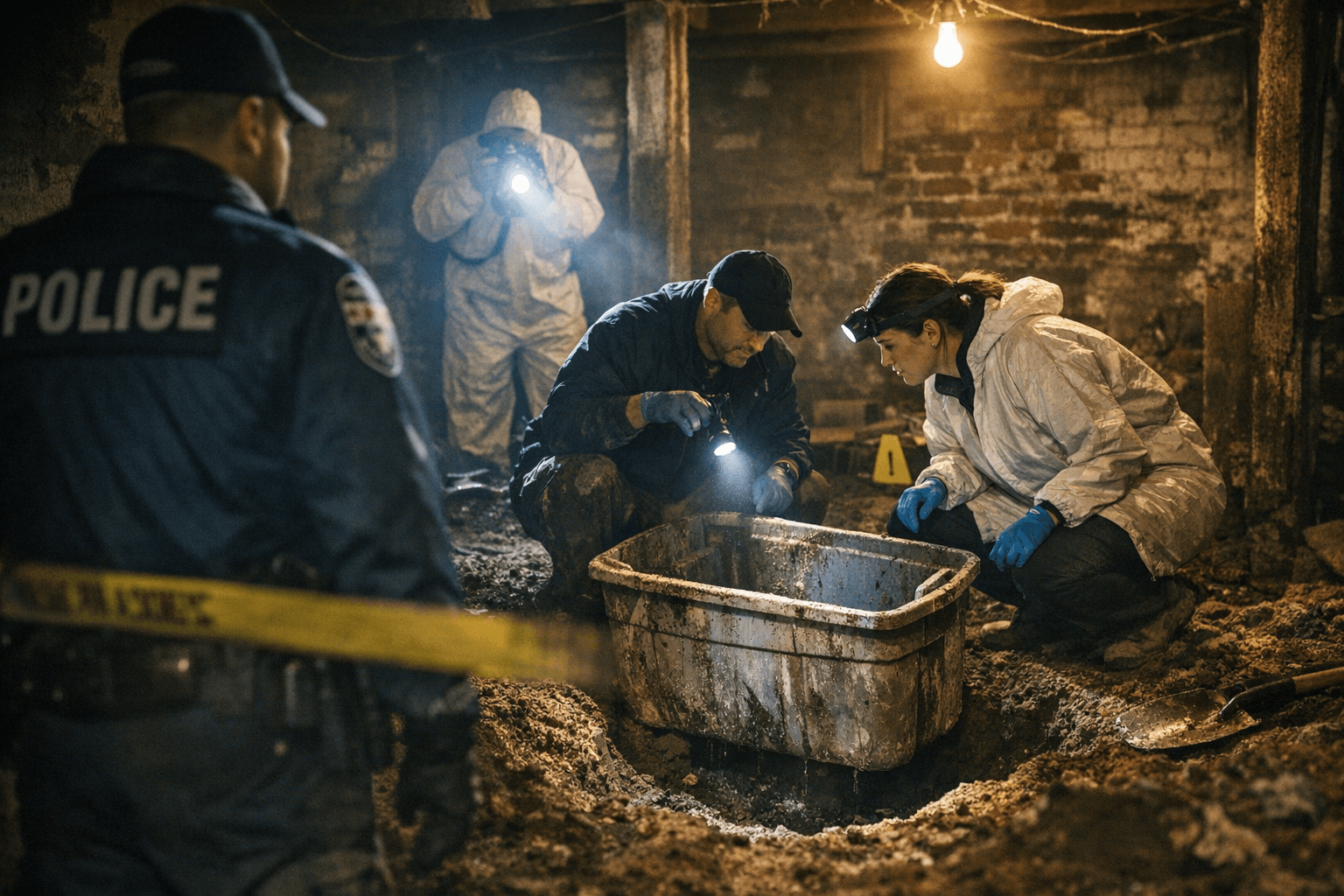
Reporting assembled for the film and around the case lays out grisly mechanics: Courier-Journal reporting describes Carroll as stabbed and shot by Banis, then wrapped in a large plastic storage container, sealed with foam and lime, and buried under the basement floor. Collider’s account adds that Carroll was 37 and that limbs were reportedly broken apart to make him fit in a Rubbermaid container. Sources diverge on the date of death, Collider places the killing in April or May 2009, WLKY calls it late 2009, but multiple outlets anchor the discovery and subsequent prosecutions to 2010.
Mundt and Banis both accused the other in police interrogation-room footage and on witness stands, a dynamic the documentary foregrounds as it reconstructs overlapping narratives. The film’s critics and analysts have zeroed in on that ambiguity. “The two-part documentary on HBO is not just the story of a gruesome murder, but a portrait of the city, neighborhood and home where it happened,” reads one central critical line in the film’s coverage, while Collider praised the project as a “master class in how to tell a true-crime tale,” noting the directors’ “deft exploration” of who committed the killing.
Local author David Domine, whose book provided the source material and who appears in the film tracing local lore, frames the house as a locus of hidden histories. “Like every single house down here in Old Louisville, this house has stories to tell. You just kind of sometimes need to scratch the surface and see what's below it,” Domine says. He also emphasized the documentary’s mixed portrait: “It's a tragedy at the heart of the story. The murder of Jamie Carroll is really what this is all about. So it's a sad story, but still, we managed to kind of paint the neighborhood in a broader stroke and kind of present it positively and kind of show that, you know, good things can come from bad things.”
By making Old Louisville and 1435 S. Fourth St. the project’s central character, Murder in Glitterball City has reopened scrutiny of how true-crime storytellers deploy place. The HBO series combines courtroom footage, local memory, and forensic detail, the Rubbermaid bin, foam and lime sealing, the basement burial, to press viewers to weigh competing accounts even as the Louisville convictions remain part of the public record. The result is less a conventional whodunit than an argument about what a city, and a single house, can reveal about a crime.
This article was produced by Prism’s automated news system from verified source data, official records, and press releases, then run through automated quality and moderation checks before publishing. The system is built and supervised by the people who set the standards it runs under. Read our full AI policy.
Did this article answer your question?