NC Man Pleads Not Guilty to Poisoning Wife With Eye Drops in 2018
A former paramedic pleaded not guilty to poisoning his wife with eye drops for a $250,000 insurance payout, seven years after she was cremated within 48 hours of her death.
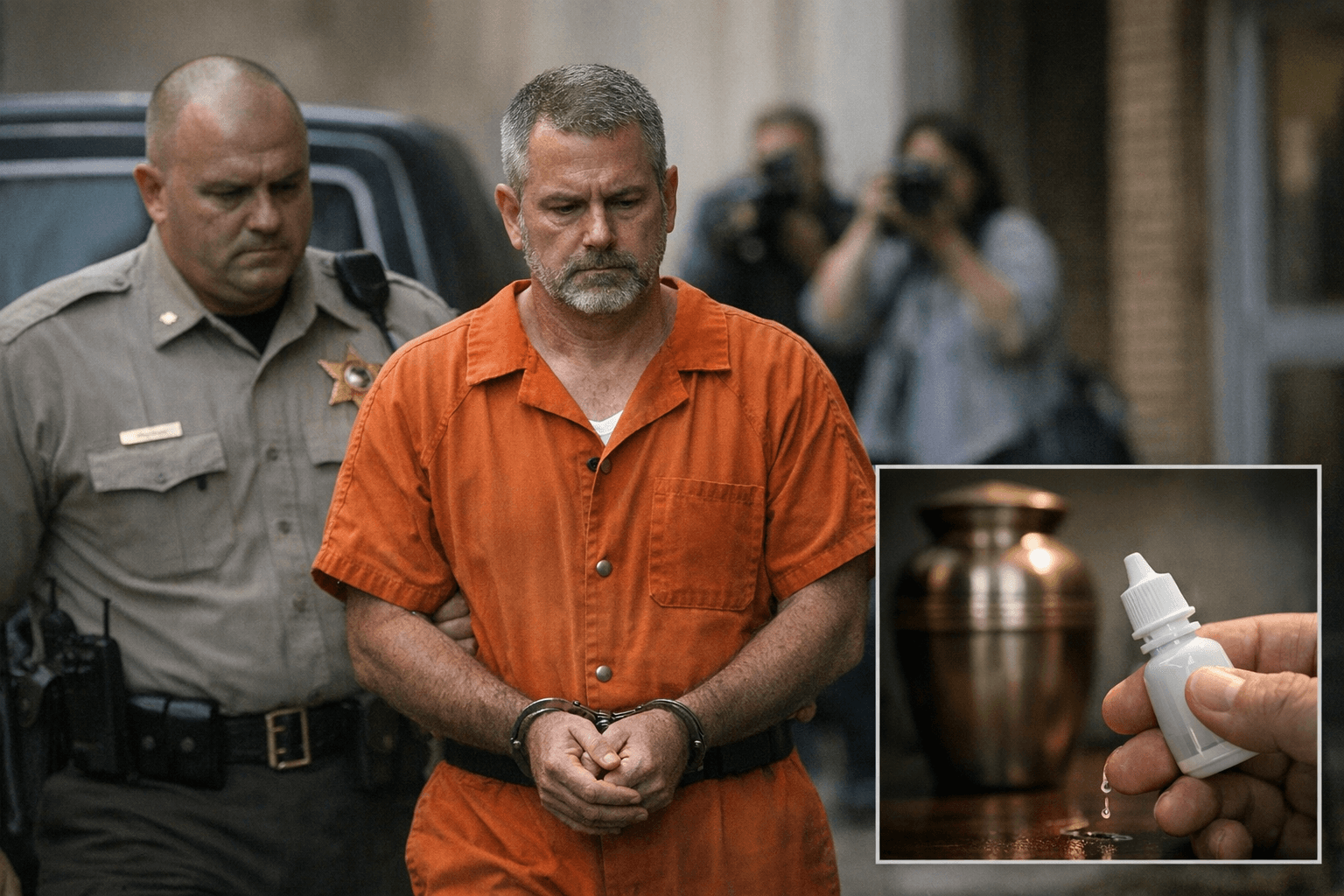
A former paramedic with clinical knowledge of the human body allegedly used one of the most ordinary products in any medicine cabinet to kill his wife, then cremated her body within 48 hours and collected $250,000 in life insurance. Joshua Lee Hunsucker, 41, of Mount Holly, North Carolina, pleaded not guilty Monday to first-degree murder, insurance fraud, and obtaining property by false pretense in the September 23, 2018 death of his wife, Stacy Robinson Hunsucker.
The alleged weapon was tetrahydrozoline, the active vasoconstricting ingredient in common over-the-counter eye drop products. Prosecutors say Hunsucker told people Stacy died of a heart attack, filed paperwork with the insurance company listing myocardial infarction as the cause of death, and collected the payout. Her body was cremated within two days, a timeline that might have buried the case permanently.
It didn't, because Stacy was a registered organ donor. Hospital staff had drawn and preserved a blood sample before her death, and when the Department of Insurance and the medical examiner later pulled those vials for reexamination, they found abnormally elevated levels of tetrahydrozoline, a compound capable of causing dangerously low blood pressure, slowed heart rate, and death in sufficient quantities. That single preserved sample became the forensic foundation for a murder charge filed more than seven years after Stacy died.
The indictment, filed March 11, 2026, also brought insurance fraud and obtaining property by false pretense charges. Hunsucker appeared in court April 6 for his arraignment and his attorney entered the not-guilty plea on his behalf without Hunsucker speaking. His defense team filed a change-of-venue motion arguing that pervasive media coverage in Gaston County makes seating an impartial jury there effectively impossible.
The charges extend well beyond Stacy's death. Prosecutors allege that in 2024, Hunsucker poisoned his then-11-year-old daughter, who was admitted to the hospital with low blood pressure, slowed heart rate, extreme exhaustion, and constricted blood vessels, symptoms that mirror tetrahydrozoline toxicity. Her blood tested positive for both tetrahydrozoline and O-desmethylvenlafaxine, an antidepressant metabolite not approved for children, which investigators found inside Hunsucker's truck. Prosecutors say he then directed suspicion toward his in-laws, John and Susie Robinson, who are also key witnesses in the murder case.
That alleged framing attempt fits a broader pattern the prosecution has outlined. In 2023, Hunsucker staged his own kidnapping, claiming he was pistol-whipped, zip-tied, and injected with an unknown substance during a roadside flat-tire stop. Investigators found no evidence of a legitimate attack and instead charged him with stalking and harassing the Robinsons. The new indictment piled on four counts of witness intimidation and four counts of obstruction of justice tied to alleged misconduct while he was out on bond.
A judge revoked that bond following the latest charges. The court agreed to separate some of the alleged offenses for individual trials, with potential trial dates set for later in 2026. For a poisoning case built almost entirely on a seven-year-old blood sample, how well prosecutors can document the chain of custody on that single preserved vial will likely determine whether the tetrahydrozoline evidence survives defense challenges and reaches a jury.
This article was produced by Prism’s automated news system from verified source data, official records, and press releases, then run through automated quality and moderation checks before publishing. The system is built and supervised by the people who set the standards it runs under. Read our full AI policy.
Did this article answer your question?