Syria says six missing Al-Abbasi children are presumed dead after 13 years
Syria’s missing-persons commission said the six children of dentist and chess champion Rania al-Abbasi are presumed dead, ending 13 years of silence but not the hunt for remains.

After 13 years of uncertainty, Syria’s National Commission for Missing Persons said the six children of Dr. Rania al-Abbasi are presumed dead, a devastating confirmation in one of the country’s most watched disappearance cases. The commission said its conclusion was based on “reliable and corroborated” findings and a high degree of professional certainty, even as the search for remains continued and the family’s privacy was being respected.
Rania al-Abbasi, a dentist and former Syrian and Arab chess champion, was taken with her six children from her home in the Dummar neighborhood of Damascus on March 11, 2013. Her husband, Abdulrahman Yasin, had been arrested two days earlier, on March 9, 2013. The children were between 3 and 15 years old when they vanished, and their disappearance quickly became one of the clearest symbols of Syria’s wider enforced-disappearance crisis.
The case has now drawn fresh scrutiny from Syria’s Interior Ministry, which said an initial probe implicated Amjad Youssef and that investigators had gathered information and video evidence tied to the case. The ministry said the evidence suggested the children were killed by groups and militias affiliated with the ousted regime, and that the National Commission for Missing Persons had shared video footage and other material that strengthened the investigation. Family members have also said they viewed recordings linked to a suspect in a 2013 Damascus massacre and identified children in the footage as members of the Al-Abbasi family.
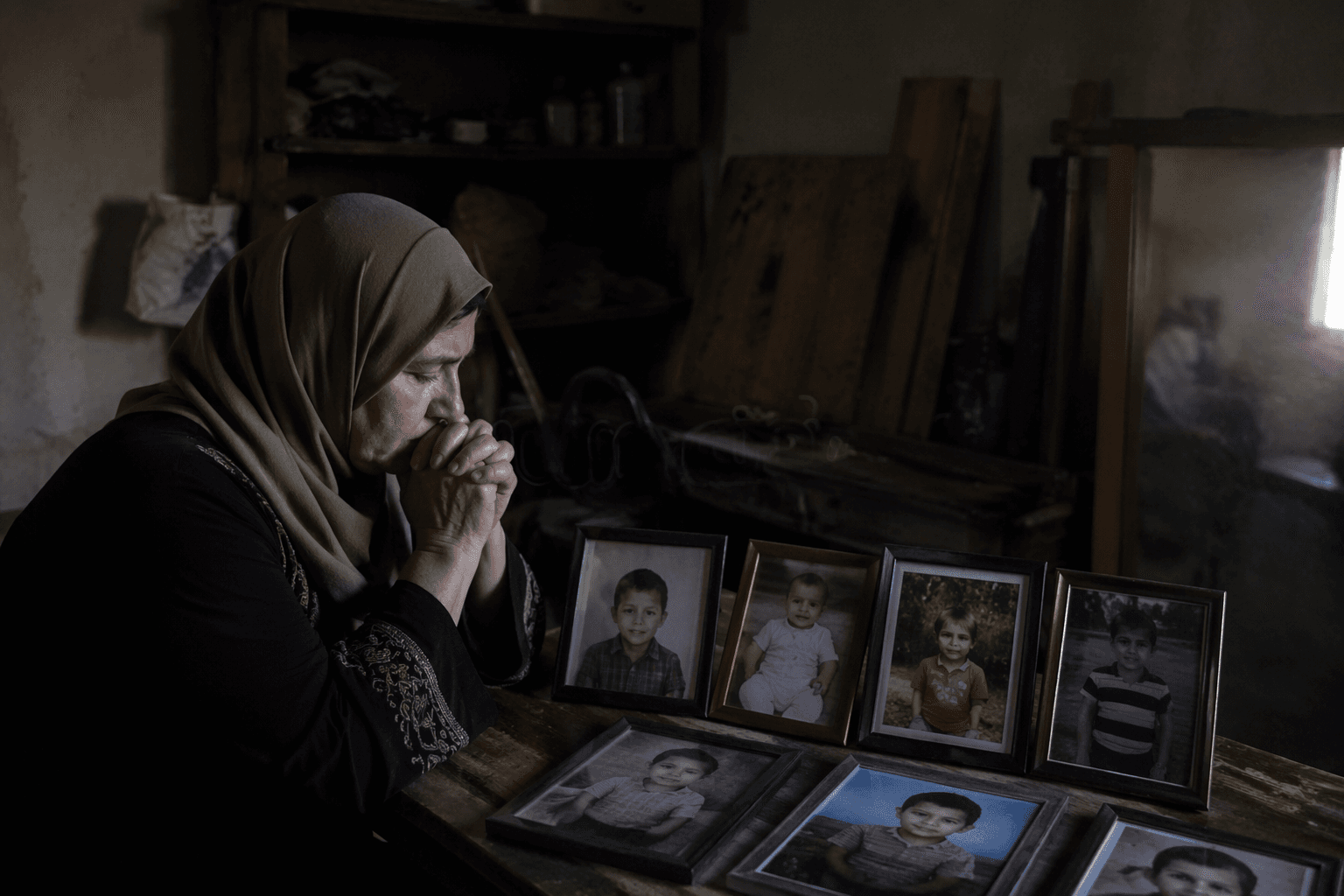
For relatives, the new finding sharpened an old wound rather than closing it. The commission’s declaration did not answer every question that has hung over the family since the arrests in March 2013, including the exact chain of custody, the location of the remains, and who specifically ordered or carried out the killings. Those gaps matter in a case that has long stood for the mechanics of Syria’s disappearance machine, where confirmation of death does not automatically mean accountability.
The Al-Abbasi case has remained a touchstone for rights groups and families searching for answers about detainees and missing children. The UN Office of the High Commissioner for Human Rights said in November 2025 that more than 100,000 people went missing under the Assad regime, while SOS Children’s Villages Syria said in January 2025 that it had filed a public lawsuit seeking the children’s fate. The children may now be presumed dead, but the evidence trail, and the question of who made them disappear, still drives the case forward.
This article was produced by Prism’s automated news system from verified source data, official records, and press releases, then run through automated quality and moderation checks before publishing. The system is built and supervised by the people who set the standards it runs under. Read our full AI policy.
Did this article answer your question?