Tiny DNA fragment solves Dallas cold case murder of Ruby Battee
A DNA trace on Ruby Battee’s clothing survived 40 years, then linked her 1986 Dallas murder to inmate Marvin Lee Holloway.
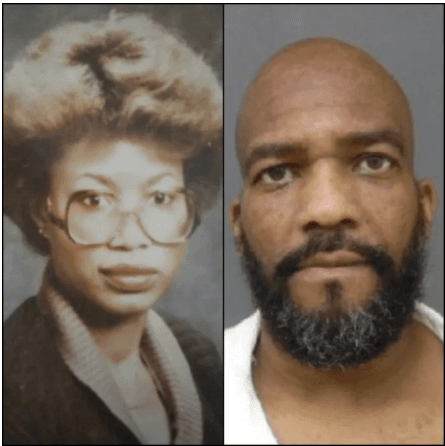
The tiny fragment outlasted the original investigation, and that was enough to break Ruby Battee’s 1986 murder open at last. Dallas police said preserved DNA on clothing from Battee’s home case pointed investigators to Marvin Lee Holloway, an inmate already serving life in prison for another killing, and now facing a capital murder charge in Battee’s death.
Battee was killed and sexually assaulted in her Dallas home on May 27, 1986, after an unidentified person forced his way inside. For years, detectives had little more than a limited biological sample on her clothing, a stubborn remnant that sat through decades of stalled forensic technology. The Dallas Police Department said the only viable DNA left at the scene was found on Battee’s clothing, a fact that kept the case cold until modern testing could do what 1980s methods could not.
In January 2025, Dallas homicide detectives submitted previously untested sexual-assault swabs and a pair of panties recovered from the scene to the University of North Texas Center for Human Identification in Fort Worth. A partial male DNA profile was developed in April 2026 and entered into the Combined DNA Index System, where it matched Holloway on May 5, 2026. That database hit turned a decades-old file into an active murder case again.
Detectives Andrea Isom and David Grubbs then traveled to the Beeville unit of the Texas Department of Criminal Justice on May 13, 2026, to collect Holloway’s DNA and interview him before securing the new capital murder warrant. Holloway was already in prison for a separate killing, after his 1988 arrest in the murder of his co-worker, Emily Proctor. He was sentenced to life in May 1989.
Dallas Police Chief Daniel Comeaux, who took over the department in April 2025, credited the cold-case team’s persistence. The Dallas Police Department Cold Case Squad handles unsolved homicides that are no longer assigned to an active homicide detective, and Battee’s case is the latest reminder of how those files can be revived when evidence survives long enough for science to catch up.
For true-crime watchers, the arc is as stark as it gets: a single piece of preserved evidence held its ground for 40 years, then finally gave Ruby Battee’s case a name. The fragment that sat quietly on her clothing became the witness the original investigators never had.
This article was produced by Prism’s automated news system from verified source data, official records, and press releases, then run through automated quality and moderation checks before publishing. The system is built and supervised by the people who set the standards it runs under. Read our full AI policy.
Did this article answer your question?