Nexon Plans to Scale AI Tools Across Studios, Citing Arc Raiders Cost Savings
Nexon CEO called Arc Raiders a "Trojan Horse" for AI in game development, and the publisher just made scaling those tools across every studio official strategy.
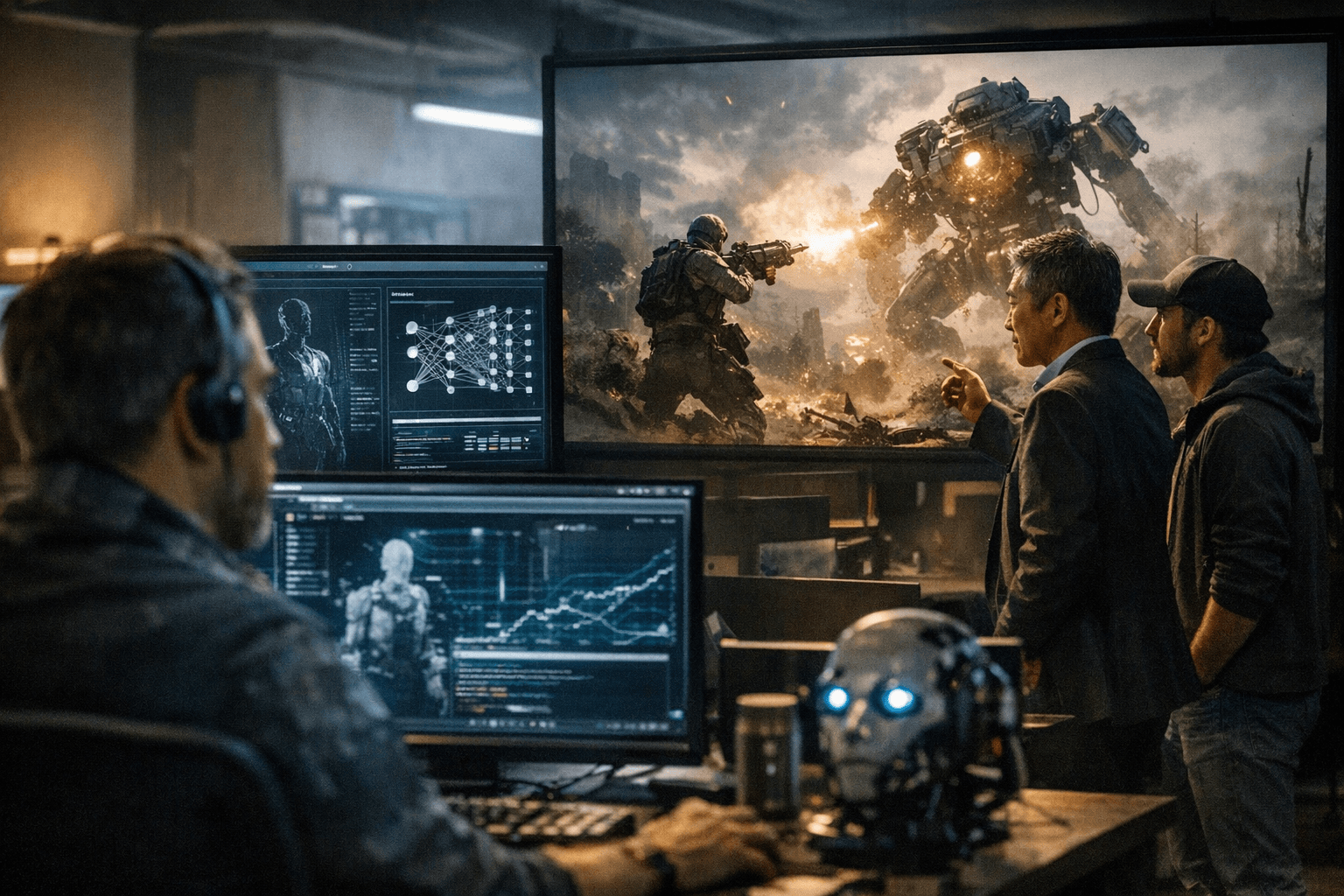
Twelve million players had already bought into Arc Raiders before most of them learned that the NPC callouts piped through the game's UI were generated by text-to-speech models trained on actors' recorded voices. At Nexon's Capital Markets Briefing in Tokyo on March 31, that production choice wasn't treated as a side note. It was held up as a proof of concept.
CEO Junghun Lee described Arc Raiders explicitly as "a Trojan Horse," a gift containing "a shift in the mindset about how technology frees developers and live service teams to spend more time thinking and less time doing." The rhetorical stakes were high enough that Lee kept pushing the same line twice: "More time innovating; less time writing code." Nexon then named the mechanism for scaling that approach: an AI initiative called Mono Lake, described as an end-to-end intelligence platform trained on billions of player sessions and decades of live game data, including engagement patterns, retention metrics, and live game telemetry across the entire Nexon catalog. The claim from Lee is that Mono Lake "makes the intelligence available across everything we build and operate," reaching every developer, every live-ops team, and every product decision simultaneously.
Patrick Söderlund, who founded Embark and was appointed Nexon executive chairman in February, was the briefing's other anchor voice. His account of the Arc Raiders pipeline filled in what "less time writing code" actually meant in practice: Embark applied AI to iterative asset creation, NPC audio workflows, and enemy animation through reinforcement learning, in addition to the text-to-speech system for voice barks. The result, by Söderlund's account, was two AAA-scale games, Arc Raiders and The Finals, "built with significantly fewer people, at a fraction of the cost you'd expect for a AAA game." No specific budget figures were disclosed, but Nexon posted record revenue of ¥475 billion in fiscal 2025, with operating income of ¥124 billion, lending credibility to the argument that the Embark model achieved unusual capital efficiency.
What players of Arc Raiders should read into all of this is that "Mono Lake" points directly at the workflows that shape the live-service experience: the frequency and variety of content updates, the tuning of live-ops events, and the decisions around balance patches. If an AI platform is informing every live-ops call on a data-driven basis, the risk is homogenization, the exact failure mode Nexon's own leadership acknowledged. Lee said it plainly: "Without context, AI is a race to the arithmetic middle where everyone's games look the same." The argument is that Nexon's proprietary player data is the differentiator, but that remains an internal claim without independent verification. For Arc Raiders specifically, the concern isn't theoretical. The game already replaced a portion of its AI-generated voice lines with human-recorded dialogue after launch, with Söderlund acknowledging the human recordings were "better." That quiet course correction came while the same executives were assuring investors at the briefing that AI voice generation had been a success story.
The more structurally significant line from Söderlund was not about AI at all. He confirmed that Nexon has reviewed its entire portfolio of live games and new projects, applying what he called a "new floor for contribution margins." Some projects will be restructured. Some will be cancelled. His scrutiny list extended explicitly to "management layers, support functions, and external contractors," language that generally precedes workforce reductions even when the word "layoffs" doesn't appear in the same sentence. Whether AI tooling and headcount reduction are being treated as interchangeable levers is the question the briefing left unanswered, though the sequencing of Söderlund's appointment, the Mono Lake rollout, and the portfolio reset makes that reading difficult to dismiss. The industry has heard the "AI frees people to create" formulation before. Nexon's distinction, if there is one, will be visible in the hiring decisions that follow the briefing rather than the ones announced during it.
This article was produced by Prism’s automated news system from verified source data, official records, and press releases, then run through automated quality and moderation checks before publishing. The system is built and supervised by the people who set the standards it runs under. Read our full AI policy.
Did this article answer your question?