Riot Games Bans Streamer Mooda Seven Days Over Child Safety Violation
Riot issued a seven-day publisher-wide ban to Canadian streamer Mooda on April 8 after an on-stream child safety violation, with permanent removal threatened for any repeat offense.
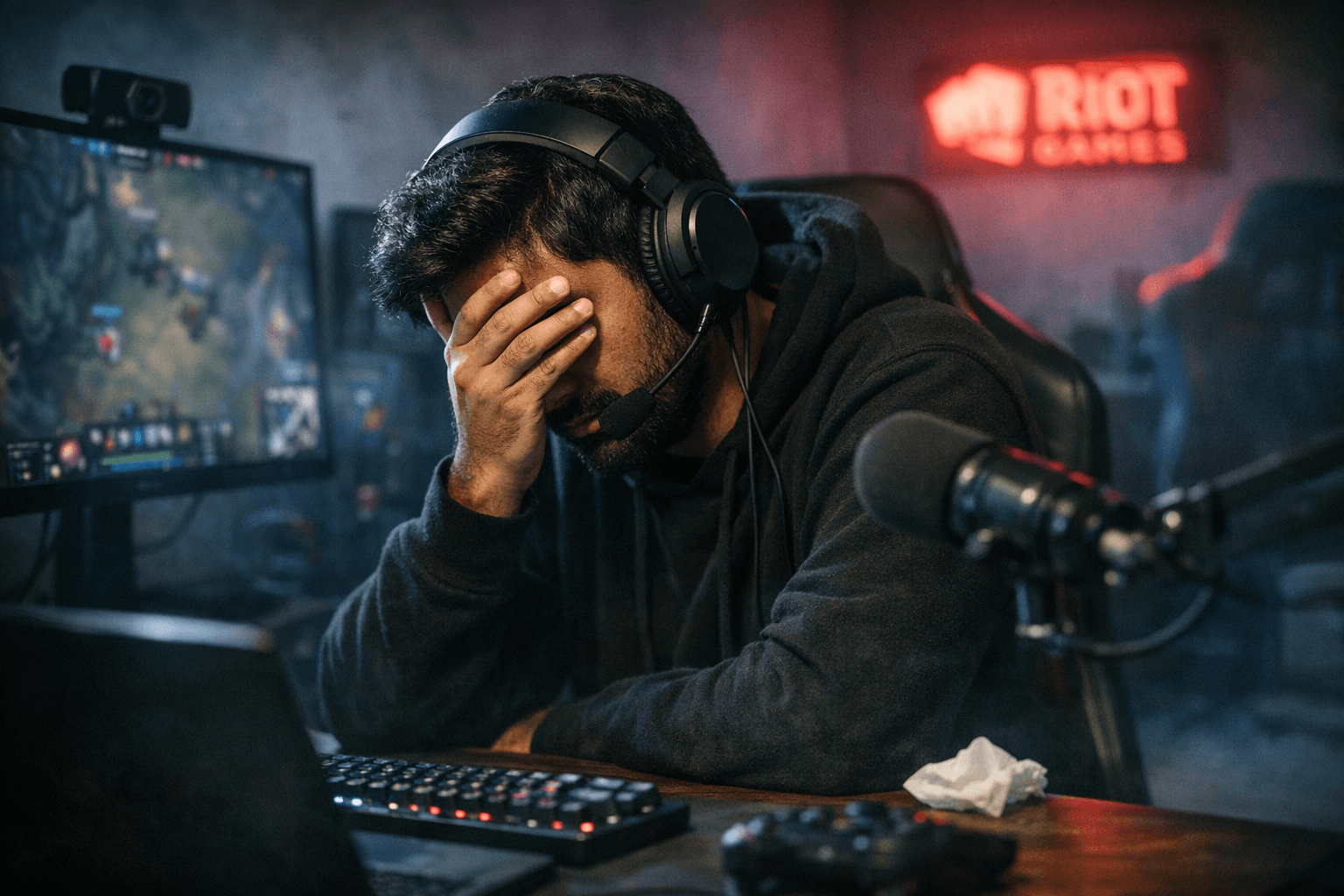
Every creator building a streaming career around Riot titles now has a concrete answer to the question of what, exactly, triggers a publisher-wide enforcement action. Canadian streamer Ahmad "Mooda," a presence across Twitch, YouTube, and TikTok, received a seven-day Riot-wide ban on April 8, 2026, after making references to possession of child sexual abuse material and what he framed as an "Epstein cheese pizza joke" during a collaborative broadcast. Riot's enforcement team cited its Child Safety Policy, and Mooda read the company's follow-up email live on stream the same day the ban landed.
The reach of the penalty is what separates this from a routine platform suspension. A Twitch or YouTube ban removes a creator from a single distribution channel. A Riot-wide ban revokes access to the entire publisher's game catalog, terminates competitive eligibility across all Riot-affiliated events, and cuts off the pipeline to future Riot-connected marketing deals and sponsorships. For any streamer whose content centers on VALORANT or League of Legends, those are not hypothetical losses.
Riot's Child Safety Policy prohibits any content that references, sexualizes, or alludes to illegal material involving minors. The enforcement structure follows a graduated model: a first confirmed violation results in a time-limited ban paired with a formal written warning, which creates a documented record. That record converts any subsequent offense from a fresh incident into grounds for a permanent ban. Riot's communication to Mooda made both conditions explicit.
Mooda disputed the context of the incident publicly and was unable to overturn the decision. Riot did not reverse the enforcement action. Publishers in this space have treated child-safety violations as a near-categorical exception to the appeals process, a posture driven by both community standards and the legal and regulatory exposure that surrounds content of this nature.
The incident clarifies the specific risk profile of collaborative live broadcasts. Collabs reduce the natural friction that keeps individual streamers self-editing: multiple personalities, elevated energy, and a larger combined audience create conditions where off-script moments happen faster than any single moderator can flag them. A pre-stream content agreement with collaborators, a written internal list of prohibited reference categories, and active chat moderation are the most direct measures available to avoid a similar outcome.
Mooda's ban is set to expire after the seven-day window. What does not expire is the enforcement record Riot now holds, which becomes the threshold for a permanent removal if a second violation occurs.
This article was produced by Prism’s automated news system from verified source data, official records, and press releases, then run through automated quality and moderation checks before publishing. The system is built and supervised by the people who set the standards it runs under. Read our full AI policy.
Did this article answer your question?