Rollback netcode explained, why fighting games need responsive online play
Rollback netcode keeps matches moving by predicting inputs and correcting mistakes in a few frames. In fighters, that responsiveness can be the difference between a fair fight and a laggy mess.
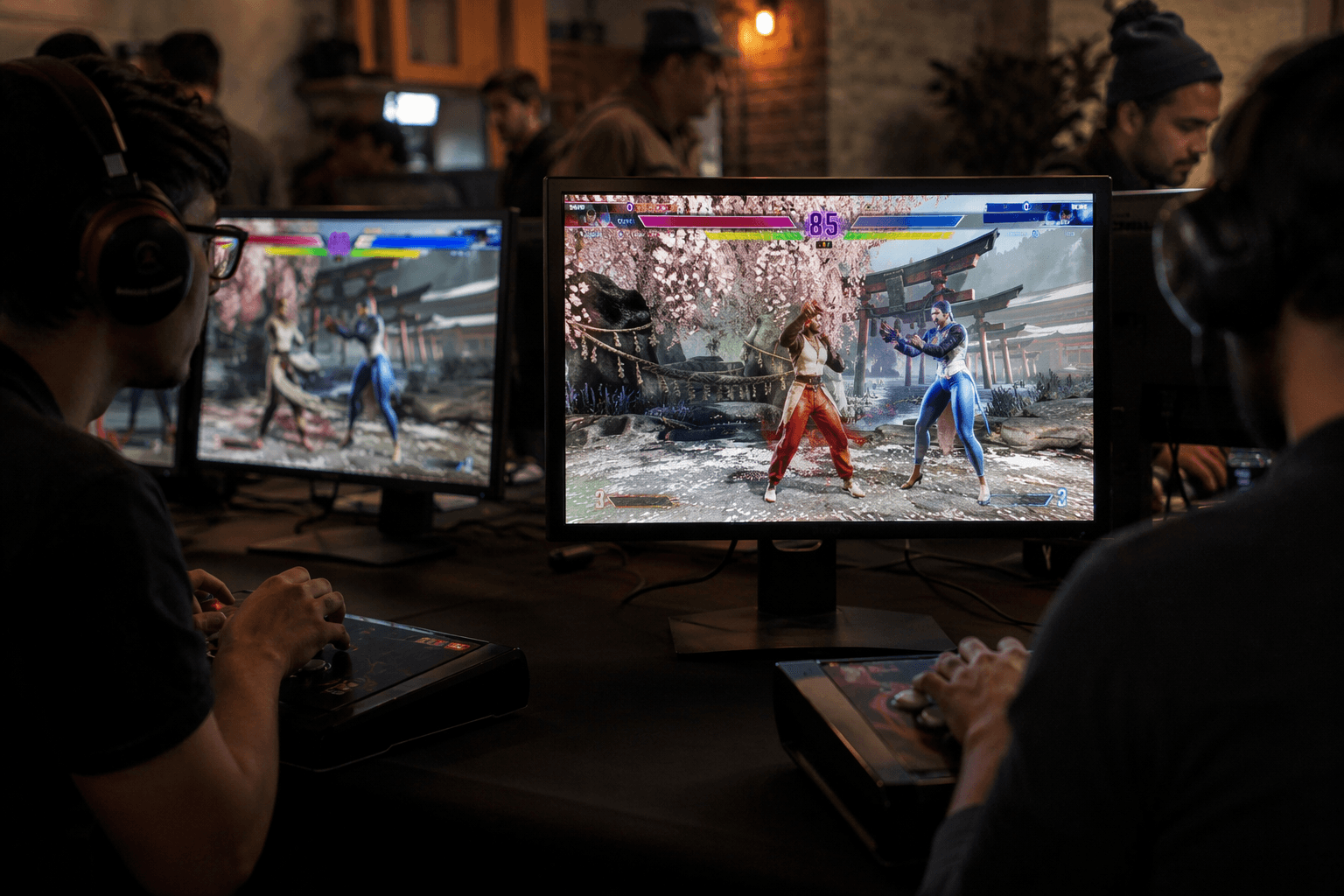
The difference between a match that feels sharp and one that feels off usually comes down to whether the game is waiting on remote inputs or trying to keep the action moving anyway. In fighting games especially, that split decides whether a punch lands when your hands expect it to or a beat later, after the moment has already passed.
Why online play feels late
Online games are always managing latency, because the server and each client are never perfectly synchronized. In a traditional delay-based system, the game intentionally pauses for remote inputs before advancing the action, which keeps the state clean but adds perceptible input lag. That approach can work in slower genres, but in a 2D fighter or any game built around tight timing, the wait is exactly what makes the connection feel bad.
That same lag is why players talk about online quality in simple, practical terms instead of network theory. If your normal combo timing changes from match to match, or a jump-in feels like it lands after the button press you made, the game is not just slow, it is inconsistent. For a lot of players, that inconsistency matters more than raw visuals or even roster size when they decide whether a game is worth buying for online play.
What rollback netcode actually does
Rollback netcode takes a different path. Instead of freezing the action while it waits for the other side, the game predicts what the remote player will do, keeps the match running, and then rolls back a few frames if that prediction was wrong. The engine then re-simulates those frames with the correct inputs and fast-forwards back to the present.
That is why rollback usually feels more responsive. Your own input appears immediately on screen, which matters a lot when every frame is part of the contest. The tradeoff is that the game has to be built to handle rewinds and re-simulation without turning the screen into a mess of obvious corrections.
GGPO is the name many players know from that conversation. The rollback middleware was created by Tom Cannon and Tony Cannon, and a 2019 Kotaku report noted that it was available for commercial and non-commercial use via GitHub. In fighting-game circles, that made rollback easier to talk about not as a theory, but as a tool developers could actually use.
Why fighters care more than most genres
Fighting games are the clearest case for rollback because they are built on twitch reactions, frame traps, whiff punishes, and rapid reads. If a move comes out late in a fighter, the game has not just lost smoothness, it has changed the meaning of your decision. That is why online discussions around the genre so often circle back to the same question: does the game feel fair when both players are under pressure?
Street Fighter V became one of the best-known examples of that debate, with players repeatedly focusing on whether matches felt fair rather than whether the game simply connected. That focus makes sense, because the FGC has spent years treating online responsiveness as part of competitive integrity, not just convenience.
Ars Technica published its explainer on delay-based and rollback netcode in October 2019, right as rollback was becoming a mainstream topic inside the fighting-game community. The timing mattered because players were already comparing how different games handled online play, and the terminology finally gave them a way to describe the difference between “playable” and “good.”
How the genre got here
The rollback debate did not appear out of nowhere. A historical netplay timeline has fighting-game communities discussing XBAND in 1994, when it used a 28K modem, then emulator netplay in the late 1990s, and SegaNet around 2000. That timeline shows how long players have been trying to solve the same problem: how do you keep a fast game fair when the other person is somewhere else?
That history also explains why rollback feels less like a trend and more like a long-overdue answer. Fighters have always lived closest to the pain point because they expose delay so clearly, but the lesson reaches beyond the genre. Any game that depends on instant response, whether it is a one-on-one brawler or a timing-heavy action game, inherits the same network question.
Tick rate and why Riot made a point of it
Rollback is only part of the online feel. Server tick rate matters too, because tick rate is the number of times per second a game server updates game state. Higher tick rates are commonly used to improve responsiveness and fairness, although they also cost more to run.
Riot Games made that infrastructure choice part of VALORANT’s identity. The company published “Peeking into VALORANT’s Netcode” on July 28, 2020, then followed with “VALORANT’s 128-Tick Servers” on Aug. 31, 2020. In that discussion, Riot said it is “committed to 128 tick servers,” which is a straightforward way of saying the game’s online feel was being engineered around competitive responsiveness from the start.
That matters to buyers because a game can have a strong launch trailer and still feel wrong the moment you queue up. If a shooter or sports game leans on a lower update cadence, you will feel it in delayed reactions, odd trades, and moments where a clean decision does not show up cleanly on screen. Tick rate does not replace rollback, but it helps define how tight the game feels once you are actually in a match.
A quick checklist before you buy for online play
When you are deciding whether a new release is worth it for online matches, the useful questions are the ones that connect directly to your experience in the ring, on the field, or in the lobby:
- Does the game use rollback netcode, delay-based netcode, or both?
- Is the game built for fast reaction play, like a fighter, or for slower state-heavy play, where some delay is easier to tolerate?
- Does the developer name the server tick rate, as Riot did with VALORANT’s 128-tick setup?
- If the game supports crossplay, does it explain how online matches stay responsive across platforms?
- Does the community already talk about the game in terms of fairness, late inputs, or clean hit detection?
- Is the networking model part of the pitch, or is it buried under marketing copy?
Those details are the difference between a game that simply connects and one that actually feels good to play. In online fighters especially, rollback and high tick rates are not buzzwords, they are the reason a match can feel immediate instead of hesitant.
The old XBAND and SegaNet era shows how long players have chased the same goal, and the modern conversation around GGPO, rollback, and 128-tick servers shows that the goal has not changed. The best online play still comes down to the same test it always has: when you press the button, does the game answer right away?
This article was produced by Prism’s automated news system from verified source data, official records, and press releases, then run through automated quality and moderation checks before publishing. The system is built and supervised by the people who set the standards it runs under. Read our full AI policy.
Did this article answer your question?