RPCS3 Breakthrough Update Boosts PS3 Emulation Performance Across All Games
An RPCS3 SPU breakthrough delivers 5–7% FPS gains across every PS3 game, and the original Twisted Metal programmer who once thought the console "would never be emulateable" called it "amazing work."
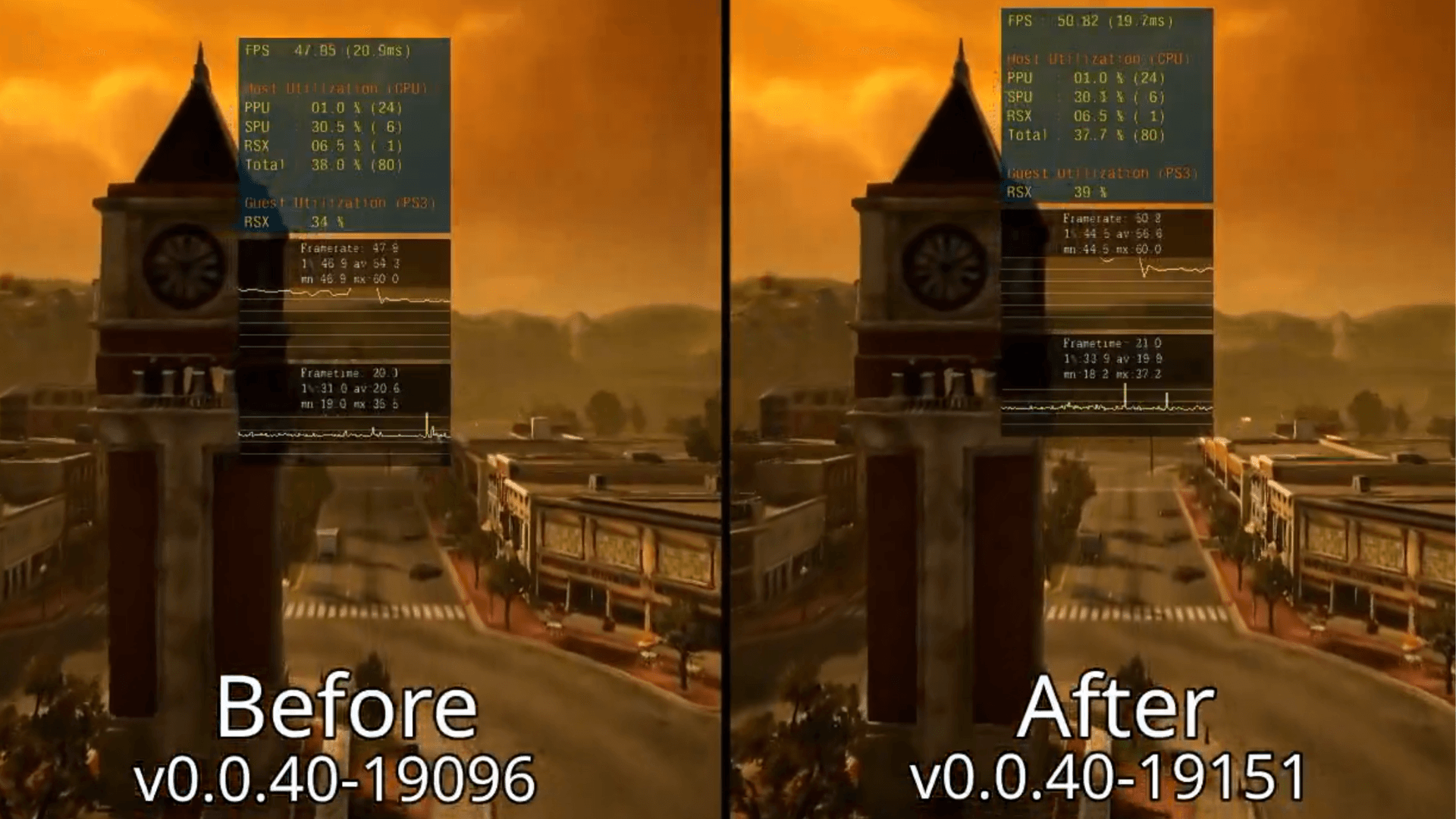
The man who wrote roughly 90% of the SPU code in Twisted Metal once believed the PS3 was simply too complex to ever emulate. James Stanard, an original programmer on the 2012 Eat Sleep Play title, said he had been "convinced at the time that PS3 would never be emulateable." On April 3, 2026, RPCS3 gave him reason to reconsider.
The open-source PS3 emulator announced a breakthrough in handling the Cell Broadband Engine's Synergistic Processing Units, the parallel co-processors that made Sony's console a genuine engineering puzzle. Lead developer Elad, known in the codebase as elad335, discovered previously unrecognized SPU usage patterns and wrote optimized code paths that generate more efficient native x86 output from them via RPCS3's LLVM and ASMJIT backends. The result is a 5–7% average FPS improvement measured between builds v0.0.40-19096 and v0.0.40-19151, and unlike most emulator patches, it applies to every game in RPCS3's library without exception.
Twisted Metal served as the primary benchmark precisely because of its SPU demands. Stanard noted he and his team had moved post-processing effects off the GPU and onto the SPUs, ultimately pushing the hardware to its limits: "We basically maxed out the PPU, SPUs, and RSX all at the same time." That a budget AMD Athlon 3000G, a dual-core chip that would ordinarily struggle with PS3 emulation, showed improved audio and performance in Gran Turismo 5 under the new build speaks to how fundamental the optimization is. The RPCS3 team framed the gains bluntly: "All CPUs can benefit from this, from low-end to high-end!"
This is not Elad's first time cracking open the Cell's complexity. His June 2024 SPU optimizations delivered 30% to 100% performance gains on quad-core, quad-thread configurations, with Demon's Souls achieving doubled frame rates on hardware-constrained systems. The April 2026 breakthrough compounds those gains by attacking the code generation layer itself, tightening host-side machine code for SPU workloads in a way that lifts every title simultaneously.

The performance update arrived alongside a separate but equally significant overhaul: a redesigned in-game overlay built specifically for handheld PCs. Previewed on March 9, 2026, and released in early April, the interface takes clear visual cues from SteamOS and targets the Steam Deck and ASUS ROG Ally. PS3 games can now be added directly to Steam as non-Steam shortcuts, with original XMB artwork carried over from RPCS3 automatically. Resolution changes no longer require a restart, and the in-game home menu sits behind SELECT+START to avoid clashing with the Steam Deck's built-in overlay. Footage confirmed Skate 3 running on the ASUS ROG Ally X, establishing that the overhaul extends to Windows-based handhelds as well.
To get there, download the current nightly build directly from RPCS3's site (build v0.0.40-19151 or later), set the SPU decoder to LLVM recompiler, and enable "Preferred SPU Threads" based on your CPU's core count. Handheld users on the Steam Deck should enable the new overlay from the settings menu and use the non-Steam shortcut feature to pull games into their library with artwork intact.
RPCS3's compatibility list now shows 73.94% of its 3,565 tested PS3 titles rated Playable, with over 98% of the entire library reaching in-game status. Stanard, who called Elad's work "amazing," captured what that trajectory means from the developer side: a console once defined by its resistance to emulation is now, title by title, fully within reach.
This article was produced by Prism’s automated news system from verified source data, official records, and press releases, then run through automated quality and moderation checks before publishing. The system is built and supervised by the people who set the standards it runs under. Read our full AI policy.
Did this article answer your question?