Sony writes down Bungie by $565 million as live-service doubts deepen
Sony took another $565 million hit on Bungie, lifting FY2025 write-downs to $769 million and sharpening doubts about Marathon and PlayStation’s live-service push.

Sony has taken another $565 million write-down against Bungie, turning one bad quarter into a yearlong indictment of its live-service gamble. The new impairment follows a $204 million cut in November and brings the total amount wiped from Bungie’s value over the last financial year to $769 million, more than 20 percent of the $3.6 billion Sony paid for the studio in 2022.
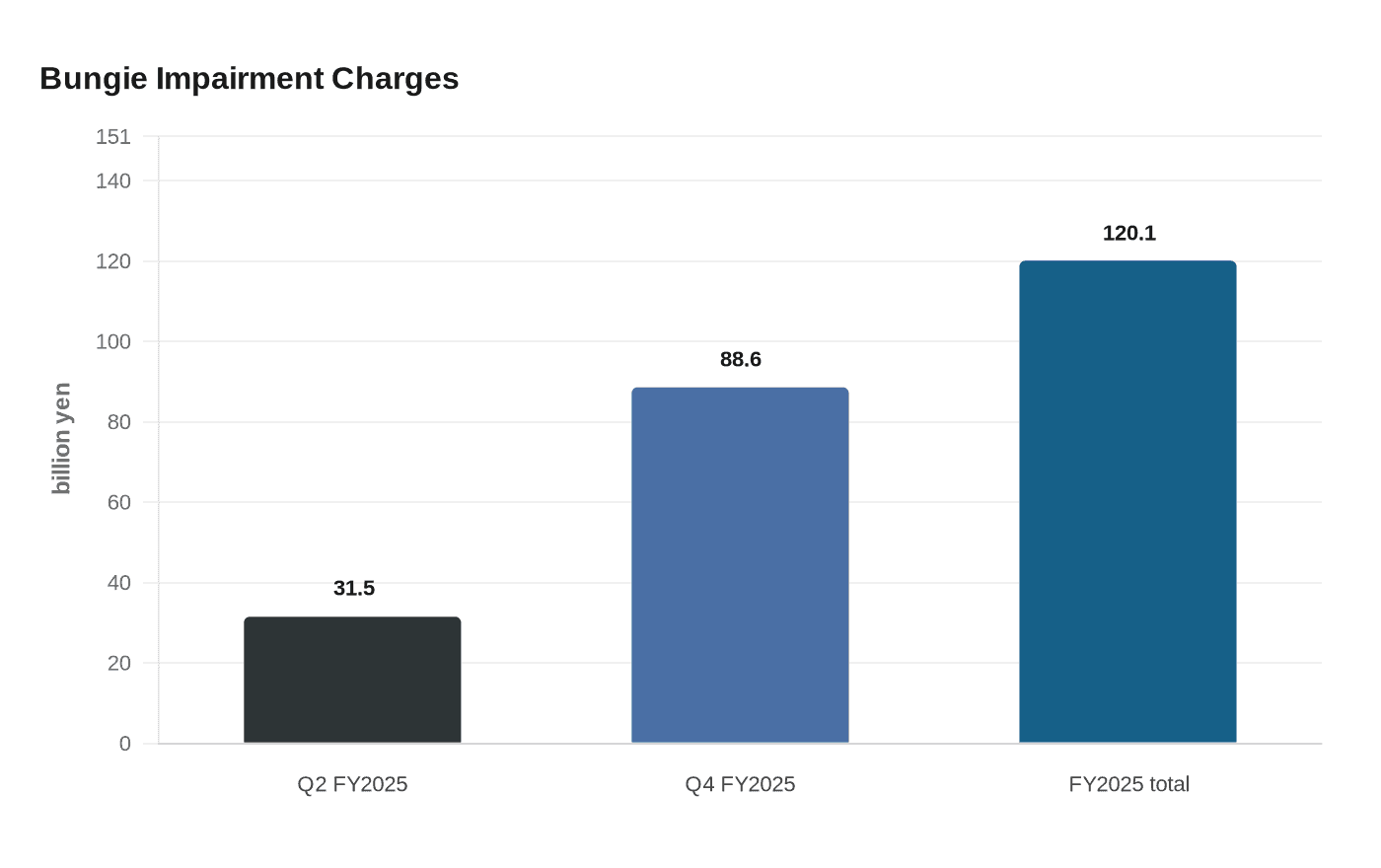
In Sony Group Corporation’s FY2025 results, those losses showed up as 120.1 billion yen in impairment charges tied to Bungie’s intangible and other assets. Sony booked 31.5 billion yen of those losses in the second quarter and 88.6 billion yen in the fourth quarter, making Bungie one of the clearest signs that the company’s push into live-service gaming has not produced the return it expected. The accounting matters because it reduces Bungie’s booked value, but it also signals that Sony sees a real business problem rather than a temporary wobble.
The pressure lands hardest on Marathon, the studio’s next major test. Bungie said on June 17, 2025 that it had delayed Marathon from its planned September 23 release after Alpha playtest feedback, saying it needed more time to refine the game. Sony later said in its November 11, 2025 Q&A summary that Marathon development was ongoing, but it did not give a clear sign that the project had fully regained momentum.
That leaves Bungie in a difficult position inside Sony’s PlayStation ecosystem. The company’s broader Game & Network Services segment still posted operating income growth in FY2025, so Bungie was not dragging down the entire gaming business. Even so, the studio now looks less like a prized growth engine and more like an expensive bet failing on its own terms. For Sony, the problem is not just the size of the write-down. It is the repetition, and the fact that one of the industry’s most recognizable live-service specialists has become a financial warning sign.
This article was produced by Prism’s automated news system from verified source data, official records, and press releases, then run through automated quality and moderation checks before publishing. The system is built and supervised by the people who set the standards it runs under. Read our full AI policy.
Did this article answer your question?