Spore developers say early previews created impossible expectations
Spore’s creators said its previews sold a fantasy of evolution-to-space that the shipped game could never match, a lesson still haunting reveal-heavy marketing.
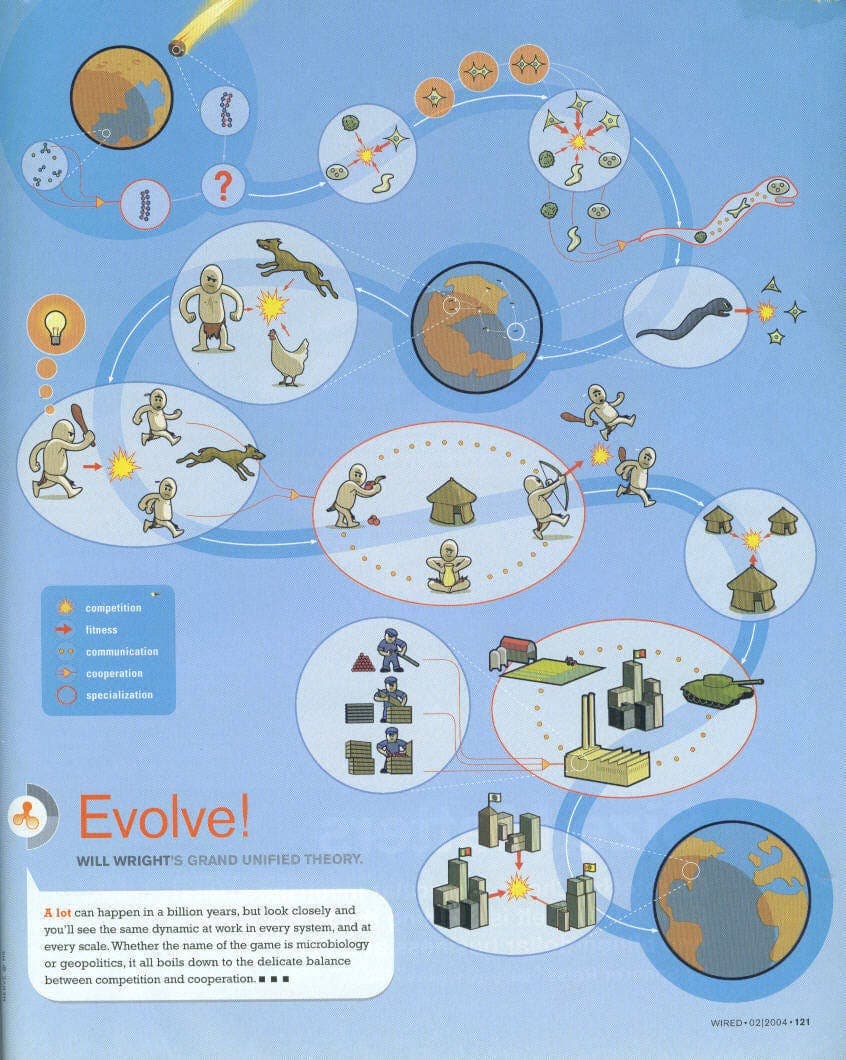
Spore is back in the conversation because its own developers have put a blunt name on the gap that haunted it from the start: the previews were bigger than the game being built. That mismatch helped turn Will Wright’s most ambitious pitch into one of gaming’s enduring cautionary tales, a project remembered as much for what players imagined as for what shipped.
At E3 2005, Spore sounded like a genre unto itself. Players would guide life from a microscopic organism to interstellar travel, with player-created creatures feeding into a shared online database that populated other worlds. BBC News reported that year that the game was due in stores by autumn 2006, a timeline that captured how quickly the idea escaped the bounds of the actual production.
The final release arrived far later. Electronic Arts announced on August 14, 2008 that Spore had gone gold and would ship September 7, 2008 in North America. By then, the hype had hardened into expectation, and the game had already become famous for promising a seamless evolutionary simulation that many players assumed would unify creature design, civilization-building, and space exploration into one continuous system.
What shipped was creative, strange, and commercially successful, but it played more like a stylized set of systems than the living simulation people had been sold in their heads. Electronic Arts said on September 24, 2008 that Spore had sold through more than one million copies worldwide across PC, Mac, and Nintendo DS. By May 2009, the publisher said fans had uploaded 100 million creations to the Sporepedia since the launch of Spore Creature Creator in June 2008, including 31,017,761 creatures. The game clearly found an audience. It just did not satisfy the fantasy that early footage had created.

That tension was sharpened by the launch fallout. TechCrunch reported in September 2008 that 2,016 of 2,216 Amazon ratings were one-star reviews amid a major DRM backlash, and estimated 500,000 BitTorrent downloads within a week of release. Spore became a business hit, a community engine, and a lightning rod all at once.
The new retrospective gives the old story sharper edges. Wright said he and Electronic Arts executive Don Mattrick were at odds over some design decisions, while Chris Hecker said the team never felt pressured in the way outsiders might assume. Wright also said the 2005 GDC presentation was meant to get early feedback, then later admitted the team was “definitely overrepresenting what it eventually became.” That is the lesson Spore still carries: in a reveal cycle that keeps rewarding bigger promises and cleaner sizzle reels, the most dangerous thing a game can become is the one people already built in their heads.
This article was produced by Prism’s automated news system from verified source data, official records, and press releases, then run through automated quality and moderation checks before publishing. The system is built and supervised by the people who set the standards it runs under. Read our full AI policy.
Did this article answer your question?