Washington Lawsuit Accuses Valve of Running Illegal Gambling Through Loot Boxes
Every $2.49 key sold to open a Counter-Strike loot box may have quietly funded what two players are now calling an illegal gambling operation generating over $1 billion a year.
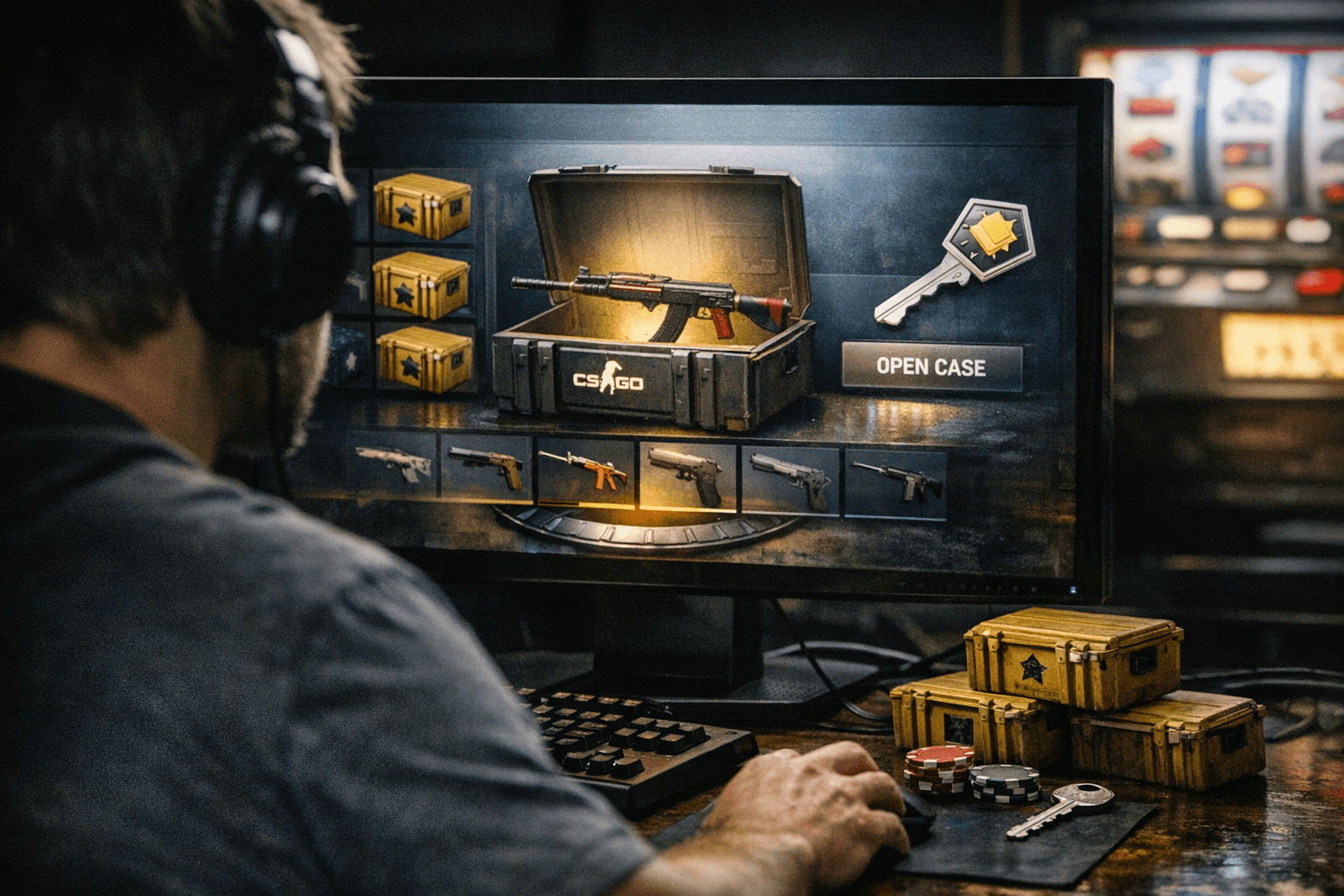
Two video game players are arguing in federal court that Valve Corporation's loot box system is not a game mechanic but a slot machine, and they want a jury to agree.
Alexander Flauto of Ohio and Jackson Meyer of Illinois filed a class-action complaint on March 9 in the U.S. District Court for the Western District of Washington, accusing Valve of knowingly operating an illegal gambling enterprise through the loot box systems embedded in Counter-Strike, Dota 2, and Team Fortress 2. The suit was filed by law firm Hagens Berman on behalf of a proposed nationwide class of consumers.
The mechanics the plaintiffs describe are familiar to anyone who has spent time in Counter-Strike. Players receive loot boxes through normal gameplay but must purchase a $2.49 key from Valve to open them. The outcome is determined by a random-number generator at the moment of opening. The visual presentation, according to the complaint, is designed to resemble a slot machine, with a simulated spinning wheel cycling through images of possible prizes before slowly landing on one item. Flauto and Meyer say they went through that process, paid for keys, and received virtual items worth less than what they spent.
The complaint characterizes the entire system as "a deliberate, carefully engineered revenue model" built on the same psychological triggers that casino designers have used for decades: unpredictable reward schedules, near-miss illusions, sensory design intended to heighten engagement, the impulse to chase losses, and 24-hour availability. The attorneys argue players return to loot boxes for the same reason they pull slot machine levers, for the chance, however remote, of landing something worth hundreds or thousands of dollars.
The revenue figures cited in the complaint help explain why the stakes of the litigation are significant. A third-party tracking service cited by the plaintiffs' attorneys estimated that more than 400 million Counter-Strike loot boxes were opened in 2023 alone, with Valve generating over $1 billion from key sales that year. Independent analysts cited by KING 5 News placed key sale revenue above $1 billion in both 2023 and 2025. The broader market for Counter-Strike digital items hit a record $4.3 billion in early 2025, according to Bloomberg. Steam, Valve's digital distribution platform, had an estimated 132 million monthly active users and 69 million daily users as of January 2026.
The plaintiffs also allege Valve profited through a second channel beyond key sales. Valve takes a 15% commission on transactions conducted through its Steam Community Market and provides users with a "Trade URL" that can be shared on third-party trading sites. The complaint contends Valve was aware of and actively facilitated external cash marketplaces for virtual items, establishing that those items carry real-world monetary value and deepening the gambling analogy.
Hagens Berman founder and managing partner Steve Berman was direct about where the firm believes the harm is most acute. "Valve knew children were on the other end of these transactions," Berman said. "Rather than protect young players through age verification or a parental consent mechanism, we believe they rigged the game to extract more money from them." The complaint cites research indicating that children introduced to gambling are four times more likely to develop a gambling problem later in life.
The suit alleges violations of Washington's law on recovery of money lost at gambling, the Washington Consumer Protection Act, and unjust enrichment. The plaintiffs are seeking restitution, damages, treble damages, disgorgement of Valve's gains, injunctive relief that would require Valve to shut down its loot box operation, attorneys' fees, and a jury trial.
This is not the first time Valve has faced this argument in the Western District of Washington. A federal court granted summary judgment in Valve's favor on January 14, 2022, in a prior loot box case involving Counter-Strike: Global Offensive, Dota 2, and Team Fortress 2. That case collapsed on causation: the plaintiff parents could not show their children had purchased loot boxes in Dota 2 and Team Fortress 2, and for Counter-Strike, they had no evidence they had ever encountered Valve's statements about the system. The current plaintiffs are direct purchasers making claims under gambling statutes rather than solely under consumer protection law, a framing that may sidestep some of the causation problems that defeated the 2022 suit.
The Washington filing arrives weeks after New York Attorney General Letitia James sued Valve in February, calling its loot boxes "quintessential gambling." Valve has not publicly commented on either lawsuit.
This article was produced by Prism’s automated news system from verified source data, official records, and press releases, then run through automated quality and moderation checks before publishing. The system is built and supervised by the people who set the standards it runs under. Read our full AI policy.
Did this article answer your question?