Ziff Davis Expands IGN Brand to France Through eMense Licensing Deal
The Dutch media firm eMense now runs IGN across four European countries, reaching 16 million gamers, with French readers the newest addition to its growing licensed network.
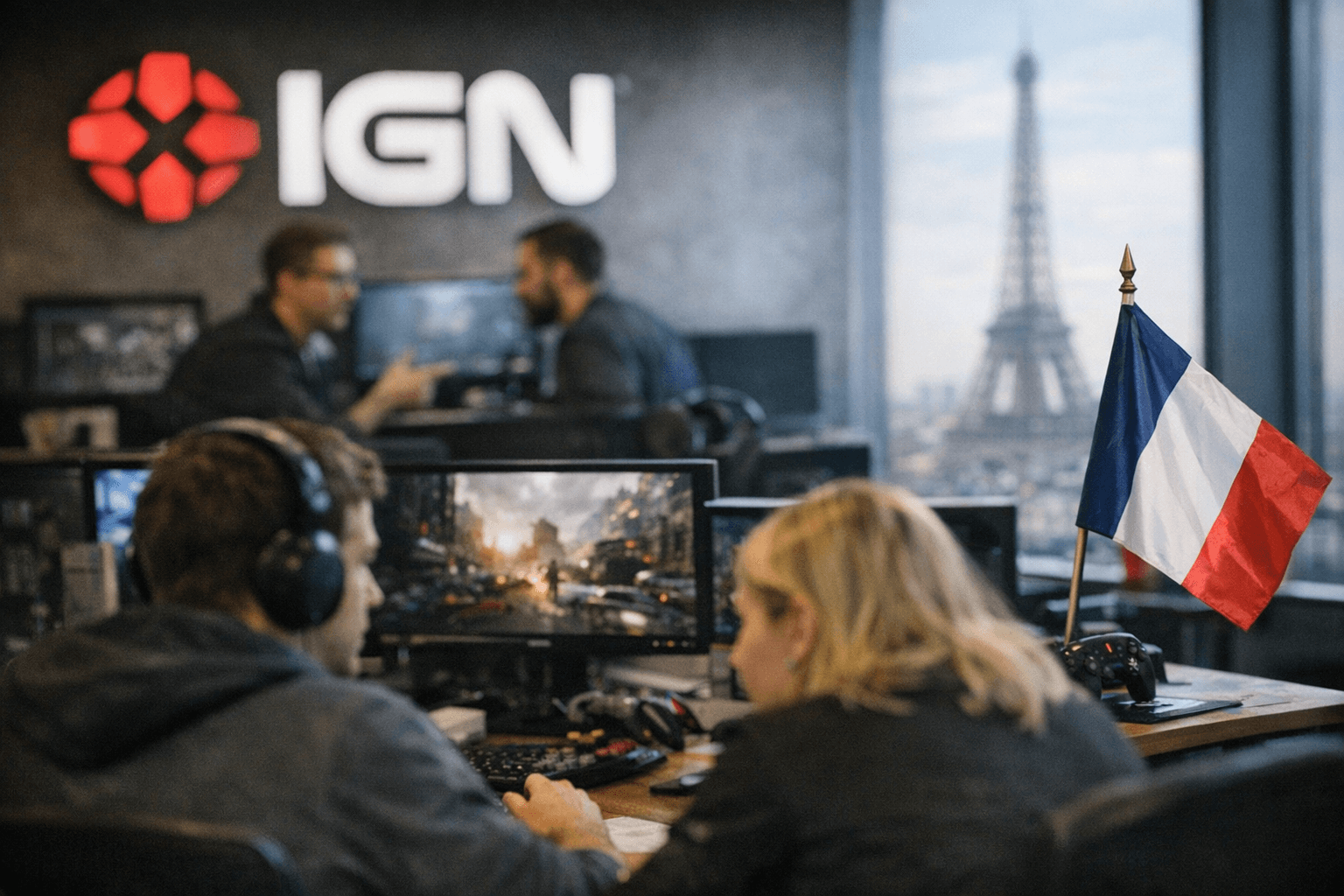
The editorial team at IGN France woke up on March 26 operating under a new corporate parent, and most of their readers had no idea anything was changing. Erwan Lafleuriel, who has led the French edition since 2020, is staying in place. The masthead looks the same. But behind the scenes, the business running it shifted: Dutch media company eMense, already licensed to operate IGN Benelux, IGN Nordic, and IGN Germany, formally took over IGN France under a new agreement with Ziff Davis.
The deal is the latest move in a deliberate Ziff Davis strategy to grow the IGN brand internationally without building out owned offices in each country. Rather than staffing up a Paris bureau and absorbing the overhead of a direct subsidiary, Ziff Davis licenses the brand to a regional operator with existing infrastructure and local market knowledge, then collects a revenue share. For eMense, the appeal is immediate: IGN's name commands advertiser rates and editorial credibility that a standalone Dutch gaming site cannot easily replicate. The combined reach of the four IGN editions eMense now manages sits at roughly 16 million monthly users. IGN's full global network spans 366 million users across 30 international editions in more than 100 countries, so France represents both a significant standalone market and a meaningful step toward closing that gap.
Adam Doree, SVP of Global Partners at Ziff Davis, described eMense as a long-standing partner and pointed to the competitiveness of European markets as the core reason the licensing model makes sense. Lafleuriel called the arrangement an "exciting next step" for building on what IGN France has already established. IGN France itself is not new, having launched in 2015 under Webedia, the French media group that still operates IGN Brasil today. What changes is the operational layer above the editorial team.
That operational shift has concrete consequences for what French readers will actually encounter. Under eMense, the commercial priorities tilt toward the Dutch company's existing advertiser relationships and its proven playbook from Benelux and the DACH region. Expect heavier investment in video and social formats that have performed across eMense's other IGN editions, and a local editorial calendar more tightly synchronized with French gaming events, esports leagues, and francophone creator culture. On the review side, IGN's global editorial standards travel with the brand license, so scoring policies and embargo practices should remain consistent with what international IGN readers recognize. The more visible shift will be in community and feature coverage, where a locally empowered team with a dedicated budget typically chases stories that a centralized English-language desk would deprioritize: French publisher news, domestic esports circuits, and regional game development.
Ziff Davis is also signaling that France is not the end of this particular expansion. A separate deal to launch a French edition of CNET, under a similar licensing model with a different partner, is already in the works, suggesting the company views the territory as broadly underpenetrated rather than niche. For eMense, operating four IGN editions simultaneously means the French launch arrives with a tested content production pipeline and cross-market advertising packages already in hand, rather than starting from zero.
This article was produced by Prism’s automated news system from verified source data, official records, and press releases, then run through automated quality and moderation checks before publishing. The system is built and supervised by the people who set the standards it runs under. Read our full AI policy.
Did this article answer your question?