Five Vintage Synths That Defined Modern Electronic Music
These five synths still shape what players buy, patch, and clone, from a 500-unit Minimoog tribute to the DX7's 200,000-plus reach.
Moog Minimoog Model D
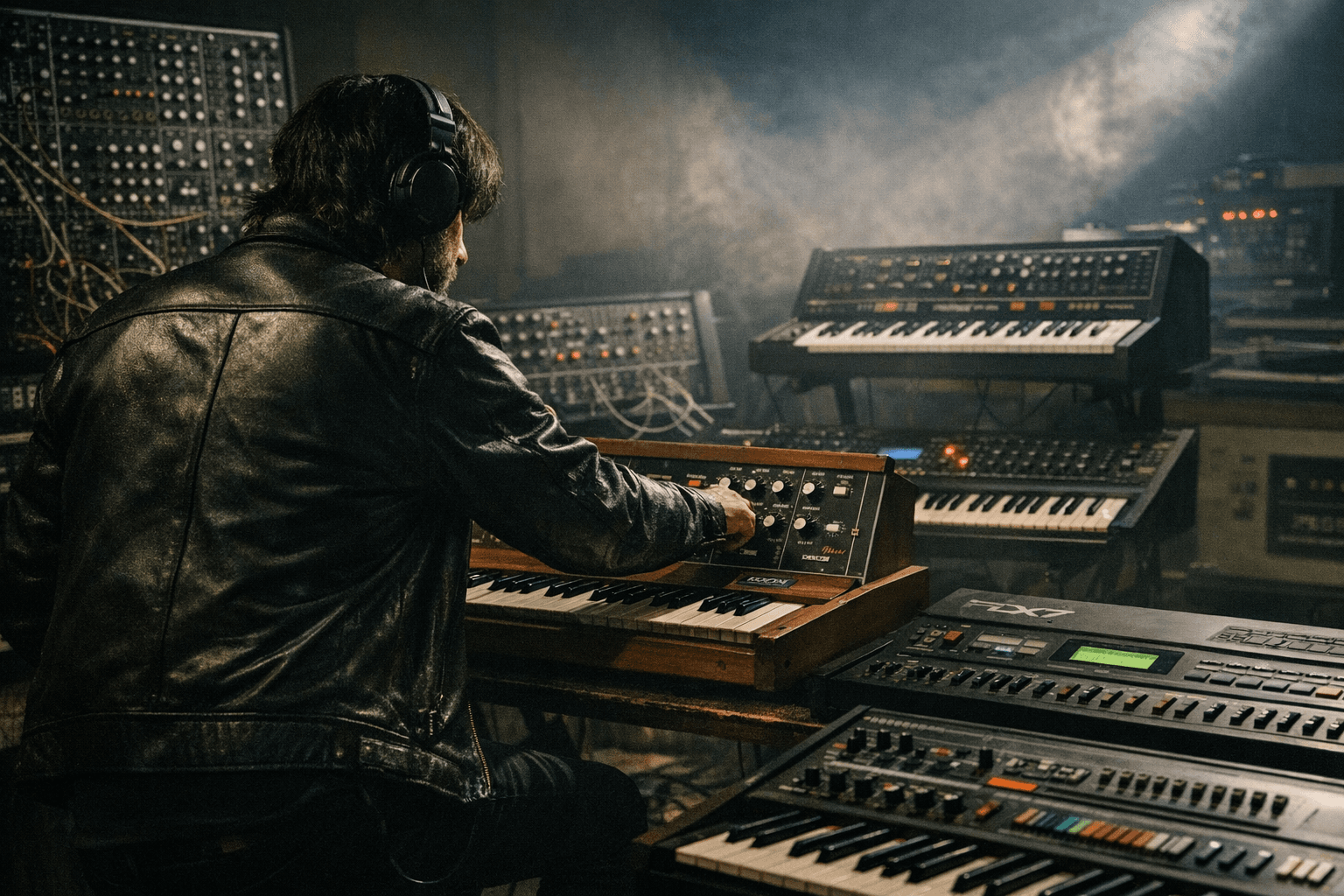
The collector’s shortcut starts with the Minimoog Model D, because almost every later subtractive synth still borrows its shape, its workflow, or both. Bob Moog condensed modular power into a hardwired keyboard instrument that made basses, leads, and fat monosynth lines feel immediate instead of technical, and that is why the Model D still reads as the default image of a synthesizer. Moog Music’s Bob Moog Tribute Edition keeps that legacy active as a limited run of 500 units, with $500 from each sale going to the Bob Moog Foundation.
That detail matters because it tells you where the Minimoog sits in the market today. It is a blue-chip grail in original form, but it is also the rare vintage icon that still appears in an official tribute run, which makes its influence visible without forcing everyone into the used-only hunt. For daily work, the practical lesson is simple: if you want the classic American subtractive sound, this is the template that taught the rest of the industry how to speak.
Sequential Circuits Prophet-5
If the Minimoog defined the solo voice, the Prophet-5 changed the way players thought about memory and polyphony. Introduced in 1978, it is widely described as one of the first fully programmable polyphonic analog synthesizers, and that single idea reshaped studio life. Instead of rebuilding sounds by hand every time, musicians could store them and bring them back, which turned a synthesizer from a performance tool into a repeatable production instrument.
That is the practical sonic breakthrough collectors still care about. The Prophet-5 gave you rich analog chords, brass, pads, and stacked textures with recall, which is why it remains one of the most important blue-chip polys on the vintage market. Its importance is not just that it sounded expensive, it is that it made consistency part of the instrument’s promise, a feature modern players now take for granted in everything from hardware polys to software instruments.
Yamaha DX7
The DX7 is the machine that made the digital age audible. Yamaha released it in 1983 to herald that new era, and the keyboard is still commonly described as the first successful digital synthesizer, with more than 200,000 units sold. That scale changed everything, because a sound that once felt futuristic suddenly became part of the regular pop vocabulary.
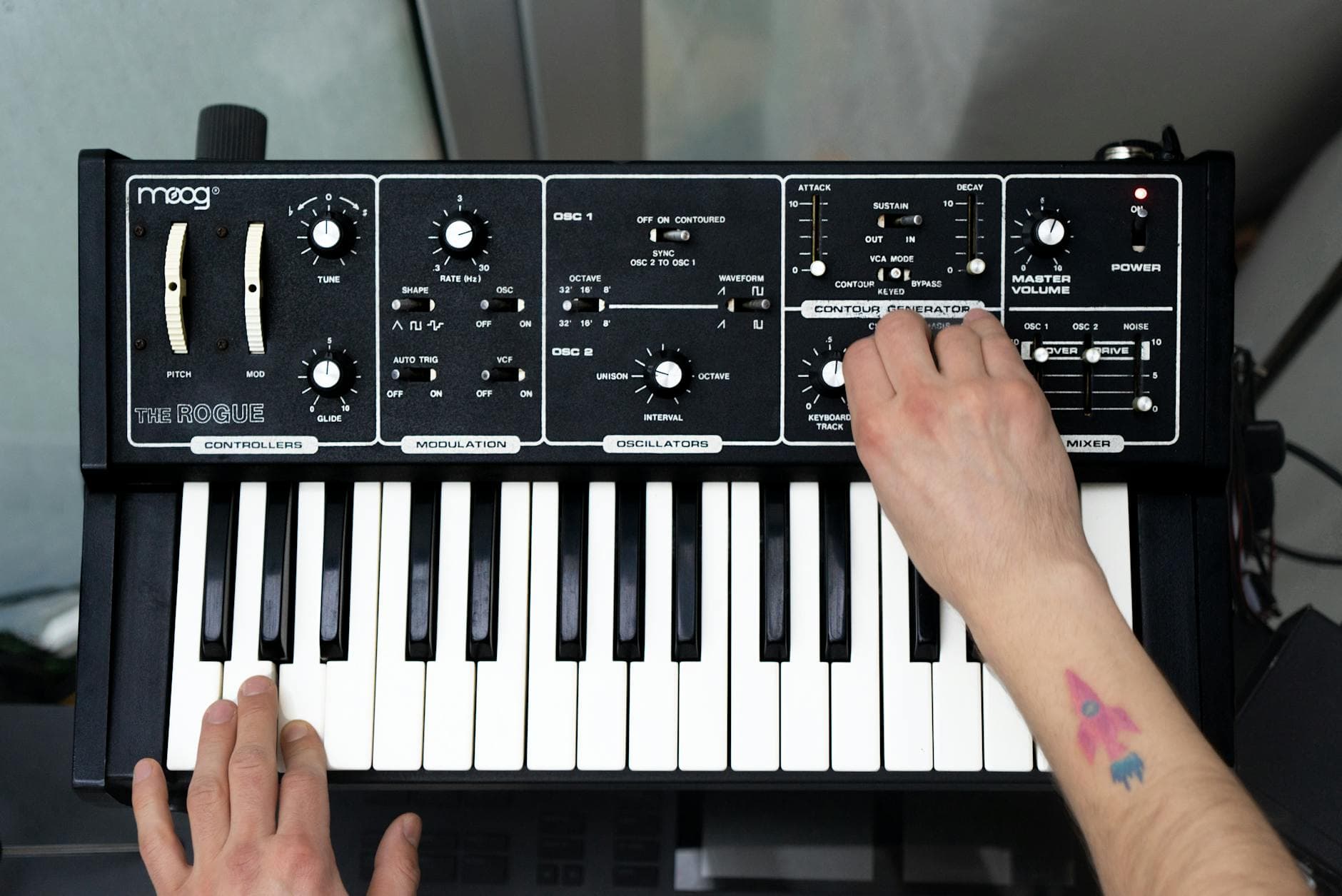
In practical terms, the DX7 brought glassy electric pianos, bell-like tones, sharp basses, and a cleaner attack than most analog rivals could deliver. That is why it crossed from studio curiosity to mainstream weapon so quickly, and why it remains one of the most attainable entries on this list. The market story is the surprise here: despite its legendary status, the DX7 is not a rarefied museum piece in the way a top-tier analog poly can be, because Yamaha built and sold so many of them that the used pool is still deep.
Korg M1
The M1 took the workstation idea and made it normal. Built from 1988 to 1995, it bundled sample playback, sequencing, and synth architecture into one mainstream production tool, and it is widely described as one of the best-selling synthesizers in history, with estimated sales of about 250,000 units. That commercial reach explains why its factory sounds became so recognizable in late-1980s and early-1990s pop and house music.
What the M1 changed in practical sonic terms was speed. Its polished pianos, strings, organs, and keyboard layers let producers sketch complete tracks quickly, which gave the workstation era its identity and made the instrument a fixture in everyday studio life. For collectors, the availability angle is the key takeaway: this is one of the great canonical synths that is still far more reachable than the analog blue chips, because it was a mass-market success rather than a scarce niche artifact.
Doepfer A-100
The A-100 is the outlier on this list, and that is exactly why it matters. Widely associated with the 1995 start of the Eurorack modular revival, it helped turn modular synthesis back into a living format instead of a sealed chapter of electronic-music history. Its power is not a single famous preset or signature patch, but the way it reopened synthesis as a build-it-yourself process.
In sonic terms, the A-100 gave players patchable control over every stage of the sound, from oscillation and filtering to routing and modulation. That made the modular idea feel accessible again, because you could assemble a system gradually instead of chasing one impossible vintage monster. The market detail is the story here: compared with the blue-chip classics above, the A-100 helped create a format that is still expandable, still current, and still the most practical entry point into modular for players who want the lineage without the museum price tag.
This article was produced by Prism’s automated news system from verified source data, official records, and press releases, then run through automated quality and moderation checks before publishing. The system is built and supervised by the people who set the standards it runs under. Read our full AI policy.
Did this article answer your question?