Hivetune's Free Relica 2 Brings Authentic 8-Bit Chiptune Sounds to Modern Producers
Hivetune's Relica 2 lands free with 30+ factory presets and a bitcrusher hand-tuned per oscillator, making NES-accurate sound design a no-cost proposition.
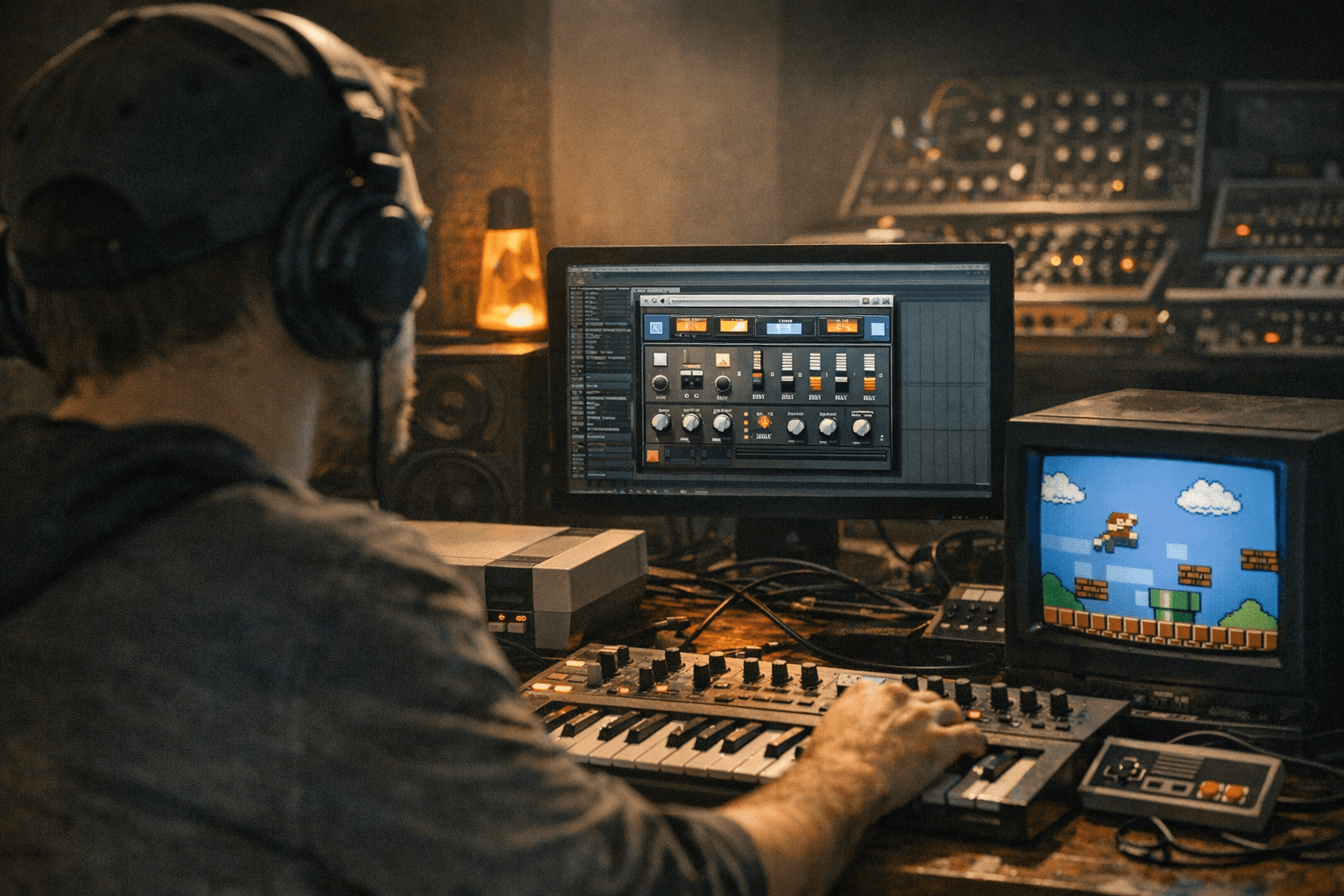
Getting genuine NES character into a DAW without hardware used to mean hunting for a tracker or paying for one of the handful of focused chiptune plugins actually worth using. Hivetune's Relica 2, released free on April 8, gave producers a third option: a subtractive synthesizer built specifically to recreate the sound of 8-bit consoles and handheld hardware, available at no cost in VST3, AU, and standalone formats for Windows 10 and newer and macOS 11.0 and up, including Apple Silicon and Intel.
The sequel to Hivetune's original Relica, the plugin centers on four oscillator shapes: square, sawtooth, triangle, and sine. What separates it from typical retro synth tools is the detail behind each one. The built-in bitcrusher was fine-tuned by hand for each oscillator shape individually, meaning the grit it adds to a saw wave is calibrated differently than what it does to a sine. Pulse-width modulation runs across all four shapes rather than being locked to the square, which is unusual enough in subtractive design that Hivetune called it out explicitly. A dedicated noise module covers white, pink, and periodic types, and the BPM-syncable arpeggiator converts held chords into cascading note sequences in the style of classic chiptune sequencers. A vibrato engine with adjustable rate, depth, and multiple LFO shapes rounds out the modulation section. Everything sits on a single screen: oscillator, bitcrusher, noise, ADSR, arpeggiator, with no tabs to navigate. More than 30 factory presets cover leads, basses, percussion, and pads, and users can save and load their own patches from the same browser.
Getting authentic handheld sound out of Relica 2 is a three-step process. Disable antialiasing first; that one toggle is the largest single shift toward cartridge-era grit. Engage the bitcrusher, then set a short attack and fast release in the ADSR. From there, route the arpeggiator to 1/8 triplet for an NES-style lead, or switch the noise type to periodic for the percussive clicks that defined early handheld percussion. For a lo-fi pad, layer saw and sine oscillators, flip antialiasing back on, dial in gentle bitcrushing, and open attack and release wide.
The deeper discipline is using Relica 2 the way the hardware it references actually behaved. Engage monophonic mode and set portamento to taste: the NES and Game Boy sound channels were not polyphonic, and lush chord voicings are the fastest way to break the illusion. Let the aliasing run rather than reaching for EQ to smooth it out. The harmonic roughness that antialiasing-off produces is not a flaw to correct but the texture itself. In a mix, route Relica 2 into a tape saturation plugin or mild analog emulation stage, then sidechain-compress it under rhythmic elements so the bleeps sit in the pocket. Layered with a modern virtual-analog synth, Relica 2 works best placed on top, supplying gritted high-frequency character while a warmer source handles the low end.
Relica 2 does exactly what it sets out to do and nothing more, which for anyone chasing 8-bit authenticity on a zero-dollar budget is exactly the point.
Know something we missed? Have a correction or additional information?
Submit a Tip