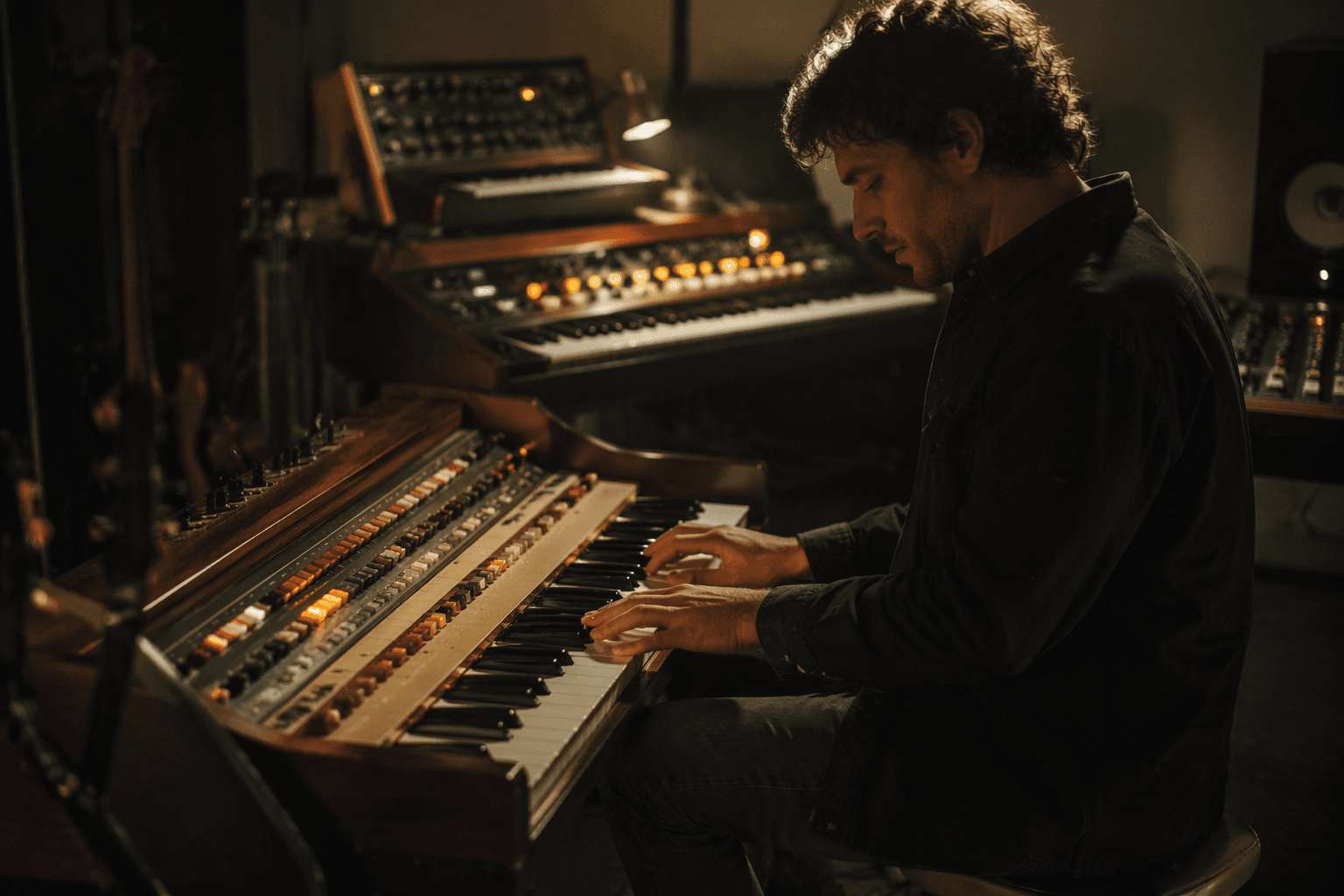
Korg turns phase 8 into a growing synth ecosystem at Superbooth
Korg is treating phase8 like a platform, not a finish line, and the add-ons around it show where its vintage-minded ecosystem feels real.
Phase8 arrives as a platform, not a finished trophy
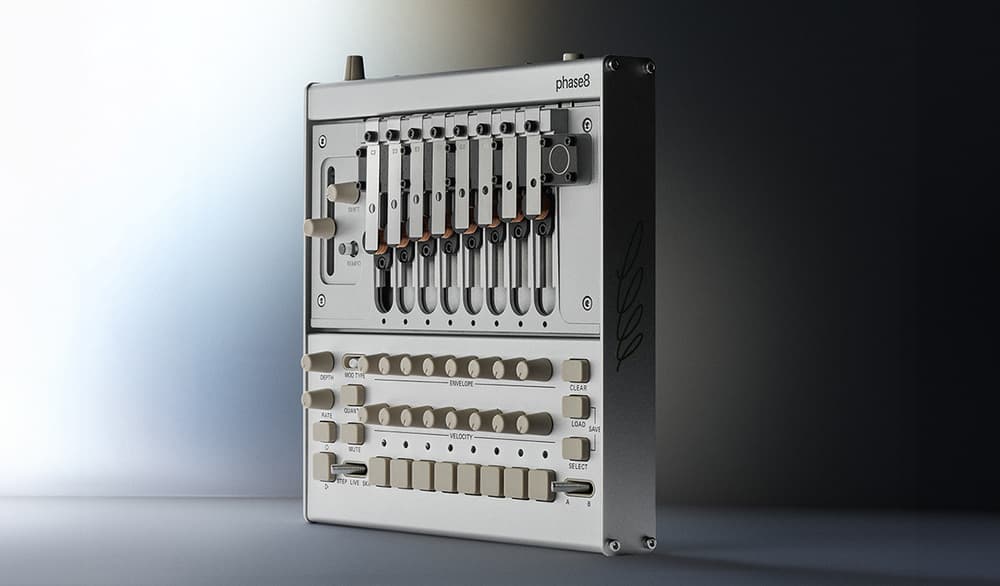
Korg did not bring phase8 to Superbooth as a sealed product story. In the wooded corner of Korg Berlin’s setup, the instrument was presented as something alive: an eight-voice acoustic synthesizer built on Acoustic Synthesis technology, with physically vibrating steel resonators under electronic control. That framing matters because it puts phase8 in a very old synth lineage, where the instrument is not just a keyboard or module but a system that invites expansion, modification, and play.
The production version’s path makes that idea even clearer. After prototype appearances at Superbooth in 2023, 2024, and 2025, phase8 formally debuted at NAMM 2026, giving it the sort of multi-year development arc vintage gear people usually associate with cult classics rather than brand-new products. The official product page describes eight independent electromechanical voices and 13 chromatically tuned resonators, with eight installable at any one time. Korg also says future resonators are in the works, and a presale package includes three exclusive resonators aimed at extending the instrument’s tonal range.
What phase8 actually does for players
On paper, phase8 is unusual enough to earn its place. The instrument supports envelope shaping, sequencing, analogue wavefolding, and pitch-dependent modulation, which gives it a much broader vocabulary than a novelty object built around moving parts. It is also physically interactive in a way that synth fans immediately understand: you can touch, pluck, strike, or otherwise excite the resonators by hand.
That hands-on design is part of the appeal. The resonators are not just a visual gimmick for demos; they are the core of the sound engine, which means the player is shaping both the note and the object that produces it. Korg’s own language, and the way the instrument was shown in Berlin, suggests an emphasis on performance experimentation rather than preset nostalgia. For readers who care about lineage, that makes phase8 feel less like a museum piece and more like a new branch of an old tree.
The add-ons that feel like real workflow extensions
This is where the ecosystem question gets interesting. The strongest additions around phase8 are the ones that expand how the instrument behaves, not just how it is packaged. The phase8 app, built by Iarla Scaife and Keisuke Nohara, adds browser-based access for MIDI-capable environments along with a visual editor for patterns and presets. That is not accessory theater. It gives the instrument a cleaner way to manage ideas, recall structures, and work with the kind of sequencing and preset navigation that modern hardware users now expect.
The resonator expansion story is also substantive. Korg has bass resonators that extend the low end, and the presale package’s three exclusive resonators point to a model where the sound source itself is expandable. For a synth built around physical resonance, that is a meaningful form of future-proofing. Instead of treating the instrument as a fixed voice architecture, Korg is effectively turning the resonator set into the modular layer.
The most intriguing examples push that logic even further. Hadrien Costrejean’s 3D-printed acoustic effects, which were demoed alongside the instrument, show that phase8 can absorb a maker culture mindset without losing its identity. Likewise, the Bex Burch collaboration recorded in Korg Berlin’s offices signals that the instrument is being used as a creative platform, not merely sold as a product SKU.
Where the ecosystem starts to look more peripheral
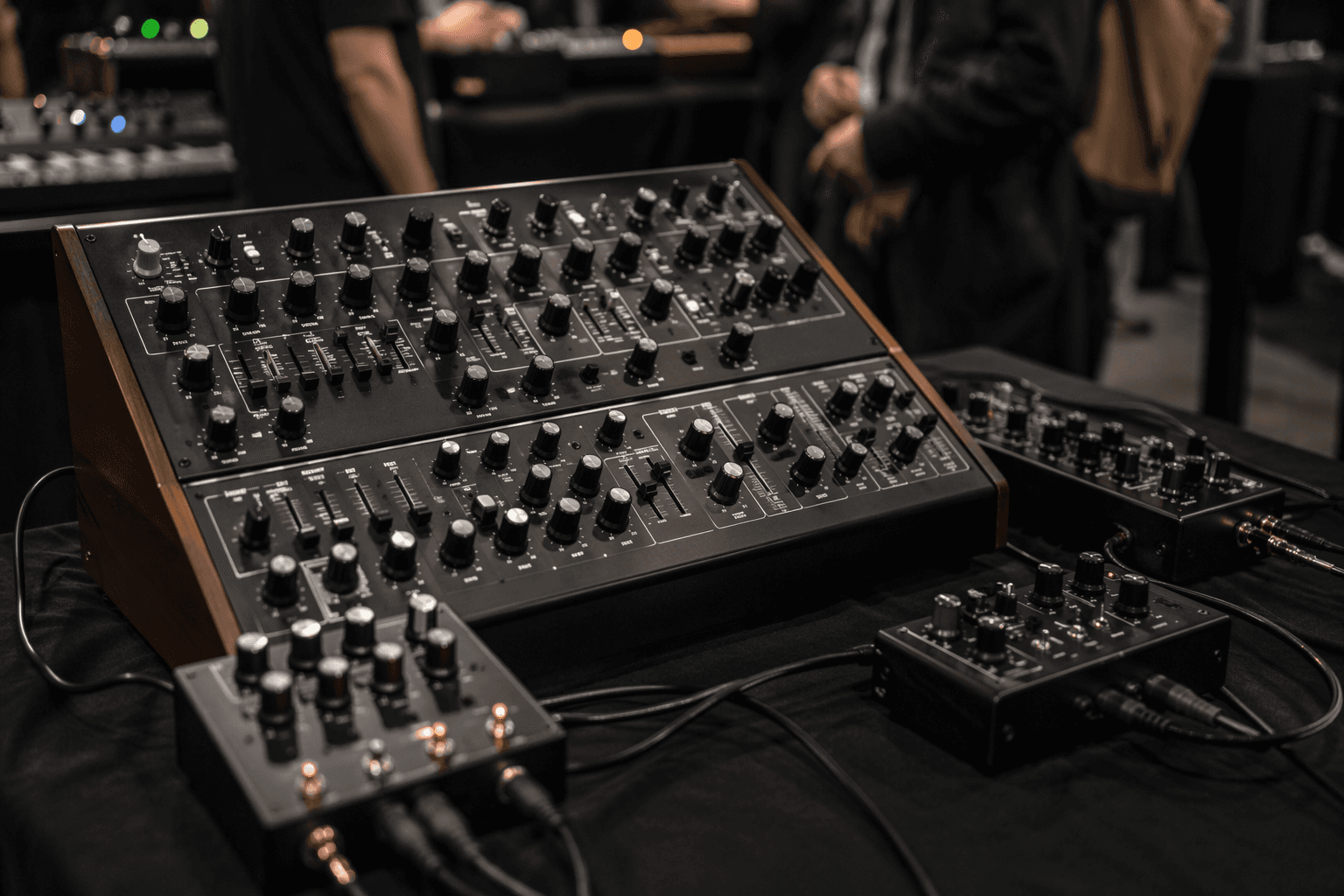
Not every piece around phase8 carries the same weight. The compact NTS mixer previewed at Superbooth, for example, feels useful but less tightly bound to phase8’s identity. It was shown as a nu:tekt kit with 2 mono and 4 stereo analog inputs, dual-channel effects, USB audio and MIDI, and a 3.5mm TRS MIDI out. That is a solid spec for a desktop rig or live table, and the idea of a no-solder, no-tools performance mixer with built-in effects and USB-C is easy to understand.
Still, the mixer is a broader Korg utility item rather than a phase8-specific extension. It may fit the same desk, and it may suit the same kind of player, but it does not deepen the acoustic synthesis concept the way the app or resonator expansions do. That distinction matters. Vintage-minded readers know the difference between an accessory that solves a real workflow problem and one that simply keeps a logo in the room.
The same caution applies to any branding halo that gathers around a hot new instrument. If Korg starts stacking mixers, effects, and one-off add-ons without making the core system meaningfully richer, the ecosystem becomes noise. The strongest legacy gear communities are built around tools that alter the relationship between player and machine, not just around add-on catalogs.
Sinevibes keeps the software side alive
The software side of the story gives Korg’s ecosystem argument more credibility. Sinevibes said it would be at Superbooth 2026 in Berlin working with both Korg and Dreadbox, and it has also pointed to ongoing DSP development with Korg products. That is important because it shows the platform is not frozen at launch. It continues to attract third-party development, which is usually the sign that a hardware family has real momentum rather than just a marketing cycle.
Sinevibes has been collaborating with Korg for years, including plug-in and effects releases for Korg devices, so the Berlin showing reads as continuity rather than a one-off booth appearance. For synth users, that continuity is often the difference between a product that ages well and one that becomes a dead end. A growing software layer can keep hardware relevant long after the first wave of excitement fades.
Why this matters to legacy-minded synth buyers
Korg’s phase8 story is not really about one instrument. It is about whether a modern synth brand can build the kind of ecosystem vintage gear people actually trust: one where the machine has a core identity, the expansions change how it behaves, and the surrounding tools serve the instrument instead of overshadowing it. At a street price of $1,149.99, phase8 is not pitched as a cheap curiosity, and its mix of physical interaction, resonator expansion, browser control, and ongoing third-party support gives it a stronger case than a standalone oddity.
That is why the Superbooth presentation landed. Korg was not just showing a new box in the woods. It was testing whether phase8 can become the center of a living system, with enough depth in the resonators, the app, the software partners, and the practical utilities to justify long-term buy-in. For a brand with legacy on its side, that is the real vintage question: is this a product you finish, or a platform you keep opening up?
This article was produced by Prism’s automated news system from verified source data, official records, and press releases, then run through automated quality and moderation checks before publishing. The system is built and supervised by the people who set the standards it runs under. Read our full AI policy.
Did this article answer your question?