Momo Müller launches editor and soundbank for Behringer CZ-1 MINI
Momo Müller’s new CZ-1 MINI editor puts phase-distortion controls on-screen, adds 50-plus sounds, and makes Behringer’s $89 mini feel less like a preset box.
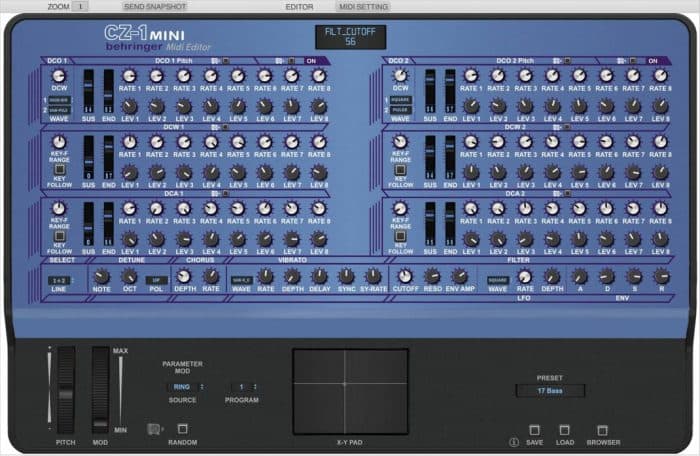
Momo Müller has given Behringer’s CZ-1 MINI something the little phase-distortion box really needed: a fast, hands-on way to edit it without living in its menus. The new editor ships in VST2, VST3, AU, and standalone formats for Windows and macOS, and it opens up direct parameter changes, DAW automation, X-Y modulation, and a set of nine random functions that turn programming from a chore into a quick session.
The package also includes a soundbank with 50 presets, or more than 50 new sounds depending on how you count the bank, and that matters for a synth built around compact hardware. At €6.90, about $7, the editor is priced like an impulse buy, but the practical appeal is bigger than the sticker price. It lets the CZ-1 MINI sit inside a DAW project as a sound module, which makes the Behringer box feel less like a novelty and more like an instrument that can stay patched into everyday work.
That shift is especially relevant because the CZ-1 MINI is Behringer’s compact take on Casio’s CZ lineage, one of the most recognizable digital synth families of the 1980s. Casio’s CZ series began in 1984, and the original CZ-1 arrived in 1986 as the flagship: 61 keys, velocity and aftertouch, 16-voice polyphony, 64 preset patches, 64 user patches, and a $1,399 list price. The modern MINI is a very different machine. It was announced in October 2025 and reported as available in February 2026, with a 27-key touch-capacitive keyboard, three voices, an analog 24dB low-pass filter, chorus, vibrato, USB-C, 5-pin DIN MIDI in, a sync input, a headphone jack, a 16-step sequencer, and a multimode arpeggiator.
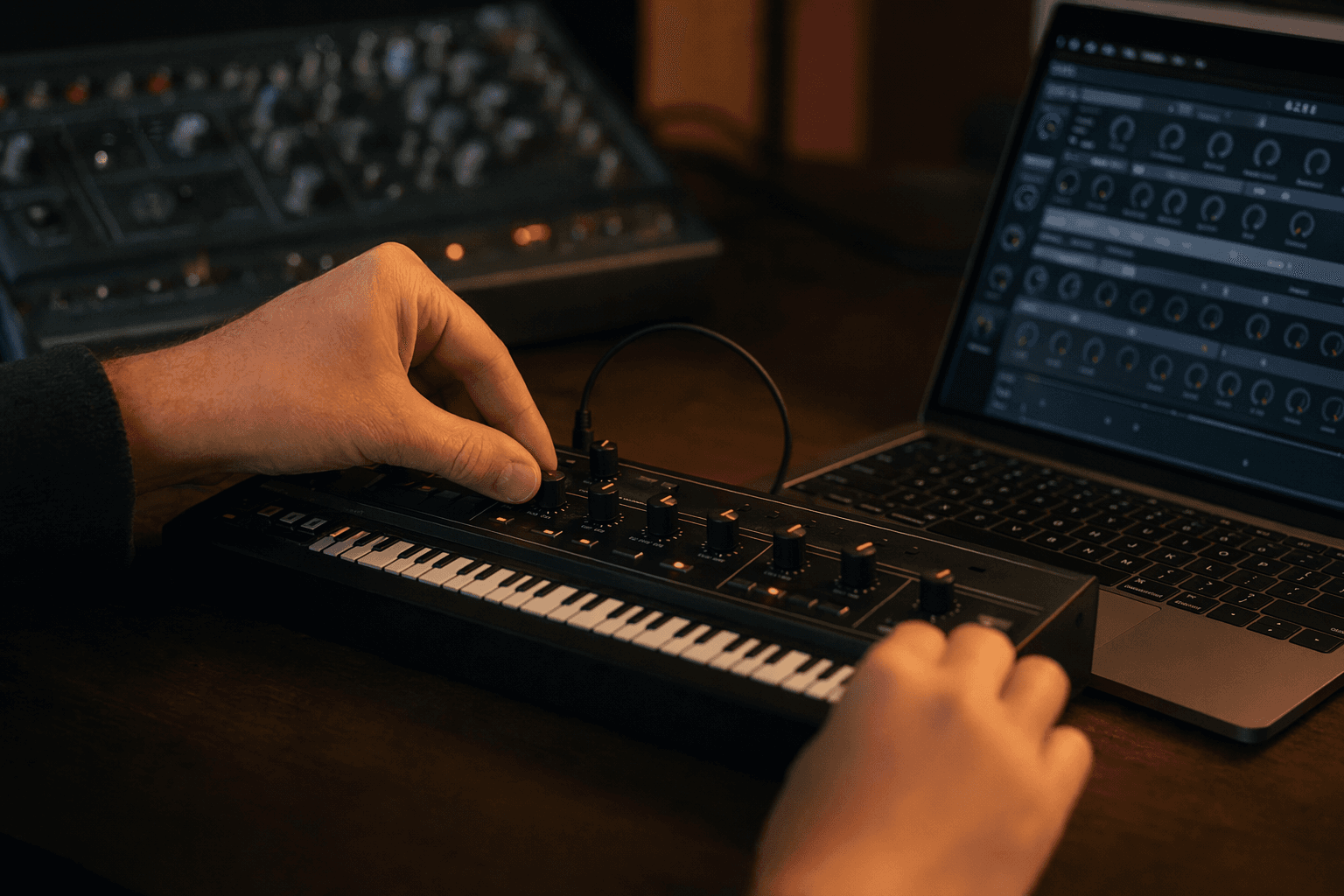
Behringer’s own implementation also makes the software angle possible. The CZ-1 MINI supports original SysEx files, plus NRPN and CC control for all parameters and bulk load and save. That kind of MIDI plumbing is exactly what third-party editors feed on, and it helps explain why Momo Müller’s package feels less like an accessory and more like a missing control surface.
For vintage synth owners, the real question is whether this keeps the CZ-1 MINI in rotation. With faster patch building, easier recall, and a bank of fresh sounds, the answer looks closer to yes than to shelf candy. The hardware still carries the Casio DNA, but the editor gives it the kind of daily usability the original CZ-1 only hinted at.
This article was produced by Prism’s automated news system from verified source data, official records, and press releases, then run through automated quality and moderation checks before publishing. The system is built and supervised by the people who set the standards it runs under. Read our full AI policy.
Did this article answer your question?