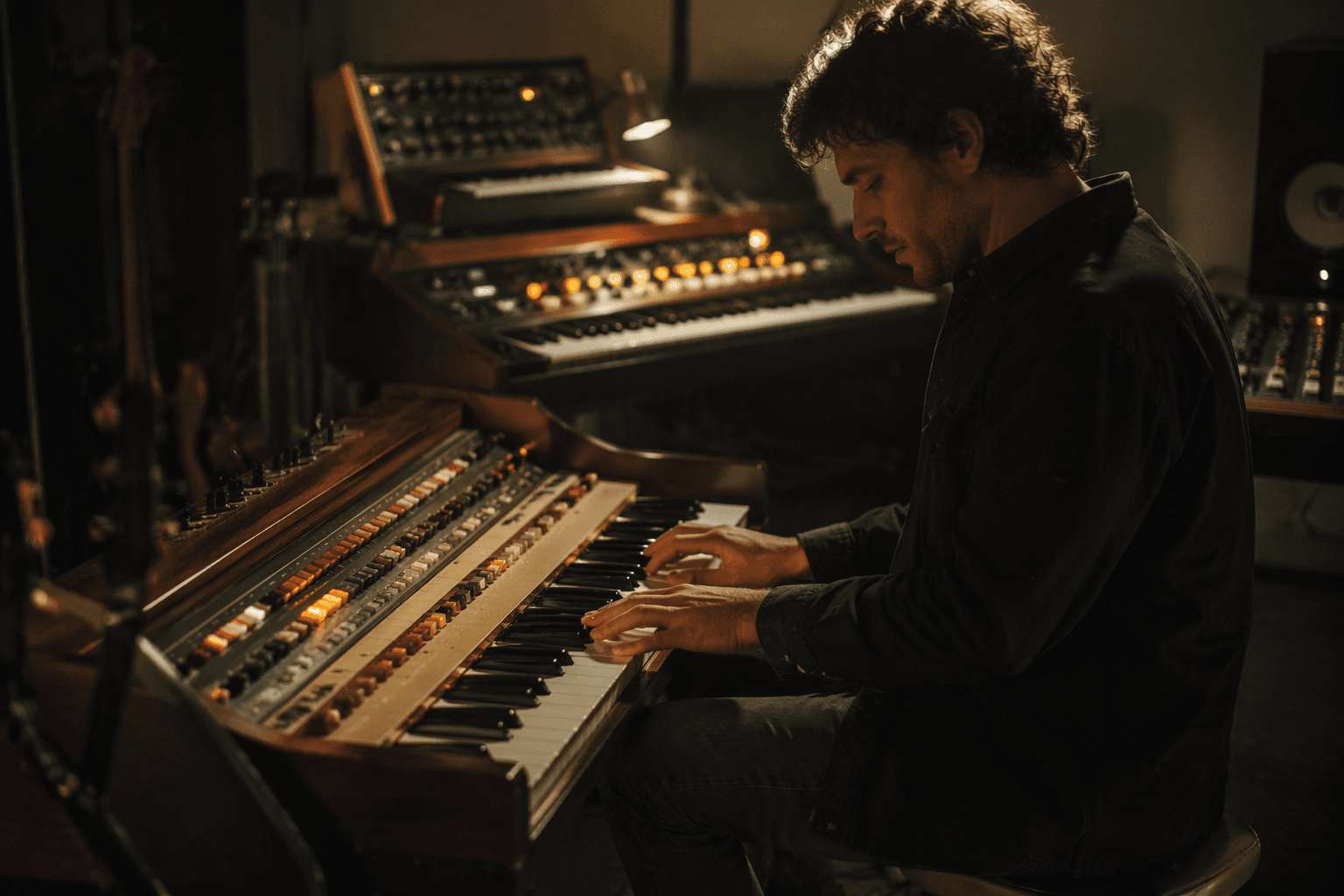
Olof Dreijer rethinks vintage synths ahead of debut album Loud Bloom
Olof Dreijer turns vintage synths into working tools, not trophies, by pairing analogue tone with Ableton, modular, and fast editing.
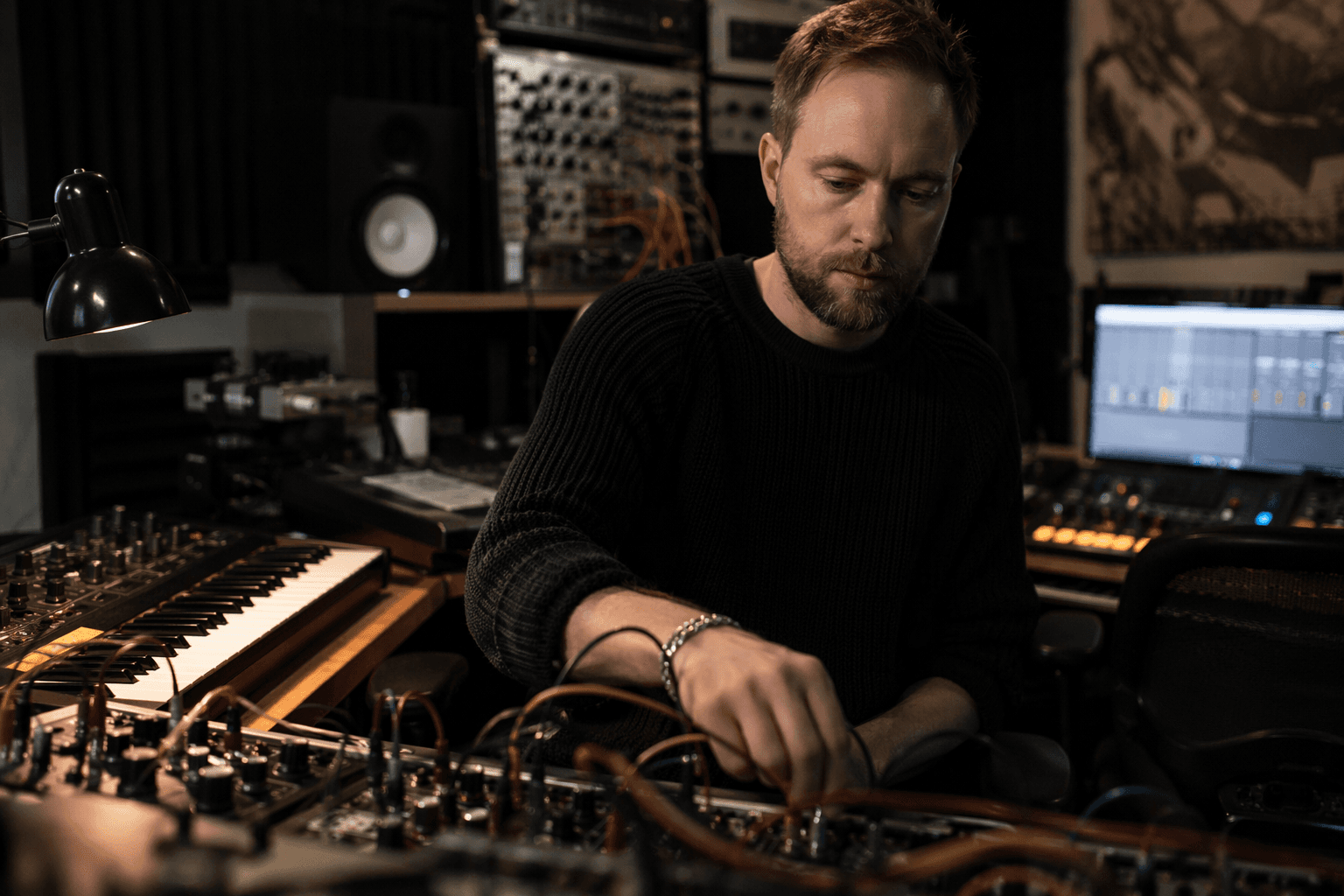
Vintage synths only stay interesting when they have to do real work. That is the practical lesson in Olof Dreijer’s move toward his debut solo album, *Loud Bloom*, a 14-track release due on 8 May 2026 via DH2, Dirty Hit’s electronic sub-label. Dreijer, formerly one half of The Knife, is not presenting hardware as nostalgia bait. He is showing how expensive analogue gear, modular systems, and software can be combined into one production setup that still leaves room for surprise.
**What *Loud Bloom* is built to do**
The album matters because it is not arriving as a straight electronic exercise. MusicRadar’s description puts beatless meditations and Zulu rap beside one another, which tells you immediately that Dreijer is working across mood, texture, and rhythm rather than locking into a single retro lane. The record also brings in Toya Delazy, Diva Cruz, and MaMan, adding voices and phrasing from South Africa, Colombia, and Sudan to a project that already reads as deliberately international.
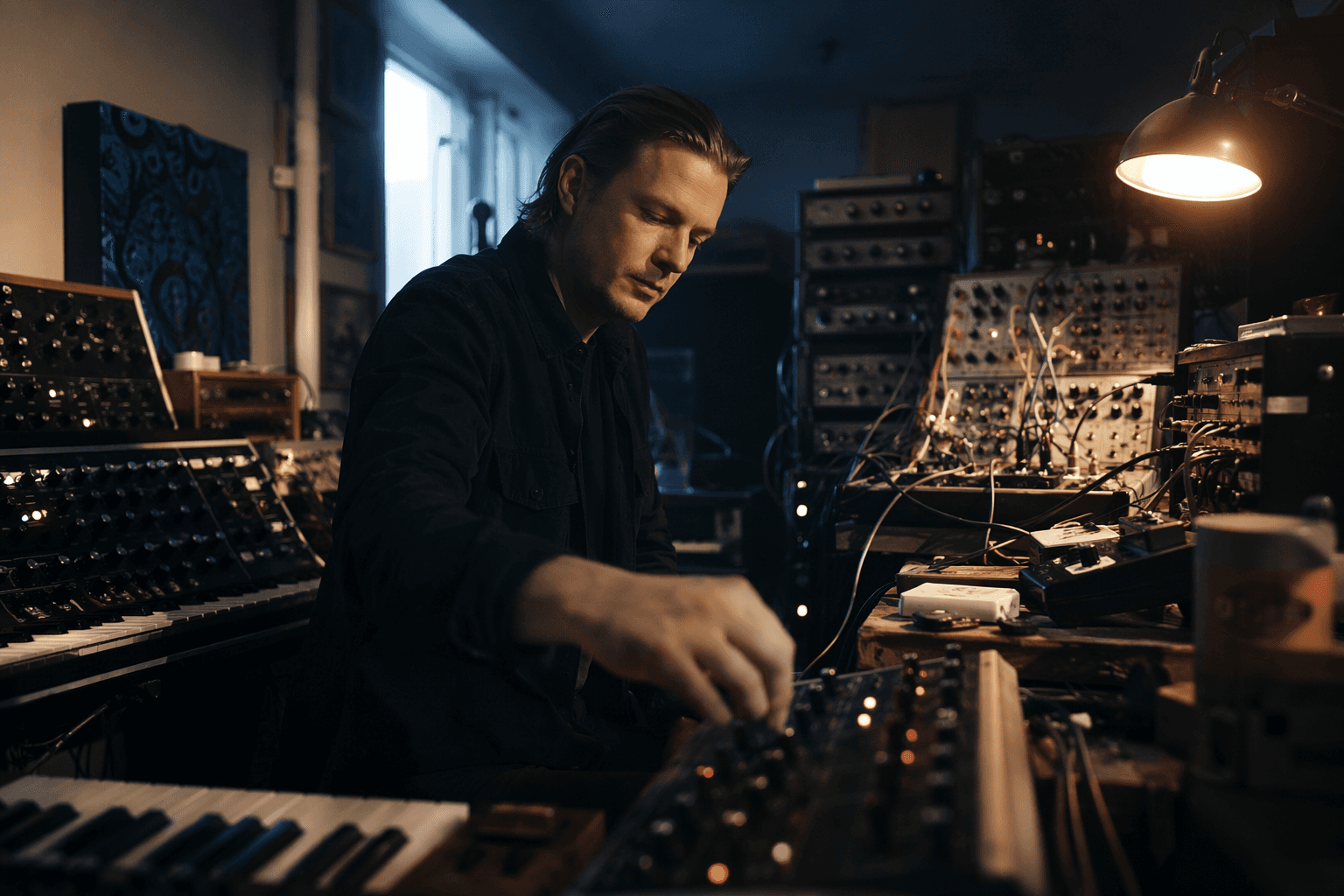
That breadth matters for synth people because it changes the role of the gear. The analogue rig is not there to recreate a single era, and the modular setup is not there just to look impressive in the corner of a studio photo. It is there to support a record that moves between angular techno and more ambient-leaning material, with the hardware acting as part of the arrangement rather than the headline.
The hardware lesson: boring until you make it move
Dreijer’s most useful comment for anyone building a hardware-heavy setup is simple: he says he used to think expensive analogue synths were boring, then learned how to make them exciting. That is the exact mindset shift that separates a display case from a usable studio. Vintage instruments do not automatically produce character; they need performance ideas, processing, and an editing system that lets you catch the good accidents before they vanish.
In practice, that means the value of the synth is not just the oscillator tone. It is the way you can push a familiar circuit into less familiar territory through modulation, layering, resampling, and arrangement. For readers who already own old analogue boxes or modular voices, Dreijer’s approach is a reminder that the payoff often comes when the gear is forced into conversation with everything else in the room.
Why Ableton is the glue, not the enemy
The other half of the setup is software, and Dreijer is blunt about it: he says he could not do what he does without Ableton. That line matters because it cuts against the fake split between “real” hardware and “mere” software. In a hybrid studio, Ableton solves the problems that hardware alone creates: recall, editing, arrangement, and collaboration.
That is the workflow to steal. A synth line can be shaped on the machine, but the session only stays manageable once it can be moved, chopped, stretched, and reorganized on screen. Modular systems are brilliant at generating material, but they are less efficient when you need to tighten a structure or build multiple versions of the same idea. Ableton gives Dreijer the place where those pieces can be assembled into a track that still feels alive without turning into a one-take science project.
- Use hardware for tone, gesture, and unpredictability.
- Use software for recall, edits, and fast decisions.
- Treat the DAW as the mixer, editor, and memory bank, not as a compromise.
For hobbyists, that is the real takeaway:
A solo run that has been building for years
*Loud Bloom* is not a sudden comeback so much as the latest step in a run of solo releases that Dreijer’s site says has been “sprinkling dancefloors” since 2023. That includes *Rosa Rugosa*, *Coral*, *Brujas* with Diva Cruz, and the *Iris* release and remix cycle. Read together, those releases make the album feel like the consolidation of a new solo language rather than a one-off statement.
The same sense of continuity runs through his wider résumé. Dreijer’s path through The Knife and Fever Ray, plus production work for Fever Ray and remix work for Björk and Rosalía, gives him the kind of deep electronic-music pedigree that makes the hardware discussion more interesting. He is not learning vintage synths from scratch. He is refining how they function inside a mature, flexible system that already knows how to move between club tools, art-pop, and left-field experiments.
Politics, protest, and the emotional side of gear
There is also a political spine to the record. Dreijer’s site says the album is primarily about joy, but that his politics guide the creative decisions every step of the way. Two tracks, “Shisandra” and “Blood Lily,” were originally commissioned for Brazilian choreographer Renan Martins’ dance piece *Guerrilla*, and Dreijer describes them as a soundtrack to a protest.
That helps explain why the album’s sonic identity can hold so many contradictions at once. Joy and protest, beatless drift and Zulu rap, analogue warmth and software precision all sit in the same frame. The synths are not being used to flatten those differences into a single retro mood. They are being used to give each piece enough texture and momentum to survive in the same record.
The live test: four decks, percussion, and vocals
The live side of this project pushes the same idea even further. Dreijer and Diva Cruz announced a Dekmantel show built around four decks, live mashups, live percussion, and vocals. That setup is a clean example of how modern electronic performance often works best when hardware and software share the load instead of competing for it.
Four decks give you the ability to move quickly between material. Live percussion keeps the set physically grounded. Vocals turn the performance into something that can shift shape in the room, instead of merely reproducing a studio arrangement. For anyone who likes watching a modular rig get stretched into a proper performance system, this is the useful model: build for transitions, not just sounds.
The bigger point is the one Dreijer keeps circling back to. Vintage synths stay relevant when they are part of a living process, not a museum logic. In *Loud Bloom*, that process runs from analogue hardware to Ableton edits to vocal collaboration and back again, and that is exactly why the setup feels current rather than commemorative.
This article was produced by Prism’s automated news system from verified source data, official records, and press releases, then run through automated quality and moderation checks before publishing. The system is built and supervised by the people who set the standards it runs under. Read our full AI policy.
Did this article answer your question?