Oversynth closes, leaving vintage synth owners fewer overlay options
Oversynth’s shutdown trims a small but useful layer of the synth world, leaving owners of Edge, Crave, Nymphes, Typhon and other boards with fewer overlay options.
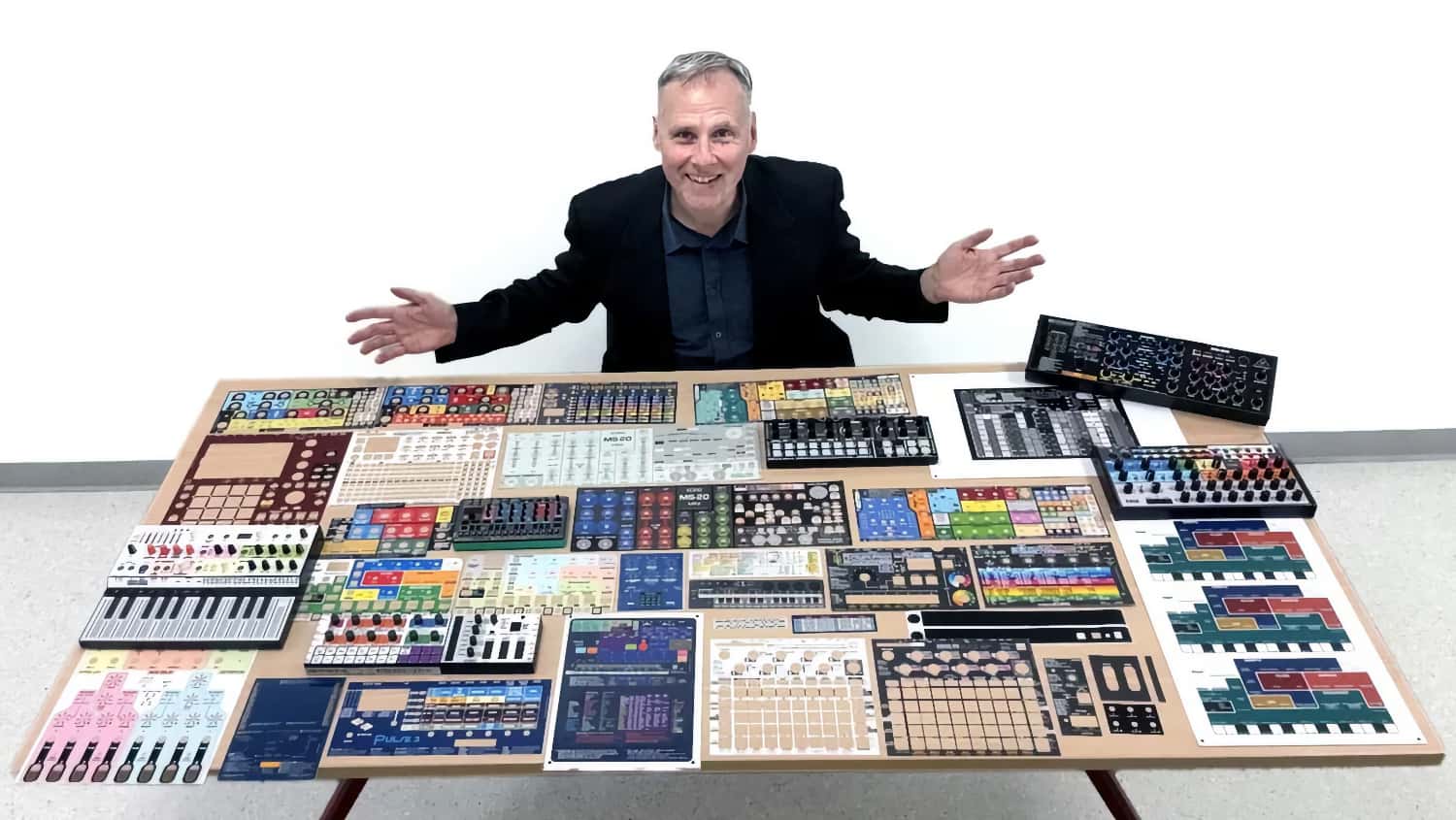
Oversynth’s closure took a quiet but practical service out of the synth ecosystem: the front-panel overlays that made cramped, cryptic instruments easier to read, faster to patch and less punishing under stage lights. For owners of vintage and modern hardware alike, that means one more source of usable replacement panels has disappeared, just as more players rely on overlays to restore clarity without altering the instrument itself.
The company opened in 2019 and shut down after founder Jeff Gruen said the decision came down to “life transitions.” Gruen thanked the synth community for its support as he stepped away from a niche that had grown steadily more important than its small footprint suggested. Oversynth did not sell sound in the usual sense. It sold legibility, helping players navigate deep sound engines without constantly reaching for a computer editor or owner’s manual.

That mattered most on instruments where function is hidden behind dense menus or tiny legends. Oversynth’s Dreadbox Nymphes overlays were built to simplify menu diving by visualizing hidden features, while its Typhon panels were noted for making hidden functions visible and cutting reflections with a matte finish. Earlier products for the Korg MS-20 Mini, Behringer Neutron and DSI Evolver were described as durable, waterproof and chemically resistant synthetic-paper overlays aimed at live performance and low-light use. Later runs stretched across a wide field, including Moog Mother-32 and DFAM, MicroKorg, Synthstrom Deluge, Roland MC-101, TR-6S and SH-4D, Polyend Tracker Mini, and Behringer Pro-1 and Pro-800.
Oversynth also appealed to players who treated overlays as usability upgrades rather than decoration. In January 2024, its Behringer Edge and Crave kits were priced at $35 each and came with a front-panel overlay, custom-cut black vinyl strips, and a sticker showing MIDI channel dip-switch settings. That kind of detail mattered on compact machines where quick recall can make the difference between a smooth set and a dead stop. The overlays were designed to give sound designers and performing musicians a faster path through complex hardware, especially in dark rooms where high-contrast graphics and large fonts did the real work.
The category is not gone, but Oversynth’s exit leaves it thinner. Synth Overlays still sells model-specific panels for instruments such as the Roland Jupiter-X, JUNO-X and SYSTEM-8. SynthGraphics has relaunched with lexan polycarbonate and 3M adhesive. Heinakroon is again offering overlays for the Behringer Neutron, Edge and Crave, and mxpand continues to market overlays across synths, sequencers, samplers, grooveboxes and MIDI controllers. Even so, Oversynth’s shutdown is a reminder that this corner of synth culture depends on small makers to keep hardware readable, playable and worth bringing on stage in the first place.
This article was produced by Prism’s automated news system from verified source data, official records, and press releases, then run through automated quality and moderation checks before publishing. The system is built and supervised by the people who set the standards it runs under. Read our full AI policy.
Did this article answer your question?