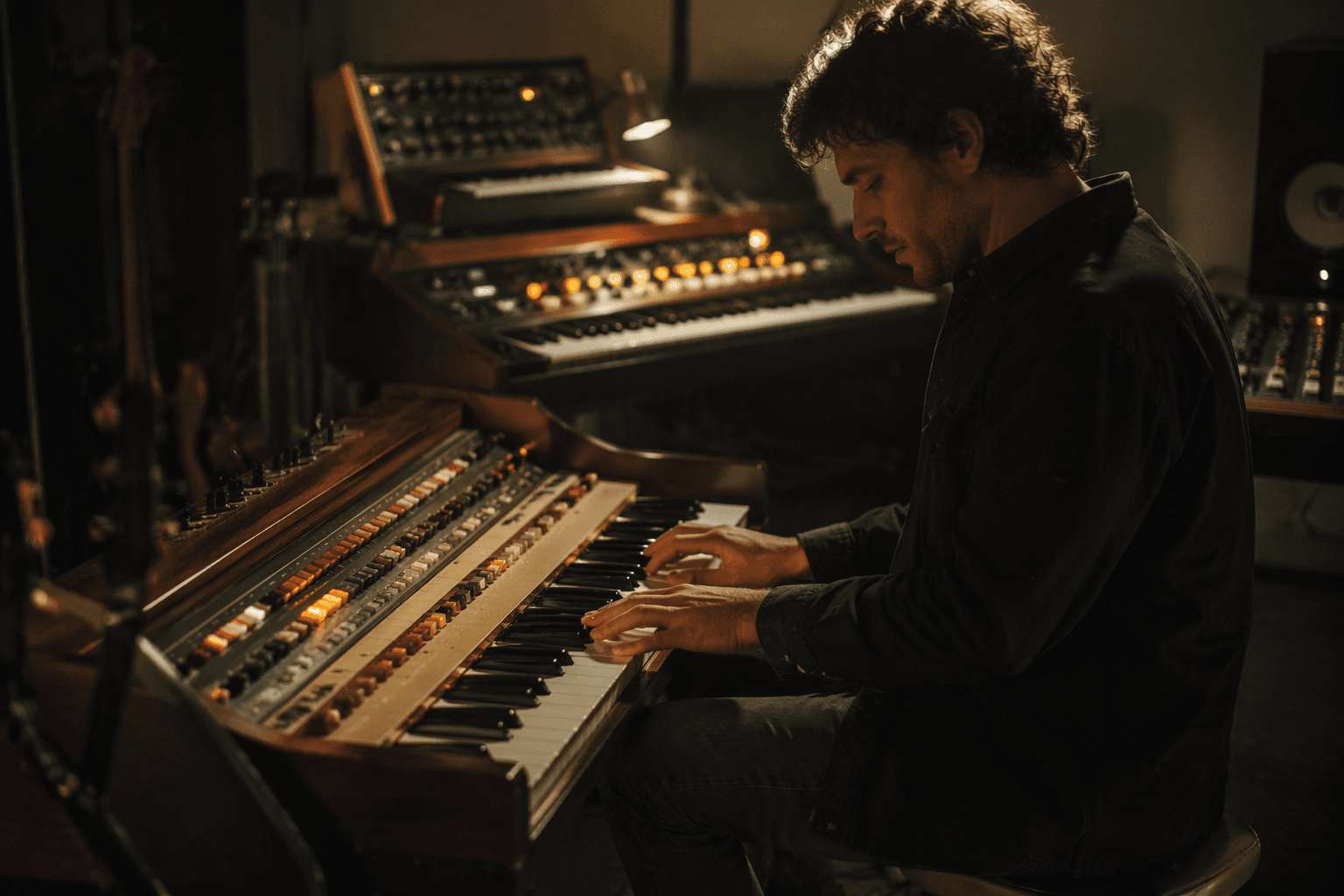
PWM advances forensic OSCar rebuild, recreating Chris Huggett’s synth with modern parts
Chris Huggett’s OSCar is back on PWM’s bench, rebuilt from schematics, an 8 KB EPROM and a presets cassette. The question now is whether it feels like the original, not just looks like it.
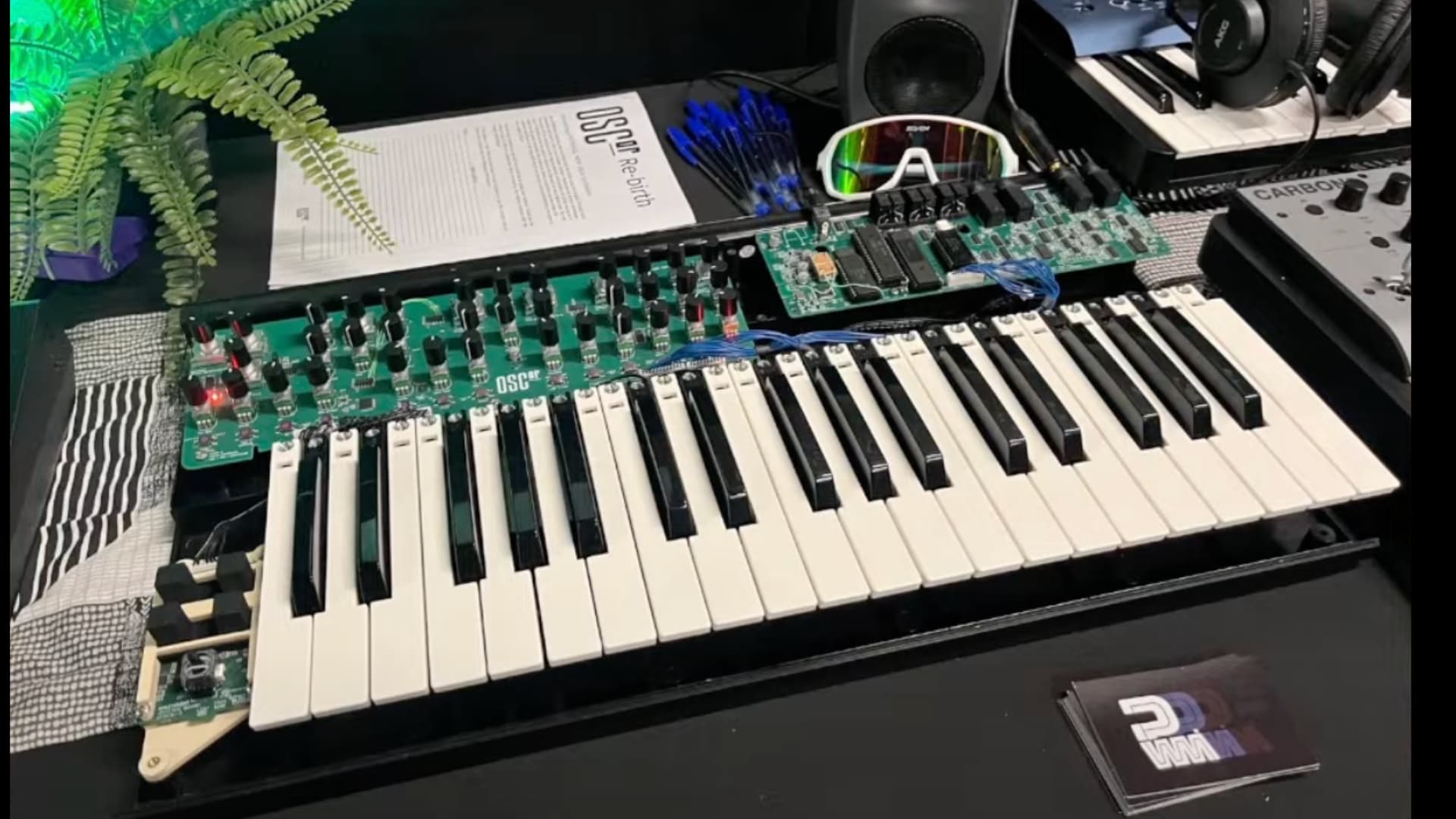
Chris Huggett’s OSCar is being rebuilt with the kind of care collectors usually reserve for a museum crown jewel. PWM showed the latest stage of the project at Superbooth 2026, and the company’s pitch is blunt: this is a forensic recreation of the original Oxford Synthesiser Company monosynth, not a loose homage dressed up in the right silhouette.
That distinction matters because the OSCar was never just another British synth shape. Launched in 1983, it paired digitally controlled dual oscillators with analog filters, then pushed further with 24-harmonic additive waveform construction, linked 12 dB/oct filters that could be combined into a 24 dB/oct slope, a built-in sequencer, and later MIDI-equipped revisions. Its look was handled by Anthony Harrison-Griffin, but its electronics came from Chris Huggett, whose design language gave the instrument its odd, forward-leaning personality.
PWM’s current effort leans hard into that original logic. Ben Supper said the reconstruction has been built from Huggett’s hand-drawn schematics, an 8 KB EPROM holding object code but no source code, user manuals, a later MIDI-retrofit manual, and a factory presets cassette. He also said the work has the blessing of Chris Huggett’s estate. Add in access to Huggett’s own final-revision OSCar, software disassembly tools, and a community of users who still know the machine inside out, and the project starts to look less like a styling exercise and more like a restoration with modern parts.
That is why the collector’s question lands so sharply: tribute, clone, or genuine revival? PWM seems to be aiming for revival. The company wants the sound and architecture people remember, but with the reliability and contemporary performance that vintage hardware often lacks. PWM acquired the rights to the OSCar name in February 2025, and the current version is still being treated as a prototype-stage, limited-run product with price to be confirmed. Interested buyers are being directed to contact the company directly.
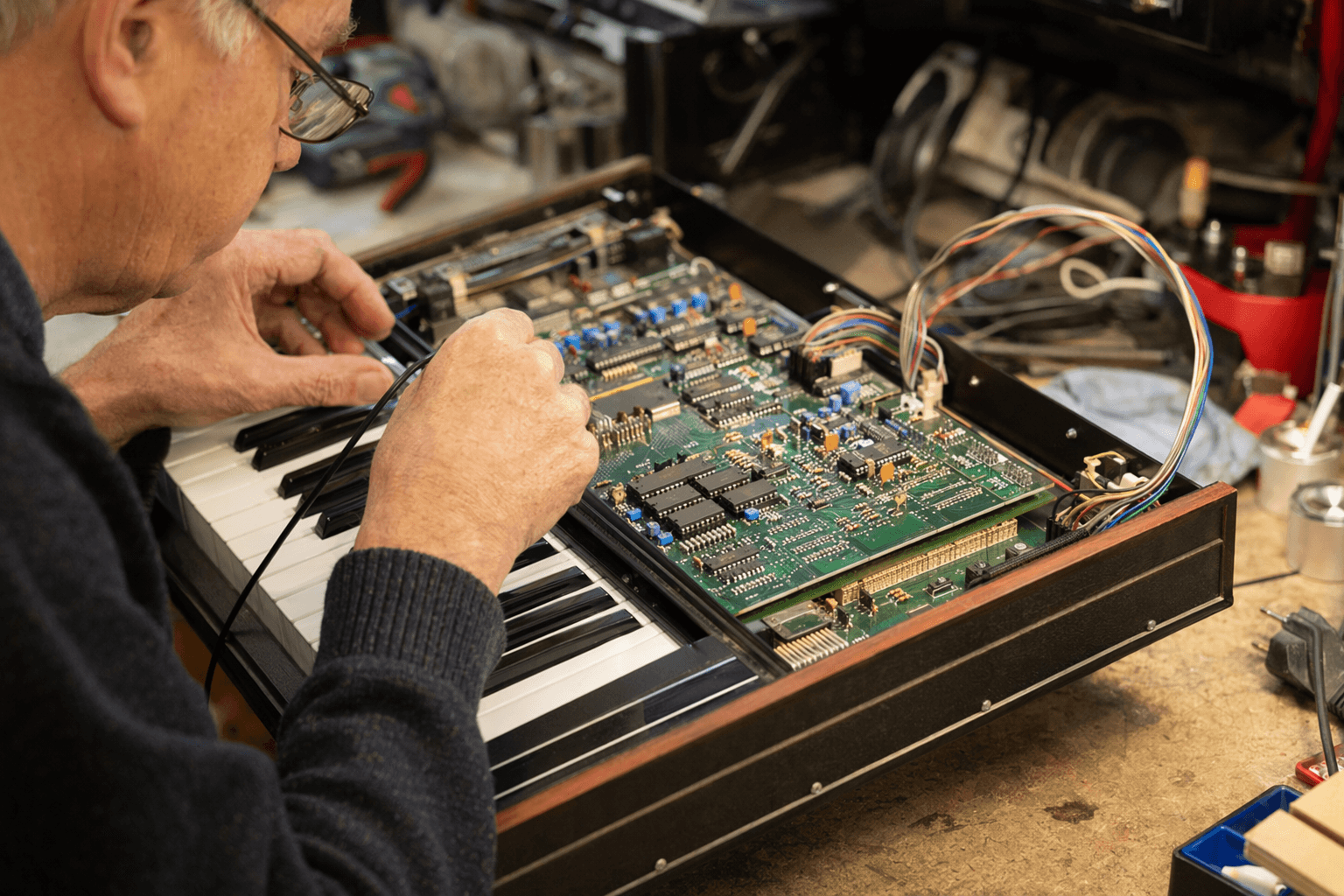
The original’s mythos gives the rebuild real weight. Contemporary coverage in 1983 put the OSCar at around £499, while later accounts cast it as a British classic championed by Ultravox and Asia, then embraced by Jean-Michel Jarre and Stevie Wonder. Supper said several hundred units are still working, but surviving examples now trade for about three times their inflation-adjusted original price, which is exactly why a faithful remake is bigger than nostalgia.
Chris Huggett died on October 22, 2020, in Headington, Oxford. PWM’s Mantis already carries his design legacy forward, and the OSCar project now asks a tougher question: can modern components preserve the interface logic, quirks, and sonic attitude that made the original cult object special in the first place? For this machine, that answer will decide whether PWM has built a replica or brought a British classic back to life.
This article was produced by Prism’s automated news system from verified source data, official records, and press releases, then run through automated quality and moderation checks before publishing. The system is built and supervised by the people who set the standards it runs under. Read our full AI policy.
Did this article answer your question?