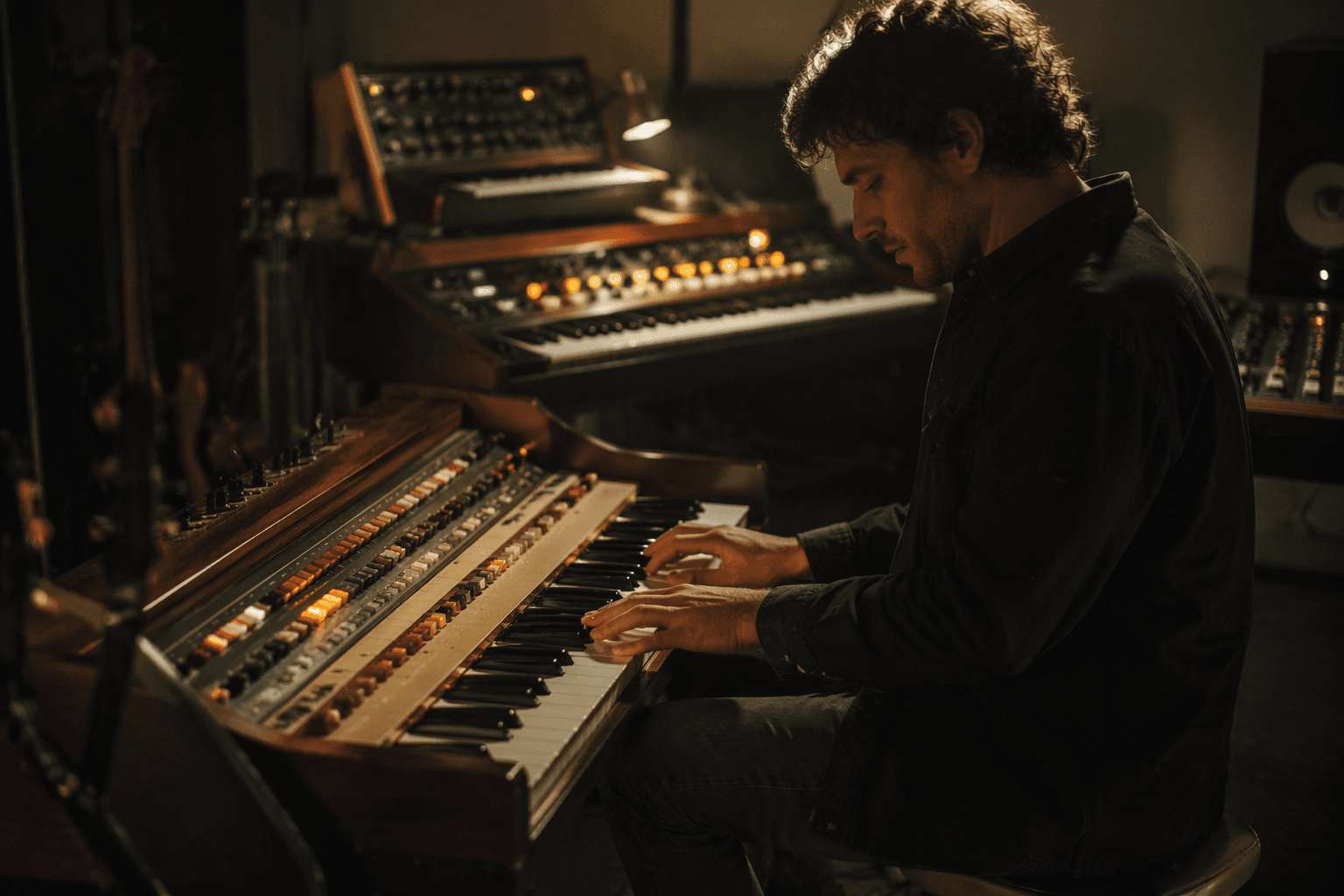
Suzanne Ciani on Buchla mastery, sound design and artistic conviction
Suzanne Ciani’s real legacy is a working blueprint: Buchla virtuosity, commercial sound design and the discipline to keep choosing her own lane.
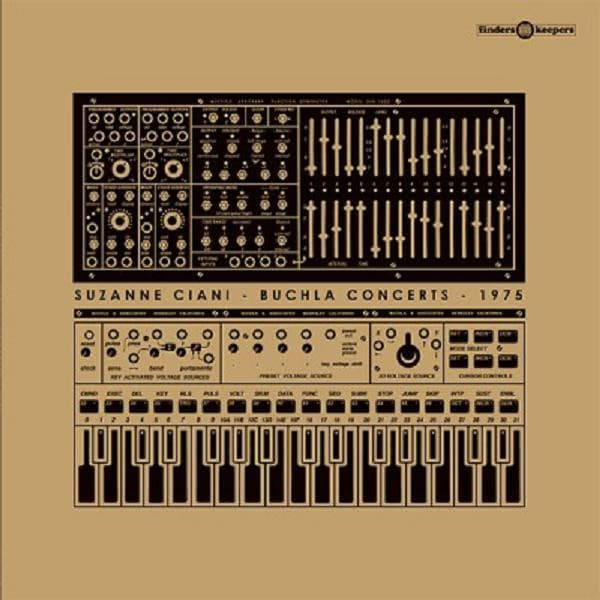
The blueprint hidden in Suzanne Ciani’s career
The new Resident Advisor interview, surfaced by Synthtopia, plays less like a nostalgia reel than a case study in how to build a life in electronic music without surrendering your sound. Suzanne Ciani’s path connects the earliest Buchla experiments to commercial sound design, award-winning composition and a long creative life that is still moving forward now.
That arc matters because Ciani was not simply one of the first great Buchla players. In the 1960s, she became one of Don Buchla’s earliest virtuosos, helping define what expressive electronic performance could feel like before synthesis was mainstream. For anyone who cares about modular history, that is the crucial origin point: she was there when the instrument was still being tested as a language, not treated as a museum piece.
Buchla mastery before the synth world caught up
Ciani’s early Buchla work is the foundation under everything that came later. The modular system demanded a different kind of musicianship, one built on patching, timing, gesture and a willingness to treat sound itself as an evolving performance surface. That is what makes her such an important figure in vintage synthesizer culture: she did not just adopt the machine, she helped reveal what the machine could mean.
The interview’s value lies in how clearly it frames that early period as more than technical bragging rights. Ciani’s Buchla work became a proof of concept for an entire field, showing that electronic instruments could be played with nuance, intention and a personal voice. In today’s modular community, that still reads as a model for how to think about synthesis: not as gear accumulation, but as authorship.
Sound design as a second instrument
What kept Ciani from becoming a one-note legacy figure was the way she translated that modular fluency into paid, durable work. She went on to create signature sound design and commercial music for Coca-Cola, AT&T and Atari, then founded her own sound design company. That combination is the real career lesson buried inside the interview: experimental credibility and commercial usefulness do not have to be enemies.

Her résumé is dense with the kind of markers that matter in this world. Reference sources describe her as having received five Grammy nominations, two Clio Awards and a Golden Globe Award, and she also scored a Hollywood film. GRAMMY.com maintains an artist page documenting her Recording Academy history, which helps place her not just in synth lore but in the broader professional history of American music.
For a lot of electronic musicians, the hard part is not learning synthesis. It is learning how to make synthesis pay without flattening the music. Ciani figured out a lane that kept both sides intact. She took the discipline of modular practice into the commercial world, then used that work to sustain a much longer artistic life than many of her contemporaries managed.
Choosing a lane in a male-dominated field
One of the sharpest points in the interview is Ciani’s insistence that her career was shaped by deliberate choices, not lucky breaks. She describes walking away from opportunities that did not match her vision, even when the industry around her offered few obvious alternatives. That clarity of refusal is part of why her story still lands with force inside synth culture.
It also matters that she built that career in a male-dominated environment, at a level of technical and musical authority that the business was not always prepared to accept from a woman. The interview turns that reality into something practical rather than abstract. Ciani’s longevity came from protecting her own standards, not from waiting for the industry to become more comfortable.
That is the kind of detail modular readers tend to remember, because it explains how a figure becomes foundational. She was not handed a template. She made one, then kept refining it.
Still active, still collaborating
The most compelling part of the story is that Ciani is not being discussed here as a finished chapter. Born June 4, 1946, she is 79 as of May 22, 2026 and turns 80 on June 4, 2026, yet the picture that emerges is of an artist who is still touring, still collaborating and still releasing new work. That combination of age and momentum gives the interview its charge.
Recent coverage also points to Concrète Waves, a 2026 live album by Ciani and Actress, co-commissioned by the Barbican in London and Sónar in Barcelona. That release matters because it shows her legacy operating in real time, not just in archival celebration. The Buchla pioneer is still in active conversation with younger electronic musicians, and that conversation is happening in major contemporary venues and commissions, not only in retrospective tributes.
- Buchla gave her the vocabulary.
- Commercial sound design gave her longevity.
- Artistic conviction kept the whole thing coherent.
Why this story still matters to the synth community
What makes this interview worth reading is not simply that Ciani was early, or influential, or decorated. It is that her career shows how a modular pioneer can build something sustainable without diluting the experimental core. The signal runs from Don Buchla’s circuitry to Coca-Cola spots, from Grammy nominations to a new live album with Actress, and the through line is consistency of taste.
That is the real career blueprint hidden in the interview. Ciani did not just survive the distance between the Buchla era and the present. She made that distance part of the work, and that is why her story still feels alive every time the modular world looks for a model of how to stay inventive, employable and unmistakably yourself.
This article was produced by Prism’s automated news system from verified source data, official records, and press releases, then run through automated quality and moderation checks before publishing. The system is built and supervised by the people who set the standards it runs under. Read our full AI policy.
Did this article answer your question?