vekoni turns a Casio SA-2 toy keyboard into an ambient orchestra
A 40-year-old Casio SA-2, a few iPhone effects, and one output jack turn a toy keyboard into a huge ambient source.
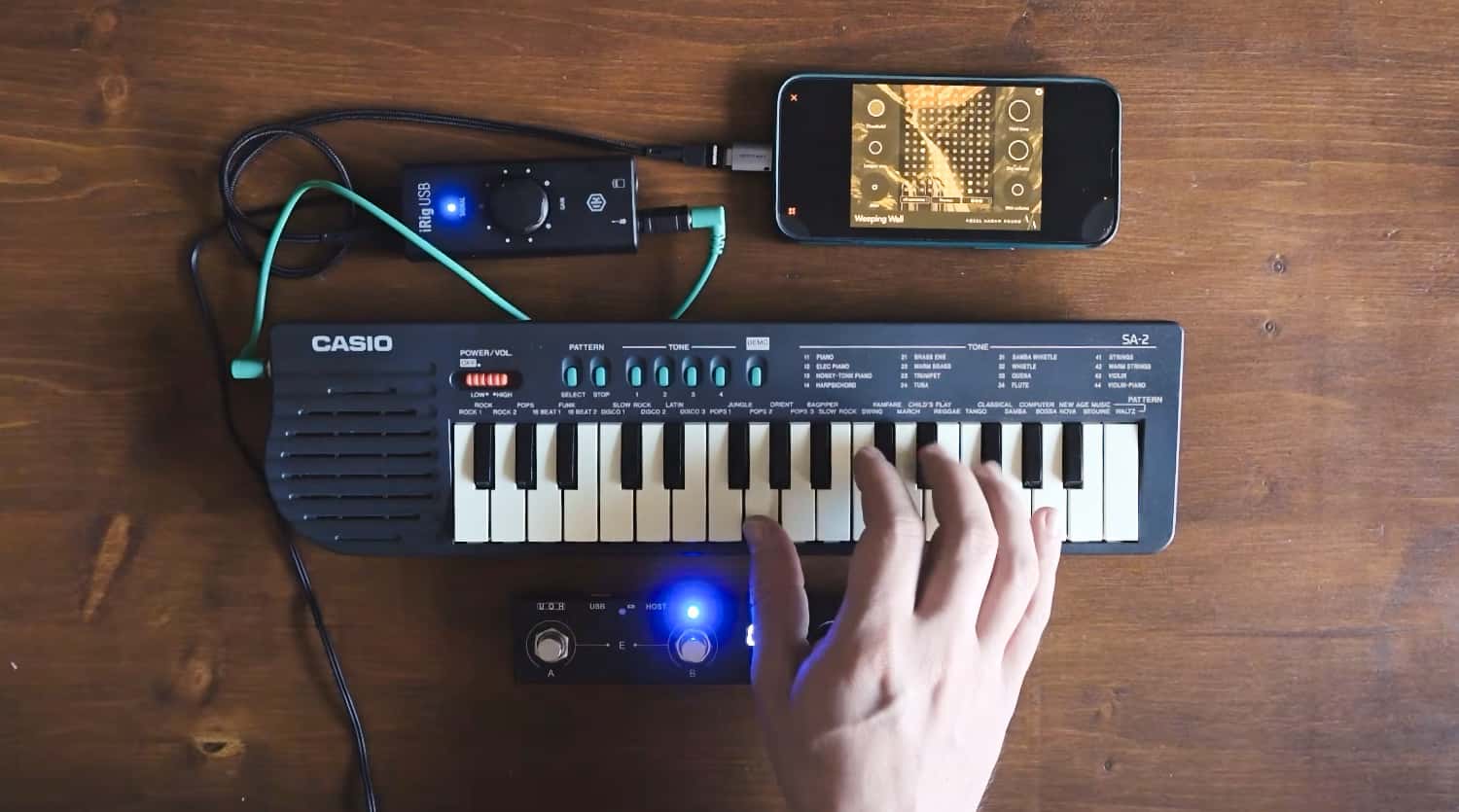
A cheap Casio SA-2 can still feel magical when you stop treating it like a joke and start treating it like a sound source. In vekoni’s hands, the little 32-key toy becomes the front end of a sprawling ambient setup, with an iPhone doing the heavy lifting and the SA-2’s modest voices stretched into something that feels cinematic.
Why the SA-2 works so well here
The SA-2 is exactly the kind of instrument vintage-keyboard people love to underestimate. It is a roughly 40-year-old Casio portable with 32 mini-size keys, 16 tones, and 32 rhythms or patterns, and it runs on four AA batteries. That makes it light, cheap, and easy to pick up, but it also makes it ideal for a rig built around texture rather than virtuoso keyboard work.
What matters most in vekoni’s performance is not the size of the keyboard, but the character of the sound. The SA-2’s violin and piano voices land in a sweet spot: simple enough to be transformed, but recognizable enough to give the final piece an orchestral frame. The instrument in the video has also been modified with an output jack, which turns it from a self-contained toy into a proper external source you can route through modern effects.
The signal chain that turns toy sounds into atmosphere
The key move in vekoni’s approach is that the SA-2 is never left naked. In the Synthtopia feature, the performance uses Quinta Pitch Machine for transposition, Rymdigare for movement and drone-like diffusion, Weeping Wall for looping, and Eventide Blackhole at the end to spread everything into a vast wash of space. That chain matters because it shows the role of the lo-fi source: it provides the grain, while the processing creates the scale.
The related YouTube video adds the missing plumbing. The audio runs from the SA-2 into a DIY stereo-to-mono summing box, then into an iRig USB interface, then into Loopy Pro on an iPhone 14. From there, Eventide Blackhole reverb and OtherDesertCities delay push the keyboard into a more lush and atmospheric zone. The drum pattern was built in Hammerhead and randomized, which keeps the accompaniment from settling into something stiff or repetitive.
That is the practical lesson in the piece. The SA-2 does not need to be “fixed” into sounding like a bigger keyboard. Its job is to provide a thin, bright, slightly toy-like layer that can survive pitch shifting, looping, and heavy space effects without turning to mush. The result is not a polished preset pad, but something with enough roughness to feel alive.
How to use a toy keyboard as an ambient instrument
Vekoni’s setup is a strong model if you want to build ambient material from overlooked consumer gear. The trick is to let the keyboard do what it already does well, then extend it with processing instead of trying to erase its limitations.
A practical starting point looks like this:
- Pick voices with a clear identity, especially simple strings, piano, or bell-like tones.
- Give the keyboard an output path, since the modded jack makes it easier to treat the SA-2 like a modular sound source.
- Use transposition and diffusion before you reach for heavier effects, because a small melodic fragment can become far larger once it is shifted and smeared.
- Add looping early, so short phrases can become beds of texture instead of one-off notes.
- Save the biggest reverb for the end, where it can turn the whole chain into a coherent space rather than a cloud of separate reflections.
That approach fits the way ambient music often works on a phone-based rig. You are not relying on a single expensive synth to do all the work. You are combining a distinctive source, a compact interface, and a few well-chosen processors until the whole chain starts behaving like an ensemble.
Why this matters for vintage synth culture
This story lands because it pushes against the old hierarchy that says the best vintage gear has to be rare, large, or expensive. Casio’s consumer keyboard line began in June 1979, and low-cost models from that world have long been useful to players who care more about texture than status. A refurbished SA-2 has been listed at $99, which keeps the barrier to entry low enough for thrift-store hunters, modders, and anyone curious about circuit-bending territory.
That mod culture is part of the SA-2’s appeal. Circuit-bending references describe adding an audio output or line-out jack as a common modification, and a GitHub SA-2 project lists a MIDI and circuit-bending board compatible with the SA-2 and related OKI-based Casio keyboards. In other words, this is not just a relic to admire. It is a platform that can be opened up, repurposed, and folded into a modern workflow with very little hardware drama.
The broader point is simple: vekoni’s performance shows how an overlooked toy keyboard can become a practical ambient instrument if you build around its strengths instead of its price tag. The SA-2’s lo-fi voice gives the rig its personality, the iPhone gives it scale, and the output jack makes the whole thing playable in a serious way. That is why the little Casio feels so convincing here, not despite its limitations, but because those limitations are exactly what let the ambient orchestra take shape.
This article was produced by Prism’s automated news system from verified source data, official records, and press releases, then run through automated quality and moderation checks before publishing. The system is built and supervised by the people who set the standards it runs under. Read our full AI policy.
Know something we missed? Have a correction or additional information?
Submit a Tip