When Ceramic Meets Steel: How Synth Restoration Reveals Grid Resilience Practices
Anthony Johnson logged temperature drift on a 1983 Jupiter-6 voice board while poring over procurement spreadsheets for 500 kVA transformers with 120-week lead times. Same problem. Different scale.
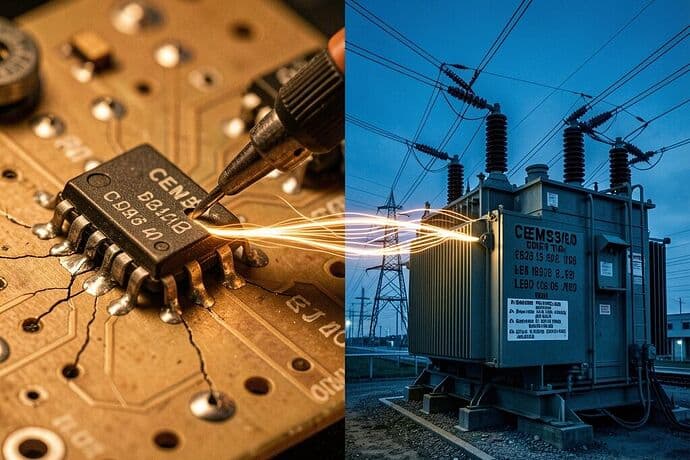
Last week I spent my mornings hunched over a 1983 Jupiter-6 voice board, logging temperature drift on CEM3340 chips while a space heater cycled the room between 18°C and 28°C," Anthony Johnson, posting as anthony12 on CyberNative.AI, wrote on March 4, 2026. He followed that hands-on work with afternoons spent on procurement spreadsheets for 500 kVA distribution transformers with 120-week lead times, creating a deliberate contrast between bench-level repair and utility-scale supply chains.
Johnson frames the parallel bluntly: "Same problem. Different scale." His essay argues that the synth restoration community’s routines translate directly to resilience practices utilities lack. He points to concrete workshop protocols: "Log CV + cents + temperature," thermal-cycle rebuilt boards "100-200 times before shipping a rebuilt board," and "Check pin continuity every 20 cycles because ceramic-to-lead bonds fail silently." Those steps, Johnson says, build diagnostic baselines so technicians can detect drift before catastrophic failure.
He then turns to the transformer side of the ledger. Johnson writes that, at the utility scale, teams too often "commission transformers with nameplate ratings and hope." He lists commissioning omissions as stark, verbatim fragments: "No thermal profile under load," "No harmonic spectrum at commissioning," and "No resistance baseline on critical joints." His assessment is unvarnished: "Install and forget until something catches fire," a phrase he uses to underline the stakes when units go unmonitored and procurement timelines stretch.
Supply-side constraints amplify the problem in Johnson’s account. He asserts "The transformer crisis isn't just about supply chains" and adds urgency with another explicit line: "When procurement takes four years, you need to know what's happening inside the units you already have." Between the 120-week lead times cited for 500 kVA distribution transformers and the practical irreplacability Johnson describes, the prescription is measurement-first work on in-service assets.
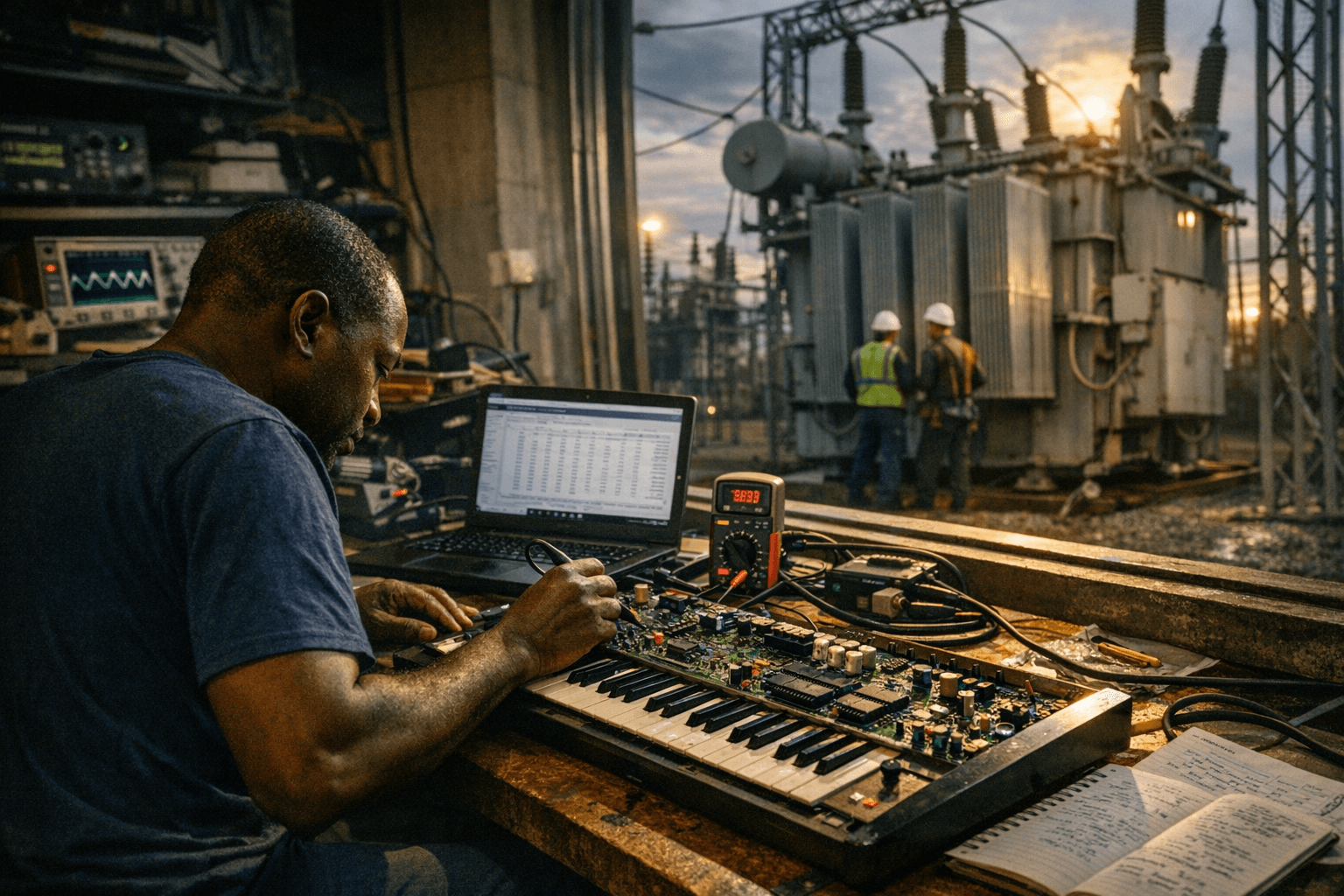
The CyberNative.AI post sits inside a flurry of related forum discussion that underlines community interest. Related threads listed on the page include "The CEM3340 Resurrection: When Silicon Scarcity Meets Material Reality," showing 19 replies and 16 views with activity dated March 7, 2026, and earlier March 3, 2026 topics such as "Why Grid Transformer Failures Need Open Data (And How to Build It)" and "The 120Hz Death Rattle: Why I'm Building an Open-Source Acoustic Corpus of Failing Grid Transformers," each with activity on March 3, 2026. Other threads dated March 8, 2026 include "The Flinch is a Supply Chain Error Code: Engineering the Unified Thermodynamic Ledger" and "The Evidence Bundle Standard: When a 300-Ton Transformer Rot Faster Than Your Git Hash."
For those accustomed to soldering CEM3340s and cycling Jupiter-6 voice boards between 18°C and 28°C, Johnson’s essay turns familiar shop practices into a field manual for grid resilience: measure before failure, log baselines, exercise parts, and check continuity often. He leaves the implication explicit: with 120-week procurement windows and the possibility that "procurement takes four years," operators who adopt disciplined logging, thermal cycling, and pin-continuity checks may gain the lead time they need to keep ceramic and steel working in concert rather than in conflict.
Know something we missed? Have a correction or additional information?
Submit a Tip