Wolfgang Palm teases new PPG WaveTerm project preview
Wolfgang Palm’s WaveTerm tease points back to the PPG wavetable era, and the new table editor may link Wave 2.2 and 2.3 owners to fresh wavetable work.
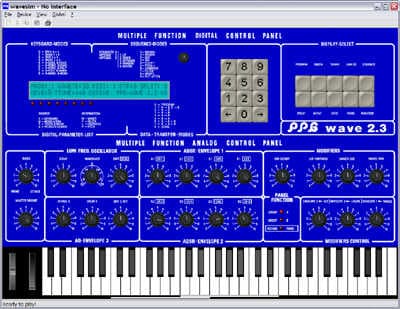
Wolfgang Palm has put the PPG name back into motion with a preview of a new WaveTerm project, and that alone gives the tease real weight for anyone who tracks the lineage from the original wavetable machines. Palm, the founder of PPG and one of the key figures in digital and hybrid synthesis, shared a clip titled “Towards a new WaveTerm?” and called it “My current work based on the CommBusTerm from Michael Indlekofer.” No launch date or product sheet came with it, but the implication was immediate: this was not just nostalgia, it was another possible chapter for a line that has long sat at the center of PPG history.
The clip points to something more concrete than a name revival. A German report said the video showed new software that communicates with the PPG Wave 2.2, the PPG Wave 2.3, and the PPG Wave 2.3 reissue through CommBusTerm and controller software. It also said the system used a Raspberry Pi to address the PPG Communication Bus. The software was described as a Table Editor, with functions such as Replace, Insert, and Fill Gaps, all aimed at helping users build custom wavetables for the Wave 2.3. Timing remained unknown, which keeps the project in tease territory rather than release territory.

That historical context is what makes the preview land so hard. Hermann Seib’s Waveterm history says Palm brought out the original Waveterm and Waveterm B in the early 1980s as rackmount sound-development systems tied to PPG Wave keyboards. Those units were not simple sample boxes. They offered sample editing and Fourier transforms, letting users generate complex waveforms and assemble wavetables from sine waves and other material. Seib’s PPG history also places the Wavecomputer 360 at the end of 1978 as PPG’s first polyphonic digital synthesizer, with the wavetable idea already taking shape.
Palm has long resisted the idea that replaying old technology is enough. In a MusicRadar interview, he said “emulation is boring” and pointed to the way PPG’s later success came from combining new waveforms with analog filter sound. That philosophy makes the new WaveTerm tease feel less like a souvenir and more like an extension of the original PPG logic: new tools, same restless core. For a name as loaded as WaveTerm, even a preview can shift the conversation around what a modern PPG product should be.
This article was produced by Prism’s automated news system from verified source data, official records, and press releases, then run through automated quality and moderation checks before publishing. The system is built and supervised by the people who set the standards it runs under. Read our full AI policy.
Did this article answer your question?