Armageddon returns to Warhammer 40,000 as 11th edition’s new battleground
Armageddon is back on the front line, and 11th edition turns its hive wars, Ork assault, and Imperial counterattack into the setting’s next big flashpoint.

Armageddon is the battleground 11th edition wants you watching
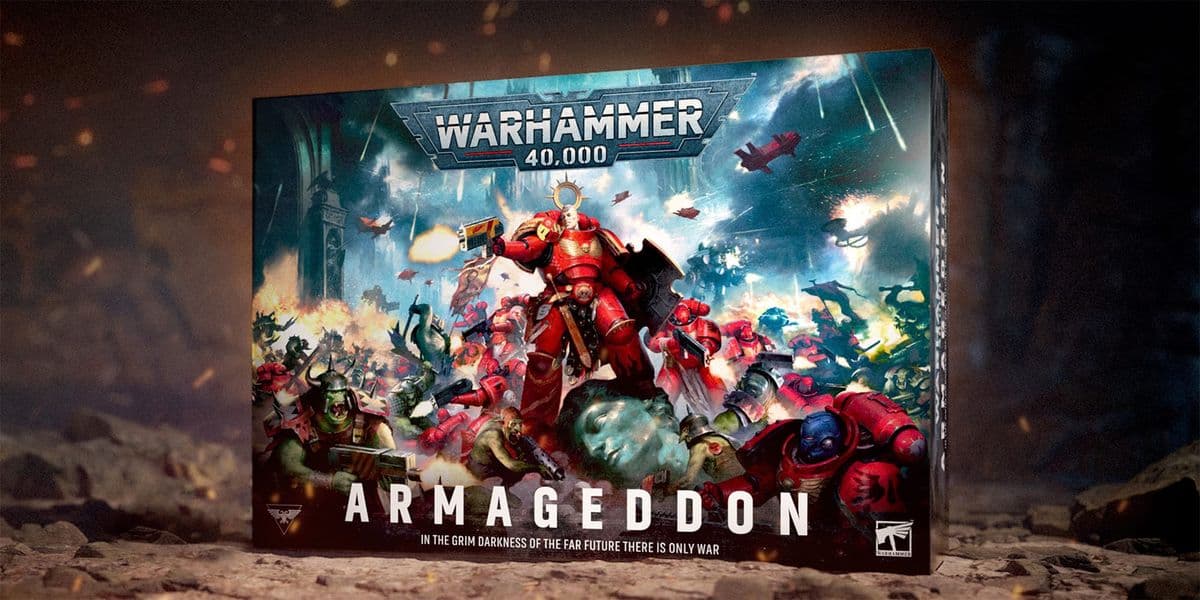
Warhammer 40,000 has a habit of returning to places that can carry the weight of an entire war. Armageddon does that better than almost anywhere else in the setting, and the new edition is putting it right back at the center of the map with the boxed set *Warhammer 40,000: Armageddon*. The story picks up after *Armageddon: The Return of Yarrick*, with an Ork vanguard under Wazdakka Gutsmek already on the ground and Ghazghkull Thraka’s main force not far behind. In response, the Imperium throws Operation Imperator into the fire, a coalition of Space Marines drawn from multiple Chapters, including the Blood Angels, Salamanders, Ultramarines, and Space Wolves.
Why Armageddon matters now
This is not just another famous name getting dusted off for nostalgia. Armageddon is the Imperium’s most fought-over planet, and that reputation comes from what it is, not just what has happened there. It is a Hive World in Segmentum Solar, a major industrial hub whose output made it strategically vital long before the endless shelling, poison, and ash turned the surface into a permanent war zone.
The planet’s importance also makes it a clean fit for a launch that wants scale. Armageddon supports siege warfare, city fighting, industrial ruin, jungle ambushes, Titan-scale clashes, and desperate last stands all at once. That gives Games Workshop a setting that can absorb a huge amount of narrative pressure while still feeling instantly recognizable to anyone who has followed the planet’s long history of conflict.
A world built for war, and for tables
Armageddon’s geography is part of the appeal. The world is a little smaller than Terra and has a weak magnetic field, and its polluted surface actually helps retain the atmosphere. That grim little detail tells you everything you need to know about the planet: industry made it habitable, then made it worse, then made it indispensable.
The Armageddon System itself is equally useful for building a sense of scale. Armageddon is one of ten planets orbiting the star Tisra. Kernbright and Verity are uninhabitable inner worlds, while Gaval is mined despite heat so extreme that its sand can melt into glass during the day. This is the kind of system that feels occupied right down to the edge of survivability, which is exactly why it works so well as a staging ground for galaxy-wide conflict.
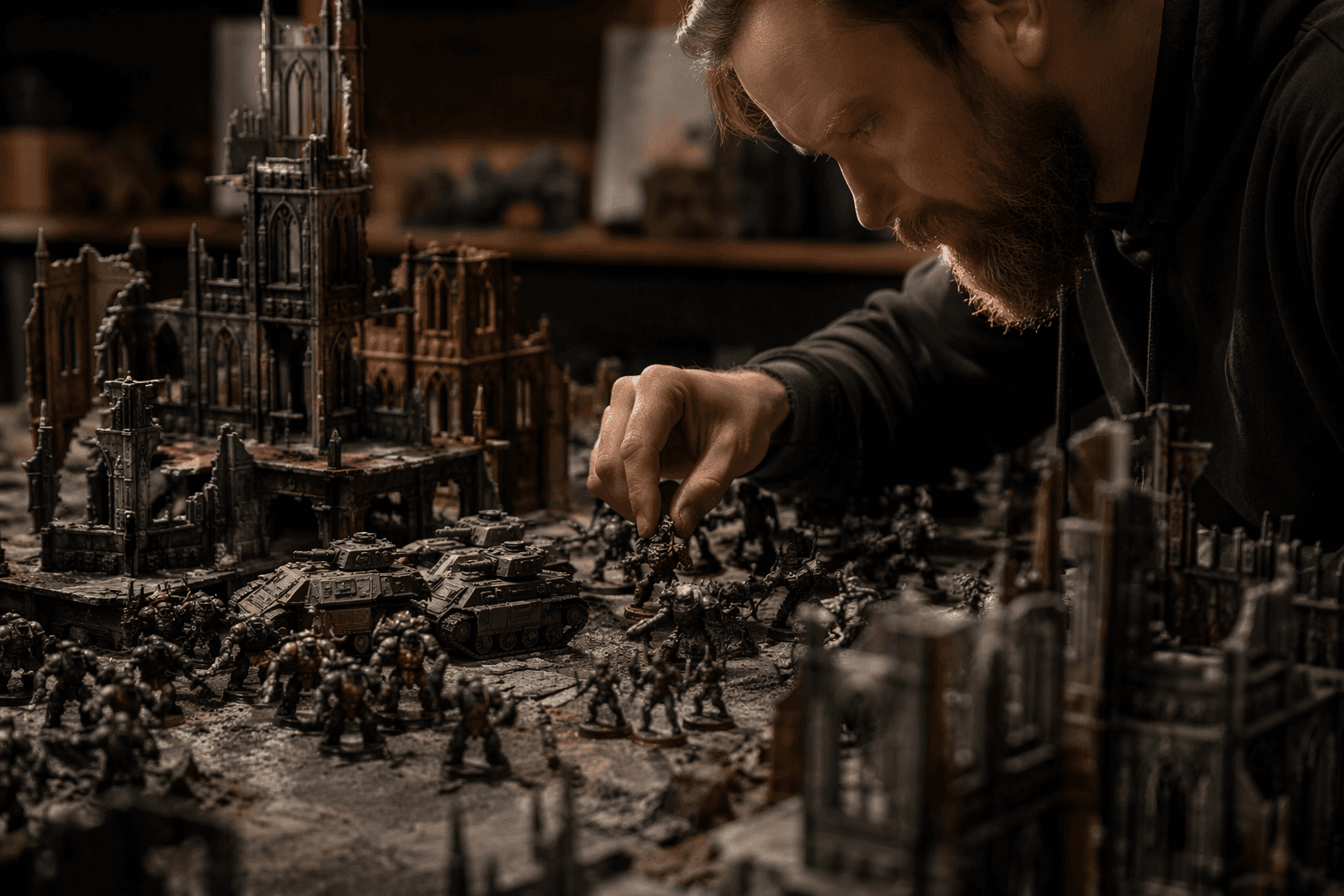
That system logic also matters for the tabletop. A world with poisoned seas, industrial ruins, mountain passes, dense jungle, and volcanic instability gives you terrain that naturally supports varied battlefields. Armageddon does not need to be stretched to fit different mission types. It already contains the kind of landscapes 40k players expect to fight over.
What the surface really looks like
Warhammer Community’s new surface lore sharpens that picture even further. Armageddon Prime holds three major hive cities: Hive Volcanus, Hive Tempestora, and Hive Death Mire. Around them lie the Mannheim Gap, the Equatorial Jungle, the Fire Wastes near the northern pole, the Sreya Rock Mountain Range, the Red Angel’s Gate warp anomaly, and the Deadlands in the south, where ice and water-processing infrastructure help define the land.
The Mannheim Gap is especially important for anyone thinking in tabletop terms. It is the only pass through Armageddon’s major mountain range wide enough for super-heavy vehicles, and it is described as the final resting place of dozens of Titans and Gargants. That single detail tells you how the planet handles escalation: Armageddon is not a place where wars stay small for long.
The new lore also says the main continent is split into Armageddon Prime and Armageddon Secundus by an immense Equatorial Jungle. During the Season of Fire, temperatures there can rise above 90°C, which turns the jungle into a refuge for Orks and a nightmare for humans. That is exactly the kind of environmental pressure that makes Armageddon feel like more than a map. The planet itself is actively deciding who can survive where.
The wars that made the name
Armageddon keeps coming back because its history already has the shape of a legendary war zone. The First War for Armageddon was a Chaos invasion tied to Angron and the World Eaters, which set the tone for everything that followed. The Second War for Armageddon ran from 941.M41 to 943.M41, with Ghazghkull Thraka leading the Ork assault against the Imperium. The Third War came 57 years later, and it brought back the same central clash: Ghazghkull against Commissar Yarrick.
Even the infrastructure around the wars has become part of the story. Monitoring stations Dante, Mannheim, and Yarrick were built after the Second War for Armageddon, then destroyed early in the Third War. That matters because it shows how quickly the planet consumes every attempt to impose order on it. Armageddon does not just host wars, it erases the tools built to track them.
What Operation Imperator signals for the new era
The new boxed set’s setup makes the stakes easy to read. Ghazghkull’s return has swollen the Ork horde, and Operation Imperator is framed as a desperate counterattack before Imperial resistance collapses. That is a strong launch premise because it gives the setting immediate momentum: the Imperium is not arriving to claim a victory lap, it is scrambling to keep Armageddon from tipping fully into Ork hands.
That also explains why the world keeps getting reused in major 40k moments. Armageddon combines recognizability, layered history, and battlefield variety in a way few other worlds can match. It is industrial enough for war industry stories, ruined enough for trench and hive combat, and unstable enough to support the sort of planet-spanning escalation that defines major edition launches.
Why this is the Armageddon moment to know
If you are looking at 11th edition coverage and trying to work out why this planet matters so much, the answer is simple: Armageddon is built to carry a war story of this size. It has the geography, the industrial logic, the hive-city density, the environmental extremes, and the history of repeated invasions to make a new campaign feel like an escalation instead of a retread.
So when the new Armageddon moment lands, it is not arriving as background decoration. It is arriving as the stage, the prize, and the casualty list all at once, with hive cities under pressure, Ork warbosses on the march, and the Imperium once again trying to hold a world that has already survived too many wars to count.
Know something we missed? Have a correction or additional information?
Submit a Tip