Best Warhammer 40k books for newcomers, from Eisenhorn to Horus Rising
Start with Eisenhorn if you want the safest 40k doorway, then branch into Gaunt’s Ghosts, Cain, and Horus Rising for the fastest read on the setting.
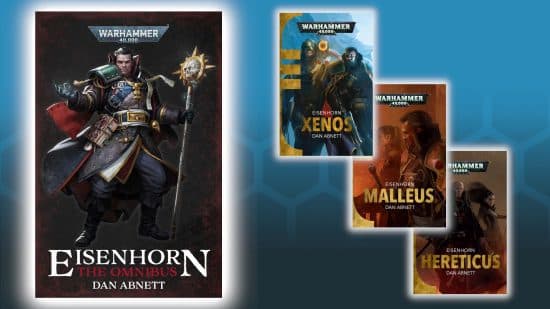
This is the rare 40k reading list that actually tells you where to begin: one safe doorway, one long war saga, one Heresy launchpad, and a few sharper side routes if you want orks, Titans, or rebellion.
1. Eisenhorn, best first 40k novel
If you only buy one Warhammer 40,000 book to test the waters, make it Eisenhorn. Following Inquisitor Gregor Eisenhorn through intrigue, mystery, moral compromise, and full-strength grimdark atmosphere, it is the clearest single entry point in the Black Library and the easiest way in for a newcomer. The omnibus is the smartest buy because it gives you the whole arc in one place.
2. Gaunt’s Ghosts, best long series
If you want a bigger emotional commitment and a strong human-eye view of the Imperium, Gaunt’s Ghosts is the long series to grab next. It works because it keeps the scale grounded in soldiers rather than abstract lore, which makes the setting feel immediate, costly, and lived-in. This is the pick when you want a war story that can carry you across multiple books without losing the thread.
3. Ciaphas Cain, best for a lighter Imperial read
Ciaphas Cain gives you Imperial heroism with a sardonic edge, which makes it a perfect palate cleanser after the more punishing corners of 40k. If Eisenhorn is the serious doorway, Cain is the series that reminds you the setting can be funny without losing its bite. It also gives you a very different angle on how the Imperium sells itself versus how it actually functions.
4. Horus Rising, best pick for Horus Heresy fans moving into 40k
If you already know the Heresy side of the franchise and want to move into the wider 40k ecosystem, Horus Rising is the cleanest bridge. It matters because it opens the door to the prehistory of the setting while still giving you the scale and tragedy that make the universe click. Start here if your reading tastes run toward grand fall-from-grace drama and you want the foundational context behind the modern nightmare.
5. Ravenor, best next step after Eisenhorn
Ravenor is the sequel-style move after Eisenhorn, and that makes it ideal once you are ready for a deeper cut. It keeps the Inquisition focus but asks you to bring a little more familiarity with the setting, so it feels like a step up rather than a replacement. If Eisenhorn taught you how 40k works, Ravenor lets you stay in that lane while broadening the scope.
6. Titanicus, best for giant-war spectacle
Titanicus earns its place because it gives you one of the most distinctive power fantasies in the setting, god-machines going to war in the middle of the Imperium’s machinery and ritual. It is a strong choice if you want a book that captures the sheer scale of 40k without needing you to track a huge character web first. For readers who want something more mechanical, apocalyptic, and battlefield-heavy, this is a standout.
7. Day of Ascension, best for a sharper rebellion angle
Day of Ascension widens the list beyond loyalist warfare and Inquisition intrigue, and that makes it valuable as an entry point with a different political flavor. It is the sort of pick that helps you understand how oppressive the setting can feel from the ground level, not just from the view of the Imperium’s elites. If you want a book that expands your sense of what 40k stories can do, this is a smart add.
8. Brutal Kunnin’, best for a more recent fan-favorite
Brutal Kunnin’ is one of the guide’s modern fan favorites, and it earns that spot by giving the list a louder, more chaotic route into the setting. It is the kind of book that broadens your reading beyond the usual Imperial power structure and reminds you how much fun 40k can be when it leans into its most violent excesses. Add it when you want a newer read that still feels unmistakably like Warhammer.
9. Warboss, best for quick ork-flavored momentum
Warboss belongs on the list because it gives you another direct hit of the setting’s rowdier side, and it does so without demanding a huge amount of homework. As a recommendation, it sits neatly alongside Brutal Kunnin’ for readers who want something immediate, nasty, and full of the franchise’s trademark excess. It is also a good reminder that the best 40k books do more than explain the lore, they sell you the tone.
If you are building a starter shelf, the cleanest order is Eisenhorn first, Gaunt’s Ghosts for depth, Ciaphas Cain for variety, and Horus Rising if the Heresy is your real point of entry. From there, Ravenor, Titanicus, Day of Ascension, Brutal Kunnin’, and Warboss fill out the map, and many of them are easy to find in audiobook form as well, which makes the whole setting much easier to absorb on the move.
This article was produced by Prism’s automated news system from verified source data, official records, and press releases, then run through automated quality and moderation checks before publishing. The system is built and supervised by the people who set the standards it runs under. Read our full AI policy.
Did this article answer your question?