Death Guard Defilers test new terrain rules ahead of Warhammer 40K overhaul
TheChirurgeon’s Defiler tests show how new terrain rules could reshape movement, firing lanes, and list prep long before 11th edition lands.
Why this testing table matters
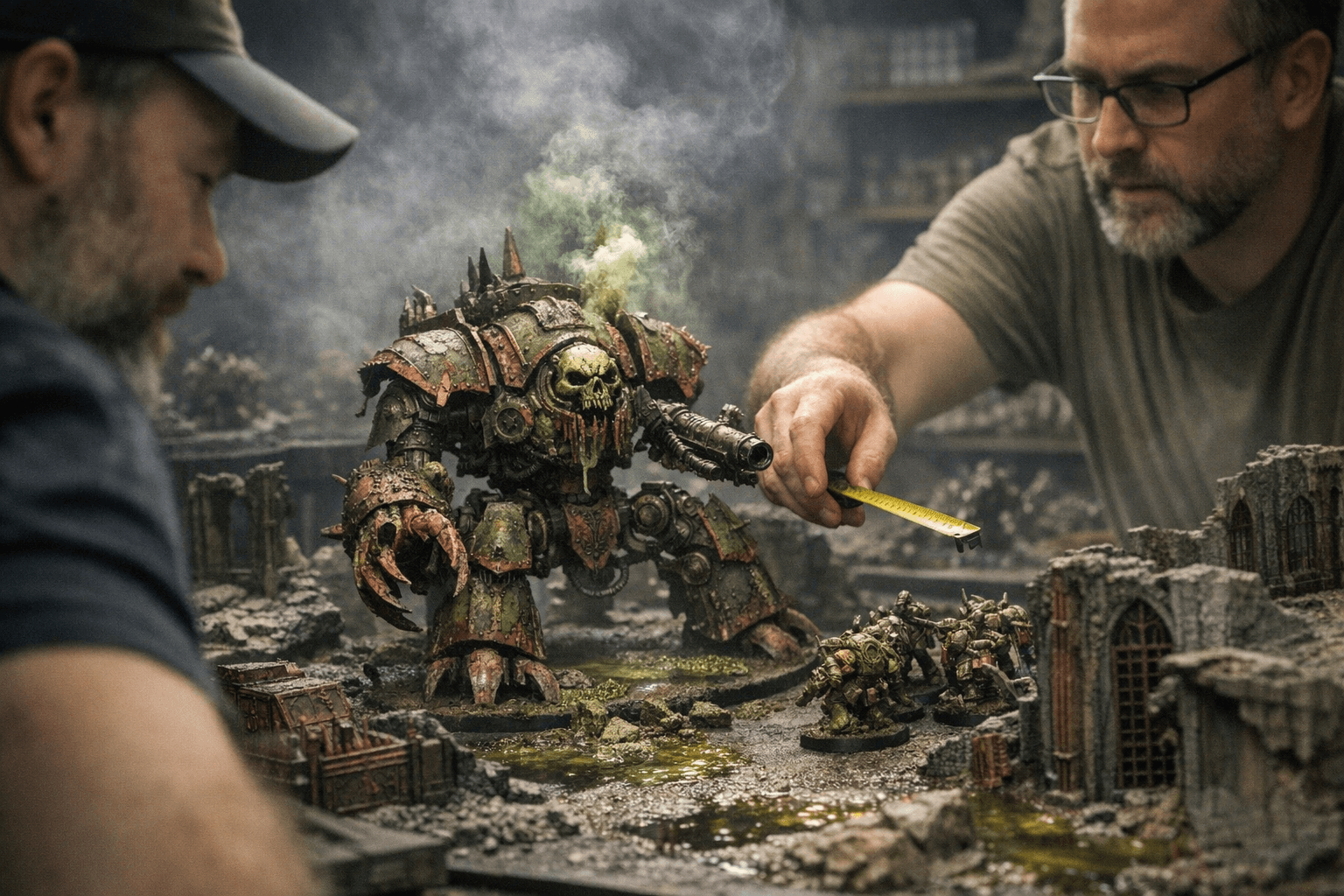
The easiest way to understand the new 40k terrain conversation is to watch a Death Guard army try to solve it before the rules fully settle. In Robert "TheChirurgeon" Jones, KC’s April 16 diary, the point is not just that he is playing games. It is that he is stress-testing Death Guard Defilers in 10th edition while also running quasi-11th-edition missions and layouts on a terrain setup he built himself.
That makes the piece feel like a snapshot of where competitive 40k actually lives right now: between official previews, tournament packet updates, and the habits players are already building at home. Games Workshop publicly revealed 11th edition at AdeptiCon on March 26, 2026, in Milwaukee, Wisconsin, and the reveal coverage pointed to a summer 2026 launch window. The race is no longer just to learn new datasheets. It is to learn the new geometry of the table before the full edition shift hits.
What the new terrain rules change
Games Workshop’s April 8 terrain article is the backbone of the whole conversation, because it reframes the battlefield in a way that rewards practice on real layouts. Terrain is now described as two components, terrain features and terrain areas, which matters because the rules are no longer just about where a ruin sits on the board. They are about how units interact with the space around it.
The new Hidden rule is the part every competitive player is already thinking through. It applies to Infantry, Beast, and Swarm models inside terrain areas if the unit has not shot in the current or preceding player turn, and Hidden models are usually only visible to enemy units within 15 inches. That is a huge practical shift for movement, screening, and firing lanes, because board position now has a tighter relationship with whether a unit can actually be targeted.
Games Workshop also says the new edition will include recommended terrain layouts tied to specific missions, with battlefields designed to support balanced play while still fitting the story of the mission. That is the key detail for list prep: if the mission packet and the table design are both being tuned together, then army construction has to account for both at once instead of treating terrain as an afterthought.
Why the tournament packet already matters
The Chapter Approved Tournament Companion is doing more than offering nice ideas for event organizers. Games Workshop says those recommendations are the official way to play Warhammer 40,000 in a tournament setting at most matched-play events, and the pack includes 20 recommended tournament rounds plus terrain layouts for the Chapter Approved Tournament Mission Pool. That turns terrain from a stylistic preference into part of the competitive baseline.
This is also why the broader Goonhammer coverage around the 2025-26 Tournament Companion matters. Players have already been training on official layouts, and even studying layout-specific strategy, for months. The result is a community that is not waiting for a clean reset; it is already rehearsing how to solve sight lines, midboard pressure, and objective access on the boards the game is increasingly expected to use.
Why Defilers are such a useful test piece
TheChirurgeon’s choice of Death Guard Defilers is smart because they expose the exact questions terrain changes are meant to answer. He says he has painted three old Defilers and based two of them, which tells you this is not a theory-crafting exercise detached from the hobby side. These are real models being put through real reps.
On the table, the profile is awkward in the best possible way. The Defilers cost 250 points each, have 18 wounds, and only Toughness 11, so they are not cheap and they are not unkillable. That makes them ideal for testing whether the new terrain rules actually let a large, expensive piece stay relevant by moving through walls natively and using board position to pressure enemy plans instead of simply absorbing fire.
The comparison to Plagueburst Crawlers is especially telling. The article frames Defilers as a possible fit for a more aggressive Death Guard plan, which is the kind of list-building question terrain changes force you to ask early. If Hidden and new mission layouts reward pieces that can move, threaten, and occupy space differently, then a Defiler starts to look less like a relic and more like a tool for a board that is about to value movement in a new way.
How to read the table before your next event
The practical lesson from this testing diary is not to memorize one perfect setup. It is to start thinking about how different layouts change the value of every slot in your list. A board with tighter lanes, better wall access, and more terrain areas will not just alter who gets the first shot. It will also change which units can hide, which ones can contest safely, and which ones need to commit earlier than usual.
A good prep checklist for the new season is already taking shape:
- Rehearse movement through terrain areas, not just around ruins.
- Check which units can realistically exploit the 15-inch visibility window.
- Test whether your list still functions when firing lanes are shorter and more broken up.
- Compare your expensive centerpieces against the mission layouts you expect to see, not just against ideal open-table math.
That is what makes TheChirurgeon’s update feel so useful. It is not a lore tease or a product recap; it is a look at the habits players need before the consensus forms. By combining painted models, practice games, new layouts, and a live read on the official terrain direction, the piece captures the exact moment when 40k stops being about what the rules say in theory and starts being about how they feel on the table. The players who learn that lesson now will walk into the next event already speaking the language of the new board.
This article was produced by Prism’s automated news system from verified source data, official records, and press releases, then run through automated quality and moderation checks before publishing. The system is built and supervised by the people who set the standards it runs under. Read our full AI policy.
Did this article answer your question?