Ghazghkull’s mega-tellyshokka explains the sudden Armageddon invasion
Ghazghkull is not arriving by brute force alone. His mega-tellyshokka turns Armageddon into a coordinated strike, with ten Kill Kroozers and a plan built to overwhelm the Imperium.
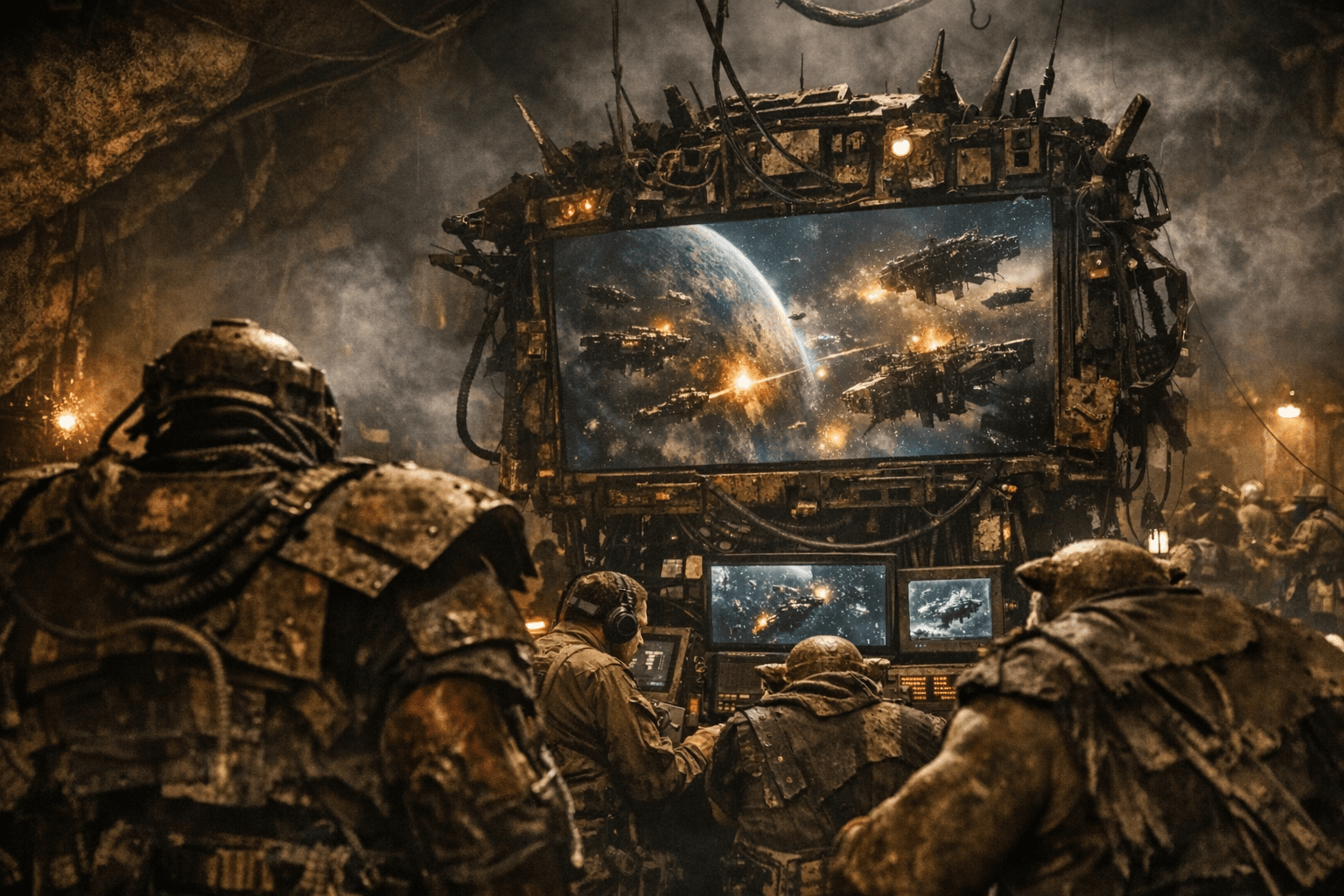
Ghazghkull’s invasion of Armageddon looks sudden because it is designed to be. The latest Armageddon lore turns the Ork assault into something far more unsettling than a normal Waaagh!: a carefully engineered arrival built around the mega-tellyshokka, a Warp-bending setup that lets Ghazghkull Thraka hit the system in one violent lurch instead of grinding forward like a conventional green tide. That single change reframes the whole war, because Armageddon is no longer being hit by random Ork momentum, but by a warboss who has planned the opening move to land exactly where the Imperium least wants it.
How the mega-tellyshokka changes the story
The core reveal is simple and nasty. Ghazghkull, Nazdreg, and the shadowy Mek known to the Imperium as Orkimedes combine their brutal brains to build a giant teleportation scheme that lets the Ork fleet skip the slow approach entirely. Instead of a long march through space, the force appears in the Armageddon system in a single reality-warping surge, making the attack feel instantaneous and overwhelming. That is the key reason this campaign lands so hard in lore terms: it makes the invasion feel like a coordinated strike, not just another loud, lawless Waaagh!.
What makes the plan especially Orky is the way it is held together by redundancy and audacity. After several disastrous tries to use one enormous engine, Nazdreg lands on a more practical answer for a Bad Moon warlord: split the force across ten custom Kill Kroozers, let them channel the Warp gateway, and then bring the fleet together when Ghazghkull needs it. That means the Orks are gambling big, but not stupidly. They have built enough resilience into the operation that one bad break does not automatically wreck the whole invasion.
Why this feels bigger than a standard Waaagh!
This version of the Armageddon war works because it is not only about size, it is about timing and pressure. Ghazghkull’s force does not merely arrive in-system; it appears where the Imperium is least prepared to absorb the blow, which turns the campaign into a race for survival rather than a straight-up slog. The new context gives the Orks a strategic edge that fans usually associate with more disciplined factions: shock, speed, and synchronized force projection.
That also changes how the invasion reads on the tabletop and in the fiction. Armageddon is already a world built around constant military strain, with massive hive cities such as Hive Volcanus, Hive Tempestora, and Hive Death Mire standing as obvious pressure points. If the Orks can strike on their own timetable, those cities become targets under immediate threat rather than objectives in a slow-burn advance. The result is a campaign setting that feels far more claustrophobic and urgent.
The Piscina IV lesson matters
The mega-tellyshokka did not appear out of nowhere. Warhammer Community ties the idea back to earlier tellyporta experience, including use on Piscina IV against a significant Dark Angels garrison. That matters because it shows the Orks have already learned that Warp-based movement can be weaponized at scale, and that the concept is not just a one-off joke machine. Piscina IV becomes the proof of concept that helps explain why Ghazghkull’s latest gamble is reckless, but not random.
Once you fold that history into the Armageddon invasion, the whole plan feels more believable in-universe. The Orks have tested the logic, failed in some of the messier attempts, and then refined the approach into something that can move an entire war machine at once. For a faction that thrives on momentum, that is exactly the kind of escalation that makes the Imperium’s response feel late before the first shot is even fired.
Armageddon’s long grudge gives the campaign weight
The setting only gets stronger when you place it in its wider canon. The Third War for Armageddon began in 998.M41, and it came fifty-seven years to the day after the Second War for Armageddon. That is not just a nice bit of chronology. It underlines how deeply Armageddon is stamped into 40k’s war history, with each conflict layering new scars over the same blasted world.
It also reinforces why Ghazghkull’s name still carries such weight there. Reference material describes him as leading the largest Ork WAAAGH! ever raised in that war, and Commissar Sebastian Yarrick remains his great enemy on the Imperial side. That long-running rivalry is part of what keeps Armageddon such a potent setting: it is not just a battlefield, but a stage for one of the setting’s defining personal vendettas. When Ghazghkull comes back, it feels like the next move in a grudge match that has shaped the planet for generations.
Why this release wave feels coordinated, not random
The wider Armageddon rollout backs up that same message. Warhammer Community’s April 2026 reveals place new Ork detachments and new Astra Militarum detachments in the same window, which makes the campaign feel balanced around opposing forms of force projection. On one side, the Orks bring Speedwaaagh energy and Warp-jumping chaos. On the other, the Guard answer with layered mechanized strength and the kind of massed firepower that Armageddon always seems to demand.
That matters because it turns the lore into a release framework. The invasion is not just background paint for models and rules. It is the story logic that explains why both armies are getting new tools at the same time, and why the campaign is pushing mobility, reinforcements, and battlefield control so hard. Armageddon is being presented as a war where whoever dictates the pace gains the upper hand, and Ghazghkull’s plan is built to seize that pace from the first moment.
Ghazghkull’s model history adds one more layer
There is also a pleasing bit of long-game symbolism in how Ghazghkull is being reintroduced. Warhammer Community notes that this modern incarnation debuted with Codex: Armageddon, which covered the Third Armageddon War and was supported by a worldwide White Dwarf campaign that let players help decide the fate of the planet. That makes the current lore push feel like a return to one of 40k’s most community-driven great wars.
It also puts the model progression into perspective. The current Ghazghkull miniature is much larger than both the White Dwarf 134 conversion by Andy Chambers and the first official model. That growth mirrors the character’s status in the setting: he is not just a recurring Ork boss, but one of the great symbolic monsters of 40k, and Armageddon remains the place where his legend keeps getting bigger.
Ghazghkull’s mega-tellyshokka changes the invasion from a blunt Waaagh! into a surgical, terrifying escalation. Armageddon is not being overrun by accident. It is being hit by a plan, and that makes the war feel much more dangerous from the very first impact.
This article was produced by Prism’s automated news system from verified source data, official records, and press releases, then run through automated quality and moderation checks before publishing. The system is built and supervised by the people who set the standards it runs under. Read our full AI policy.
Did this article answer your question?