Modular 40k Terrain: Reconfigurable Tiles, Durable Finishes, Balanced Play
Modular terrain systems let you reconfigure boards, cut setup time, and protect terrain investment while ensuring balanced, repeatable games.
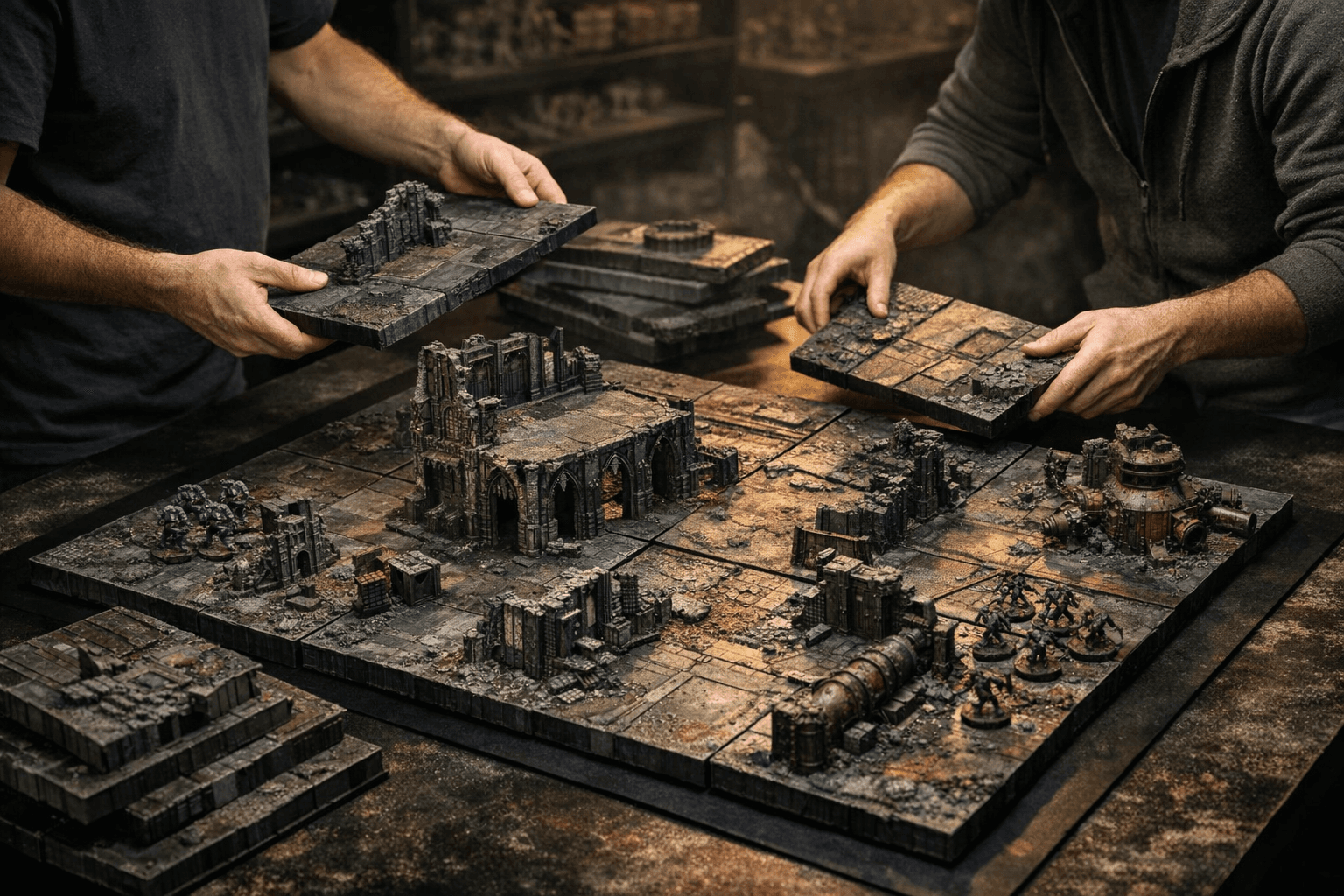
Modular terrain systems change how clubs and casual groups run Warhammer 40k nights by letting you rebuild battlefields in minutes and reduce storage headaches. Standardized tiles and swap-in pieces keep table time focused on tactics instead of setup, and durable finishes mean terrain survives repeated clashes between bolter and plasma.
Start with the base tiles. Use two to four foamboard tiles or MDF tiles 3-6mm thick, sized 30x30cm or 40x40cm, and mark standardized grid points for repeatable placement and mission setups. Seal MDF with PVA or shellac to stop moisture warping. Building a repeatable footprint makes it easier to run matched missions, teach new players deployment, and host consistent tournaments without hauling a dozen awkward boards.

Create a library of interchangeable pieces sized to fit those tile footprints. Bridges, ruined walls, barricades, and craters slot neatly onto tiles; magnetised crater bottoms provide fast attachment and prevent pieces from sliding during scrums. Use Velcro or small embedded magnets for quick swaps, and mark magnet polarity on the underside so you do not accidentally set up repelling pieces mid-game. Favor plastic or thin resin parts for high-contact bits; they flex less and take knocks better than fragile resin bitz.
Durability matters for community tables and store collections. Texture paints or Vallejo basing textures create a robust surface, and finish with a matte varnish for high-play durability and predictable scatter. Where possible, pick parts and paints that stand up to repeated handling so you avoid constant repairs between rounds.
Balance the board by spreading line-of-sight blocking across the table and providing mixed-height cover. Avoid stacking all tall terrain on one flank; instead, place a few tall elements, several mid-height ruins, and low scatter so both long-range and melee lists find meaningful options. That distribution reduces alpha-strike frustration and rewards deployment and maneuver.
Practical transport and on-the-day fixes keep terrain usable. Store tiles and scatter in stackable foam crates or custom cases. Keep a repair kit with hot glue, PVA, spare flock, and static grass for quick touch-ups before an event or between rounds. Small touches like labeled magnet polarity and a consistent tile grid will save minutes during setup and reduce disputes over placement.
If you want, I can sketch a four-tile starter layout and a shopping list of paints, adhesives, recommended foam and MDF thicknesses, and tool tips tuned to a US hobby store parts list. Modular boards free up table time, protect your investment, and give every army a fair shot at glory on a battlefield that can be reconfigured at will.
This article was produced by Prism’s automated news system from verified source data, official records, and press releases, then run through automated quality and moderation checks before publishing. The system is built and supervised by the people who set the standards it runs under. Read our full AI policy.
Did this article answer your question?