New 40k edition ties objectives to terrain and battlefield cover
Objectives now live on ruins, relics, and rubble, turning every mission into a fight for actual ground. The new edition also gives midfield units more cover and less punishment.
The battlefield itself is becoming the objective
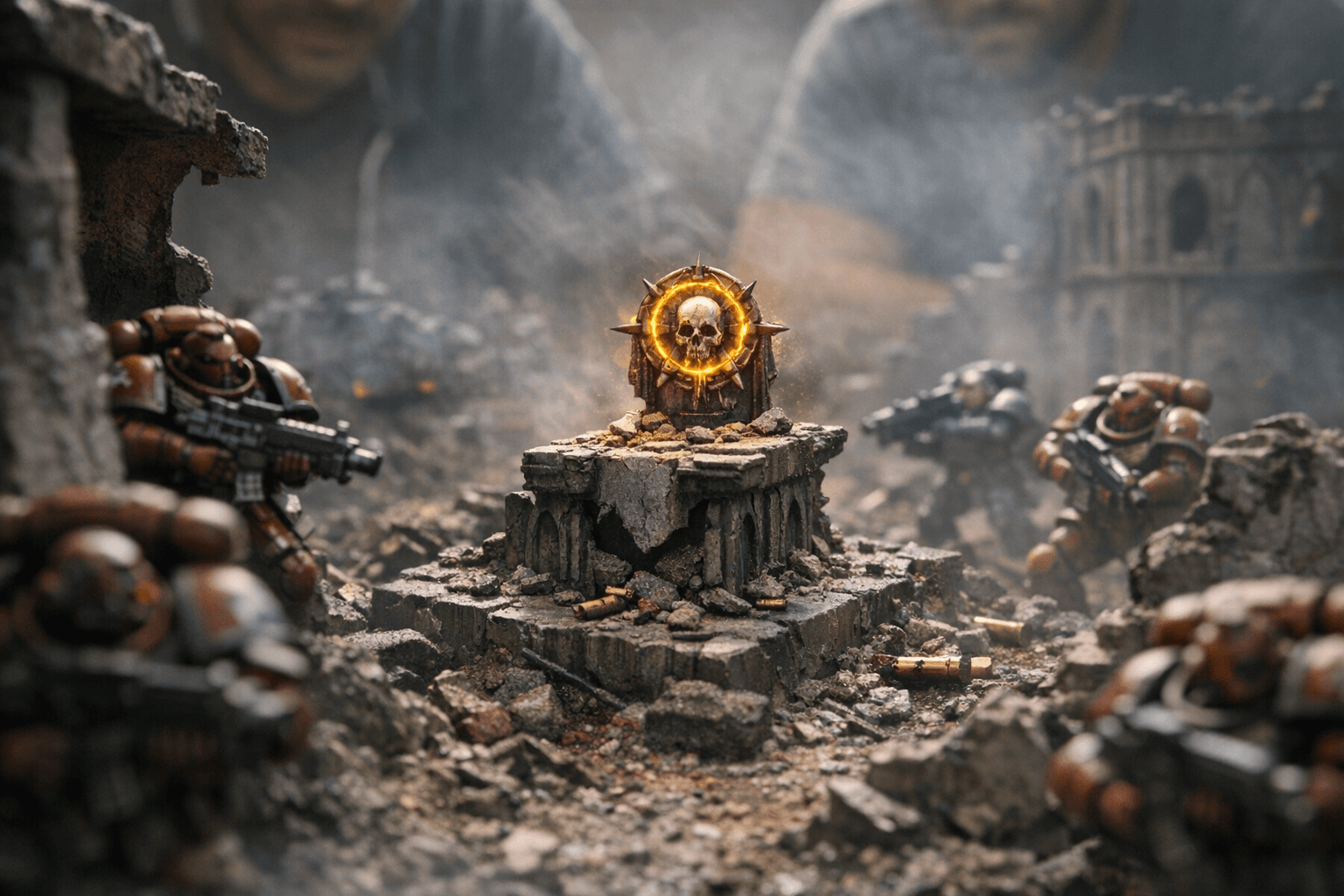
The clearest sign of where 40k is headed is simple: you are no longer just standing near a marker, you are fighting over the table’s actual terrain. The era of circular objective markers is over, and objectives are now tied to concrete features such as bunkers, ruins, relic sites, rubble fields, groves of trees, and other pieces of the battlefield that already shape your movement and fire lanes.
That shift matters immediately for how games will feel. Instead of treating objectives like abstract dots on the map, you will need to read the table as a collection of contested spaces, with each ruin or strongpoint doing double duty as both scenery and a scoring zone. Mission objectives vary from game to game too, with five or six objectives per mission, and if a mission calls for it, you can still mark those objectives with 40mm bases.
Cover is now part of the scoring puzzle
The big tactical change is not just where objectives sit, but how they protect the units trying to take them. Many objectives now provide cover to the models contesting them, which means scoring pieces are less likely to be stranded in the open after they commit. That should make objective play feel less like a sacrifice and more like a calculated advance, especially in the midfield where games are usually won or lost.
The updated terrain rules push that idea even further. Infantry, Beast, and Swarm models inside a terrain area can be Hidden if their unit did not shoot in the current or preceding player turn. In practice, that gives smaller objective units a safer way to occupy the places that matter, especially if they are built to advance, hold, and then stay alive long enough to score again next turn.
Vehicles and monsters still matter in this system, but they play differently. They do not use terrain areas for cover in the same way infantry does, yet they can still take advantage of the battlefield’s physical features and help contest objectives more safely than before. That keeps the big models relevant without making them the default answer to every board-state problem.
Mission play is getting more specific
The new edition is also changing how armies are built for the mission, not just for damage output. There are five Force Dispositions in total: Take and Hold, Purge the Foe, Disruption, Reconnaissance, and Priority Assets. That alone tells you how much more tightly missions and list construction are being linked, because your army is no longer just choosing units, it is choosing a way to approach the table’s geography.
Five or six objectives on the board also creates a sharper list-building question. Do you spread out and cover the whole table, or do you concentrate on a few decisive points and force the opponent to come to you? A force that can reach multiple terrain-linked objectives will want different tools from one that plans to anchor a small number of key positions, and that pressure will be felt before the first dice are rolled.
The mission structure also suggests a stronger connection between narrative intent and competitive play. Objective zones can represent strategic ruins, power generators, relic sites, or even bomb-disposal moments, so the thing you are fighting over has a story attached to it. That gives casual games more texture and tournament games more clarity, because the battlefield is no longer just the stage for the mission, it is the mission.
What changes in a real game
On the tabletop, this should change deployment, movement, and target priority in obvious ways. A ruin in the midboard is not just a piece of cover anymore, it may be the objective itself, which means you have to think about where you place durable units, where you send hidden scorers, and when you risk exposing a vehicle or monster to hold the line.
A few practical effects stand out:
- Small infantry units become more valuable when they can occupy terrain-linked objectives and remain Hidden if they have not shot in the current or previous turn.
- Midboard control is likely to be less binary, because an objective can offer cover while still demanding real commitment to hold it.
- Heavy units still matter for pressure and contesting, but they will not simply replace the need for terrain-savvy scoring pieces.
- Missions with five or six objectives will reward armies that can read the board quickly and decide which terrain features are worth fighting over first.
That is the kind of change that can alter how every phase feels. Movement matters more because terrain and objectives are fused. Shooting matters more because choosing not to fire can keep a unit Hidden. Even list construction starts to look more like a plan for holding ground than a simple package of threats.
Why this is such a clear next-edition signal
All of this sits inside a preview campaign that has been building toward a very specific identity for the new edition. The new edition of Warhammer 40,000 was revealed at AdeptiCon Preview 2026 on March 26, 2026, and it was introduced with a boxed set packed with new miniatures. It is also being framed around Armageddon as a launch setting and expansion focus, which gives the rules changes a strong narrative backdrop rather than presenting them as dry mechanical updates.
Taken together, the terrain preview, the mission structure, the updated cover rules, and the new Force Dispositions all point in the same direction. Games Workshop is making the battlefield itself do more of the work, so objectives, cover, and story are all collapsing into one system. If the old edition asked what you brought, the new one is asking where you are willing to stand, and what piece of ground you are ready to claim.
This article was produced by Prism’s automated news system from verified source data, official records, and press releases, then run through automated quality and moderation checks before publishing. The system is built and supervised by the people who set the standards it runs under. Read our full AI policy.
Did this article answer your question?