Priority Assets favors fast armies in 11th Edition missions
Priority Assets pushes 11th Edition armies toward speed, action pieces, and central pressure, with Drukhari-style lists best able to keep scoring while fighting.
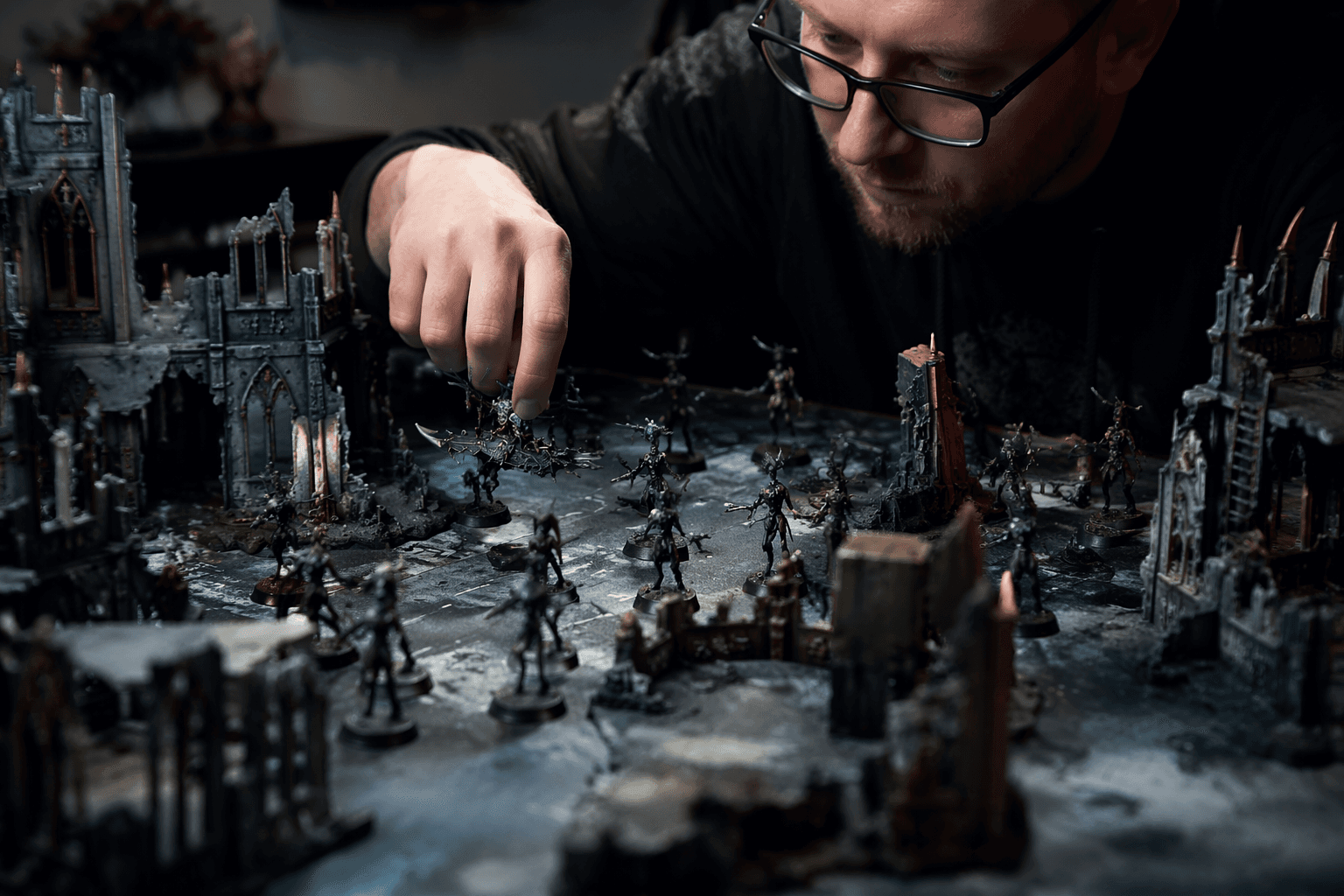
Priority Assets rewards armies that can act everywhere at once: move into the opponent’s half, keep actions running on non-home objectives, and still hit hard enough to fight over the middle. In practice, that means your first question is not “Can I stand on the center?” but “Can I keep scoring while I move through it?” If your list slows down or runs out of bodies, this mission will punish you quickly.
What Priority Assets asks of you
The mission is built as an action-heavy disposition, and the actions are tightly focused on objectives, especially central objectives and those in the opponent’s territory. It is played as a six-objective game on standard layouts such as Dawn of War, Hammer and Anvil, or Crucible of Battle, so the board does not give you much room to hide from the pressure. That combination makes the mission feel less like a straight brawl and more like a timed exercise in coordination.
Scoring is not just about touching markers. You are completing actions on non-home objectives, you gain extra incentives for killing units near a central objective, and the value of holding multiple objectives rises as the game goes on. The result is a mission that asks you to split attention between board control, damage output, and mission actions without letting any one part collapse.
What to test in practice games
The easiest mistake in Priority Assets is to assume that speed alone wins the game. Speed matters, but only if the rest of the army can keep up with the scoring plan, survive contact, and continue functioning after the first wave of casualties. That is why this mission favors lists that can pressure the opponent’s half of the table while still completing actions and avoiding the trap of overextending.
In practice games, test these habits first:
- Deploy your fastest units where they can reach central or opponent-territory objectives without forcing the rest of the army to overcommit.
- Rehearse action sequencing so one failed move does not cost you an entire scoring turn.
- Keep at least one answer ready for counterattacks, because pushing too hard for action points can leave your army stretched thin.
- Track which units are doing the scoring and which are doing the fighting, since the mission rewards you for keeping multiple pieces active at once.
That last point matters a lot for early 11th Edition events. Priority Assets does not reward a single monster unit that does everything well. It rewards armies that can divide labor cleanly, with some pieces taking the action burden while others threaten the middle or punish anyone who tries to break your tempo.
Why fast armies get the edge
The June 4 review by James One-Wing Grover, Robert TheChirurgeon Jones, and Shane Watts makes the matchup picture pretty clear: armies like Drukhari, or any list that can move fast, reach deep, and keep operating after the first exchange, look especially comfortable here. That is because Priority Assets asks you to keep pressure on the board from more than one angle at once. If your force can move into the opponent’s half, score, and still retain enough units to contest the next turn, you are already ahead of the curve.
What makes the mission interesting is that it is not a simple race to park bodies on objectives. Central-board control still matters, but so does tactical reach, and the mission rewards careful allocation of action units instead of mindless flooding. In other words, you want enough speed to get where you need to go, but enough discipline that your scoring pieces do not vanish before they have paid you back.
How list building changes in 11th Edition
Games Workshop’s April 3, 2026 army-building rules were a big tell here. Warhammer Community said forces can be tied to a mission focus, and it explicitly used Priority Assets as an example, alongside Take and Hold, with the idea that an army might have one detachment linked to one mission style and another linked to a different one. That is a major shift in how players should think about construction, because the list is no longer just a toolbox. It is part of the mission plan.
For early 11th Edition games, that means you should stop asking whether one list can do everything and start asking whether your list is built to do one mission family extremely well. Priority Assets clearly favors armies that can sustain action density, maintain pressure across the board, and preserve enough units to keep scoring as the game develops. If your force is designed like a blunt instrument, it may still hit hard, but it will not automatically match a mission that wants movement, timing, and layered board control.
Why this matters right now
The timing makes the guidance especially useful. In early June 2026, Warhammer Community said the new 11th Edition core rules were available to download, and that the physical rulebook would be included in the Warhammer 40,000: Armageddon box going up for pre-order that coming Saturday. At the same time, Goonhammer’s launch-week coverage was rolling through Priority Assets, Reconnaissance, Take and Hold, Purge the Foe, and Disruption, which makes the whole run feel less like isolated writeups and more like format-setting advice for the edition’s first competitive wave.
That is the real lesson to carry into your next practice game. Priority Assets is not asking you to win by standing still and trading wounds in the center. It is asking whether your list can move fast, score cleanly, and stay coherent while the battle spreads across the table. The armies that answer yes will feel native to 11th Edition from the first turn.
This article was produced by Prism’s automated news system from verified source data, official records, and press releases, then run through automated quality and moderation checks before publishing. The system is built and supervised by the people who set the standards it runs under. Read our full AI policy.
Know something we missed? Have a correction or additional information?
Submit a Tip