Road Through 2026, first real look at Warhammer 40,000 11th Edition
The first full 11th Edition games show a sharper Warhammer 40,000: missions, terrain, and mobility now shape list-building before the first dice roll.
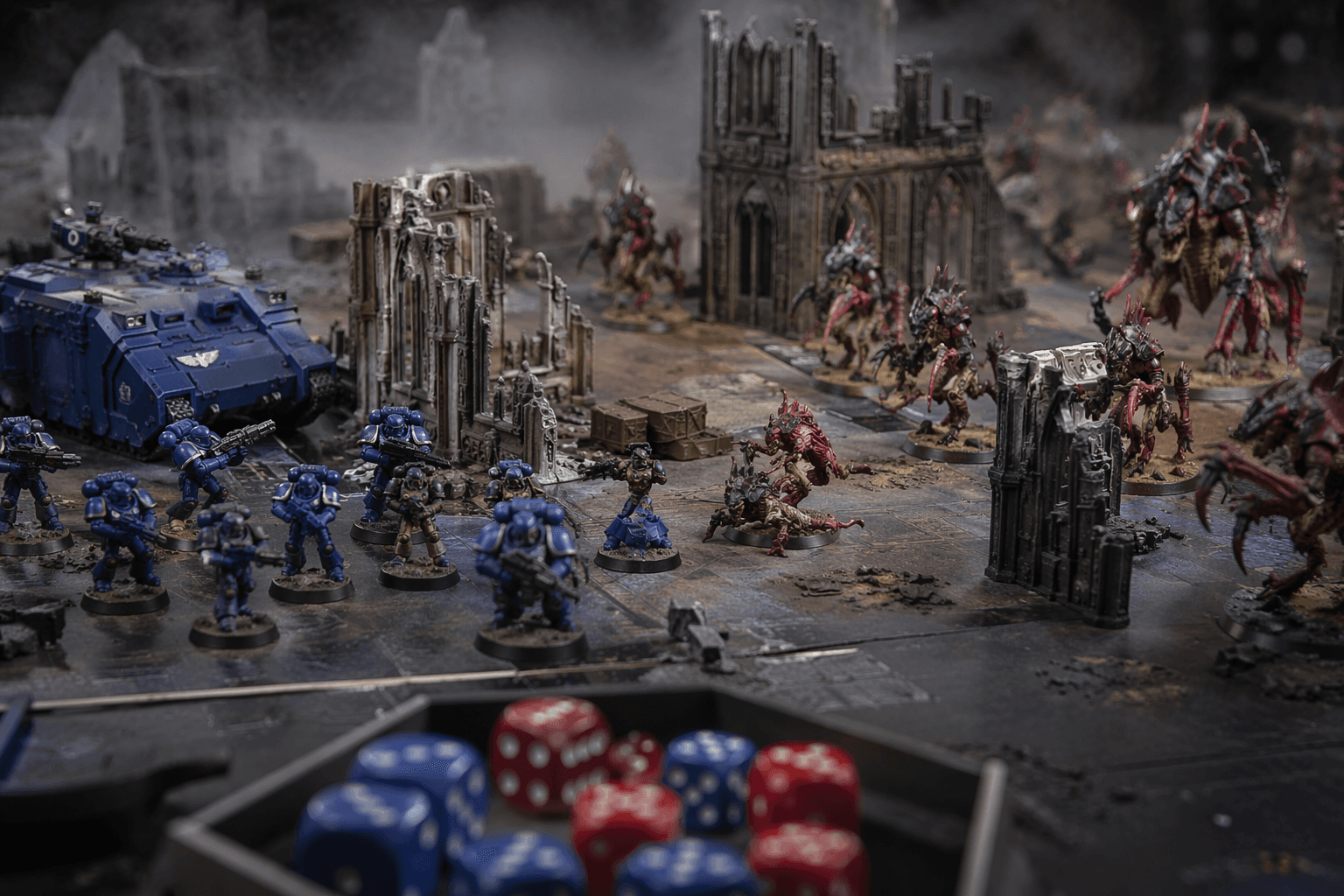
The first real 11th Edition games do not look like the half-step test matches that came before them. Once the embargo lifted, Robert Jones, writing as TheChirurgeon, could finally describe what Warhammer 40,000 feels like when the full Armageddon box, mission cards, and terrain layouts are all in play, and the answer is simple: the edition changes what matters on the table right away.
From theory to the actual table
Jones’s key point is that earlier games never told the whole story. The team had not yet received the Armageddon boxed set mission cards or the new layouts, so a lot of the early testing rested on simplified Take and Hold versus Disruption scenarios rather than the real missions players will actually face. That difference matters because 11th Edition is not just about stat lines or unit efficiency, it is about how the mission framework pushes armies to move, hide, and trade space from the opening turns.
That is why his first full look reads less like a rules breakdown and more like a practical warning to list builders. Once the mission package is complete, the shape of the game changes immediately, and the habits that worked in partial testing stop being enough.
Armageddon is the edition’s real launch frame
Games Workshop has positioned Warhammer 40,000: Armageddon as the launch box for the new edition, and the contents tell you exactly what kind of launch this is. The box goes up for pre-order on June 6, 2026 and arrives in stores on June 20, 2026. Inside are 61 miniatures total, split between 23 Space Marines and 38 Orks, along with the updated Core Rules booklet, the Armageddon: Operation Imperator lore book, the Chapter Approved 2026-27 Mission Deck, the Dominatus Narrative Campaign Deck, Armageddon datasheet cards, and a transfer sheet.
The story frame is doing just as much work as the plastic. Warhammer Community ties the release to Ghazghkull Thraka’s return to Armageddon and an Imperial counteroffensive called Operation Imperator, which gives the launch box a clear battlefield identity instead of treating it as a neutral starter set. That narrative hook also helps explain why the mission decks and layouts feel so central, because the box is not just a pile of models, it is the first expression of how 11th Edition wants games to be played.
Terrain is now part of list design, not scenery afterthought
The clearest mechanical signal from the new edition is the updated terrain system. Warhammer Community’s terrain preview introduced the Hidden rule for Infantry, Beast, and Swarm models inside terrain areas, and while hidden, those models are only visible to enemy units within their detection range, usually 15 inches. That is a major shift in how players think about board control, because terrain is no longer just cover or movement clutter, it is a tool for forcing decisions about vision, proximity, and threat range.
Cover also works differently now. Instead of the current edition’s save bonus, it imposes a -1 Ballistic Skill penalty, which changes the math for shooting and changes how attractive certain firing lanes become. Put together with the mission layouts, that means table position and line of sight are doing more of the heavy lifting than they did before, and anyone building a list for 11th Edition needs to account for that from the start.
Why Jones’s Chaos Space Marines list is the right kind of test
Jones answers that new terrain and mission pressure with a Chaos Space Marines list built for motion and board control. He ran Veterans of the Long War with the Purge the Foe disposition, assumed detachment point costs that were not yet public, and deliberately took a smaller 1 DP secondary detachment to see how the new structure actually plays. The list mixed Huron Blackheart, Fabius Bile, Cypher, a Reave-Captain, a Jump Pack Chaos Lord, Chosen, Cultists, Rhinos, Raptors, Warp Talons, and double Predator Destructors.
That combination tells you what active players need to be thinking about right now. Huron, Bile, and Cypher give the army character-driven pressure and flexibility, while the Rhinos, Raptors, Warp Talons, and Chosen help contest space fast. The double Predator Destructors add the ranged threat that keeps opponents honest, which is exactly what you want if the edition is rewarding early positioning and objective denial more aggressively than the simplified tests suggested.
The Space Wolves response shows the counterplay
The test game against Space Wolves showed the other side of the equation. Jones’s opponent leaned on a turn-one deep strike package built around Terminators, Arjac, Grimnar, Wulfen, Headtakers, and supporting units, trying to trap the Chaos army in place before it could turn movement into board control. That is a strong clue about what 11th Edition battle plans may look like in practice: pressure the enemy’s safe spaces early, force bad trades in the midfield, and use sudden arrival threats to break the opponent’s movement rhythm.
That interaction is exactly why the full mission package matters. A game where the layouts, hidden units, and mission objectives all matter is a very different beast from a simplified test where armies only prove whether they can shoot or survive. The list that looks flashy on a spreadsheet may still fold if it cannot claim ground, conceal threats, or answer a turn-one trap.
What active players should revise now
The immediate lesson from 11th Edition is not subtle, and it is not about memorizing a single hot unit. It is about rebuilding around the new priorities the edition is already telegraphing:
- Mobility matters more because getting into the right place early now affects visibility, cover, and objective play at once.
- Board control matters more because the Hidden rule makes terrain a genuine tactical asset.
- Shooting math matters differently because cover now changes Ballistic Skill rather than simply padding saves.
- Mission play matters more because the recommended terrain layouts are designed to support both balance and narrative.
- List construction matters earlier because detachment choices and point assumptions can alter how the army functions before the first model is deployed.
Warhammer 40,000: Armageddon, the terrain changes, and Jones’s first full game all point in the same direction. 11th Edition is not asking players to solve a cleaner spreadsheet, it is asking them to solve the table itself, and that makes the first full look at the edition feel less like a preview and more like the moment the real game finally begins.
This article was produced by Prism’s automated news system from verified source data, official records, and press releases, then run through automated quality and moderation checks before publishing. The system is built and supervised by the people who set the standards it runs under. Read our full AI policy.
Know something we missed? Have a correction or additional information?
Submit a Tip